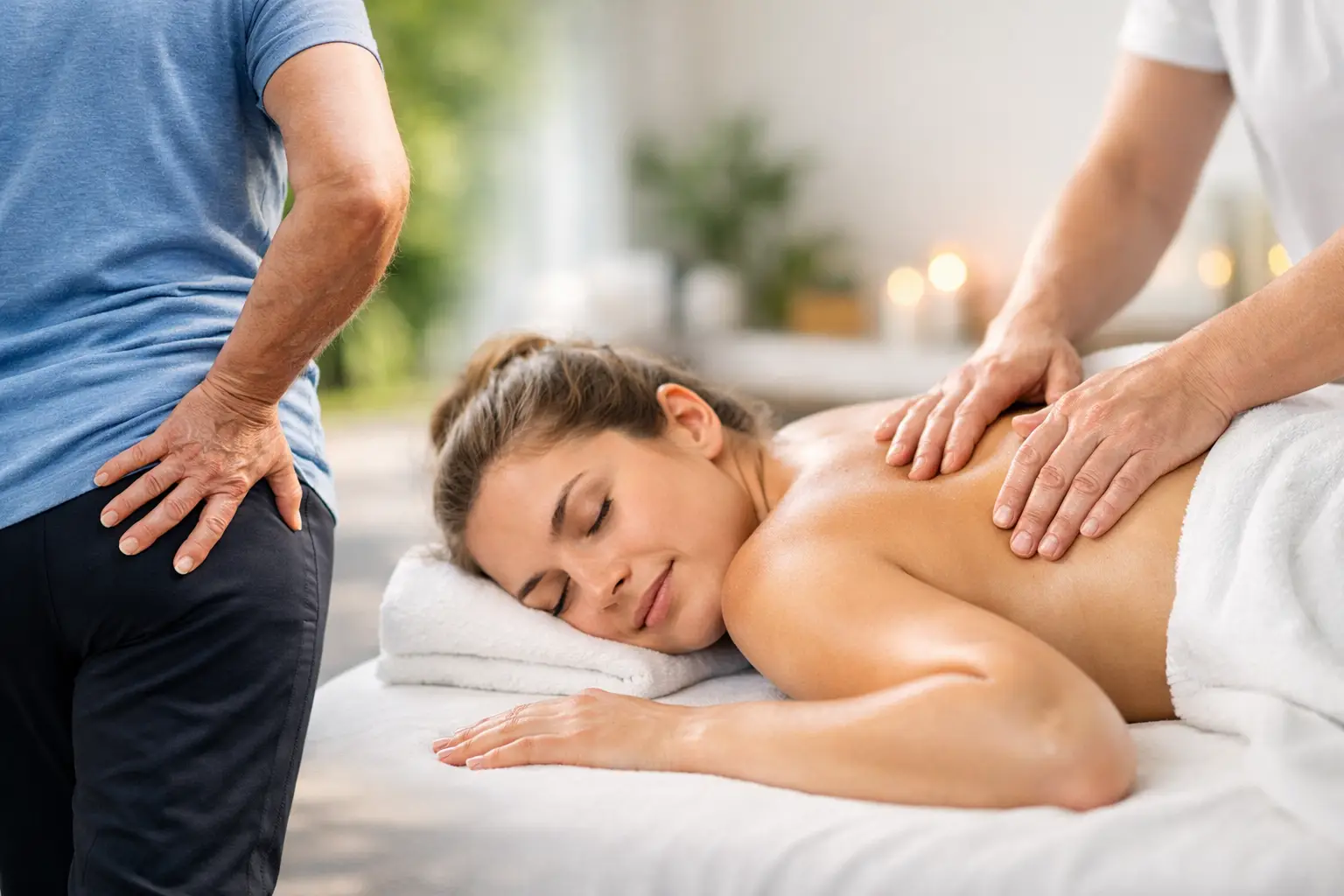
A hip that hurts every time you walk changes more than your stride. It can make commuting feel longer, workouts feel risky, and even short errands feel like something to brace for. When people look for massage for hip pain when walking, they are usually not just asking for temporary relief – they want to move normally again, without guessing which step will hurt.
When massage helps hip pain – and when it is not enough
Hip pain while walking is not one single problem. Sometimes the discomfort is coming from overworked glutes, tight hip flexors, irritated tissue around the outer hip, or a lower back issue that refers pain into the hip region. In other cases, the joint itself is involved, or the pain is being driven by tendon irritation, load intolerance, or compensations that have built up over time.
That is why effective treatment starts with assessment, not assumptions. Massage therapy can be very helpful when walking pain is influenced by muscle guarding, trigger points, reduced tissue mobility, or a nervous system that has become sensitized and protective. It may be less effective as a stand-alone approach if the pain is being driven by significant osteoarthritis, a labral injury, a fracture, or an inflammatory condition that needs medical evaluation.
The useful question is not whether massage is good or bad for hip pain. The better question is what seems to be driving your pain, and whether hands-on treatment can reduce the specific barriers that are making walking uncomfortable.
How massage for hip pain when walking can help
When the right tissues are treated, massage can reduce the excess tension that changes how you load the hip. If your glute medius, tensor fasciae latae, deep rotators, hip flexors, or adductors are holding too much tone, your gait often becomes more rigid. You may shorten your stride, shift weight early, rotate through your low back, or grip through the front of the hip. That pattern can keep the area irritated.
Targeted massage helps by improving tolerance to movement. That does not mean forcing tissue to “release” in a dramatic way. More often, it means giving the body enough input to downshift guarding, decrease local sensitivity, improve circulation, and make motion feel safer again. For many clients, the immediate benefit is not that the hip feels magically fixed. It is that walking feels smoother, less pinchy, less unstable, or less exhausting.
There is also a nervous system piece that matters. Pain with walking often creates anticipation. You brace before the painful part of the stride, which increases tension before your foot even hits the ground. A trauma-informed, neurocentric approach recognizes that reducing pain is not only about pressure and technique. It is also about creating enough physical and nervous system safety that the body stops preparing for threat with every step.
Common patterns behind hip pain while walking
Outer hip pain is one of the most common complaints. People often point to the side of the hip and assume the joint is the issue, but the driver may be irritated gluteal tendons, overworked lateral hip muscles, or tension along the surrounding fascia. This pattern often flares with hills, stairs, side sleeping, and longer walks.
Front-of-hip pain can feel like pinching, gripping, or catching. Sometimes this is related to hip flexor overactivity or reduced hip extension during gait. Sometimes the deeper joint structures are contributing. Massage may help the surrounding muscles stop overworking, but if there is sharp catching or persistent restriction, that deserves closer assessment.
Pain in the buttock or back of the hip can be muscular, but not always. Deep gluteal tension, referred pain from the low back, or irritation around the piriformis region can all show up during walking. The tricky part is that the location of pain does not always tell you the source.
That is why a clinical massage session should not be a generic full-body routine when you are dealing with walking pain. The therapist should look at how symptoms behave, what movements reproduce them, and which tissues are likely compensating.
What a good treatment plan usually includes
A thoughtful session for hip pain starts by understanding your walking pain in context. When does it hurt – first few steps, after ten minutes, only uphill, only after sitting, or during faster walking? Is it sharp, achy, unstable, burning, or tight? Does it stay in one spot or travel?
From there, treatment may include myofascial work around the lateral hip, trigger point therapy for glutes and hip rotators, gentle work through the adductors or hip flexors, and attention to related areas like the low back or upper thigh. Sometimes the area that hurts is not the area that needs the most pressure. In fact, aggressive direct work on an already irritated tendon or highly sensitive outer hip can make things worse.
Pressure should match tissue tolerance, not ego. Deep tissue can be useful, but deeper is not always better. A combination of orthopedic precision and relaxation-based downregulation often works better than forcing intensity. When the body stops fighting the treatment, change tends to last longer.
At a clinic like Reset Registered Massage Therapy, that usually means adapting in real time. If your hip responds well to focused pressure through the glutes but flares with direct compression over the side of the hip, the plan shifts. If your walking pain is linked to stress-driven bracing and shallow breathing, calming the nervous system may be just as important as treating the local tissues.
What results are realistic
Massage can create meaningful change, but expectations should be grounded. If your pain is mostly muscular and fairly recent, one or two treatments may noticeably improve walking comfort. If the problem has been building for months, or if strength deficits and movement compensations are part of the picture, massage is more likely to be one part of the solution.
The best outcomes usually happen when hands-on treatment is paired with a few simple changes outside the treatment room. That might mean temporarily reducing hills, adjusting training load, taking shorter walks more often instead of one long walk, or adding a couple of specific strengthening or mobility exercises if appropriate. You do not always need a long rehab plan, but you usually do need a plan.
It also helps to understand that feeling looser right after treatment is not the only marker of progress. Better signs include being able to walk farther before symptoms start, having less pain at the same distance, recovering faster afterward, or feeling less guarded in your stride.
When to be cautious with massage for hip pain when walking
Massage is generally well tolerated, but there are times to pause and get medical input first. If you have sudden severe pain, cannot bear weight, had a recent fall, have unexplained swelling, fever, numbness, major weakness, or nighttime pain that is worsening quickly, massage is not the first step.
You should also be cautious if the pain feels deep and sharp inside the joint, catches consistently, or has not changed despite rest and conservative care. Massage may still be part of your support plan, but it should not replace proper diagnosis when red flags are present.
Even without red flags, technique selection matters. Irritable hips often do better with a measured approach. More treatment is not always better treatment. The goal is to calm the system, improve function, and build capacity – not to leave the area feeling bruised.
How to tell if your massage therapist is the right fit
If hip pain is affecting your walking, look for a therapist who assesses before treating, explains their reasoning, and adjusts pressure based on your response. You want someone comfortable working clinically, but not mechanically. The best care is structured and collaborative.
That includes consent and communication throughout the session. Hip work can involve sensitive areas and vulnerable positioning, so feeling safe, informed, and in control is part of treatment quality, not an extra. An inclusive, non-judgmental environment matters, especially for clients who have avoided care because they did not feel comfortable in more impersonal settings.
A therapist should also be honest about scope. If your symptoms suggest that massage alone is not enough, the right provider will say so. That kind of clinical judgment protects your time, your money, and your recovery.
If walking is making your hip hurt, you do not need to settle for pushing through it or hoping it fades on its own. The right massage treatment can reduce tension, improve movement quality, and help your body feel safer with each step – which is often where real progress begins.