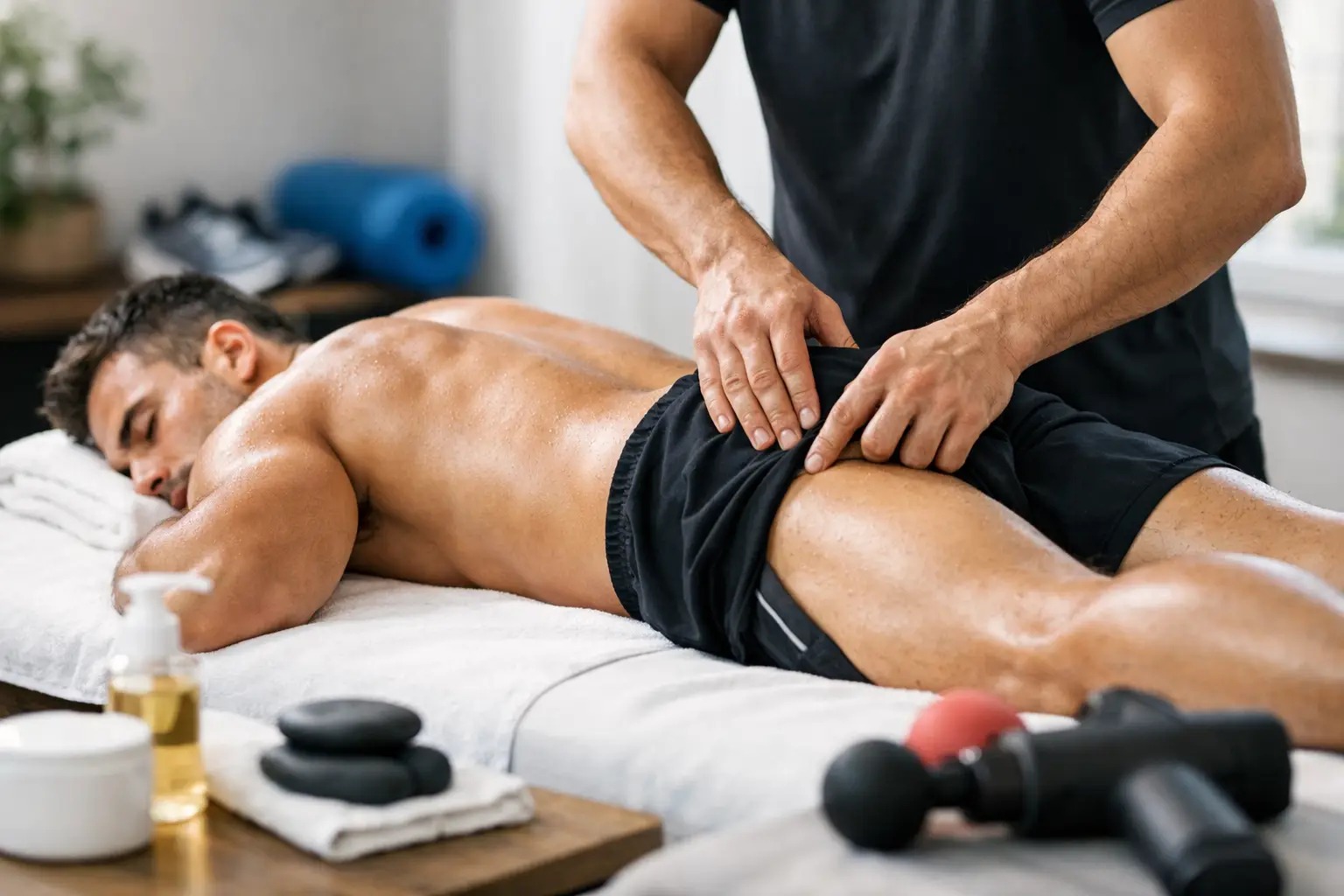
A hard training block can leave you feeling strong in the gym and stiff everywhere else. If your calves stay tight for days after a run, your shoulders start guarding after climbing, or your hips never quite loosen after leg day, sports recovery massage techniques can help – but only when they match your body, your training load, and your nervous system tolerance.
What sports recovery massage techniques actually do
Recovery massage is often reduced to a simple promise: less soreness, faster recovery. That is only part of the picture. In practice, the goal is to improve how tissue moves, calm protective muscle guarding, reduce accumulated tension, and help you return to training with better comfort and control.
That does not mean every technique “flushes toxins” or dramatically speeds healing in a way that can be measured after every session. Evidence-based care is more nuanced than that. Massage can support circulation, improve range of motion, reduce pain sensitivity, and shift the nervous system out of a more guarded state. For many active people, that combination matters because recovery is not just about muscle tissue. It is also about how safe, mobile, and coordinated your body feels when you train again.
The best sessions are not generic full-body routines. They are guided by assessment. A runner with overloaded calves and stiff ankles needs something different from a powerlifter with thoracic restriction and lat tension, or an office worker training for triathlon whose neck and jaw tighten under stress. Technique selection should reflect that.
The most useful sports recovery massage techniques
Deep tissue work for dense, overworked areas
Deep tissue techniques are often useful when muscles feel thick, bound up, and resistant to movement. This can be helpful in the quads, glutes, calves, pecs, or upper back after repetitive loading. The key is precision.
More pressure is not always better. If pressure is so intense that you brace, hold your breath, or leave feeling more protective than when you arrived, the treatment may be too aggressive for the moment. Effective deep tissue work should be specific enough to create change without pushing your system into more guarding.
Myofascial release for restricted movement
When tissue feels stuck rather than simply sore, myofascial release can be a strong fit. These slower, sustained techniques can help with areas that do not glide well, especially when movement feels limited or asymmetrical. Athletes often notice this in the hips, lateral thigh, chest, or around the shoulder girdle.
This style of work can feel subtler than traditional deep tissue massage, but subtle does not mean superficial. In the right context, it can improve comfort with movement and make it easier to load tissues more evenly during training.
Trigger point therapy for referred pain patterns
Sometimes the spot that hurts is not the source of the problem. Trigger points can refer pain into nearby or even more distant areas. A tight glute may contribute to posterior hip discomfort. Trigger points in the upper traps or jaw can feed tension headaches. Rotator cuff and shoulder blade muscles can create pain patterns that feel broader than the actual restriction.
Trigger point therapy uses sustained pressure and careful monitoring of your response. It is useful when there is a clear pattern of local tenderness combined with familiar referred discomfort. It should feel tolerable and purposeful, not punishing.
Swedish-style recovery work for downregulation
Not every recovery session should be intense. If you are under high training stress, sleeping poorly, or carrying a lot of general tension, gentler Swedish-style techniques can be exactly the right choice. Broad, rhythmic pressure can reduce baseline guarding and help your body shift out of a fight-or-brace state.
This matters more than many athletes realize. A nervous system that is constantly on alert can amplify muscle tone, pain sensitivity, and the sense that your body never fully recovers. In those cases, calming the system is part of the treatment, not an extra.
Assisted stretching and mobility-focused manual therapy
When used thoughtfully, movement-based techniques can complement hands-on work. This may include passive stretching, contract-relax methods, or guided joint movement to help restore more comfortable range. These techniques are often helpful after direct work has reduced some of the resistance in the surrounding tissue.
The benefit is practical. It is one thing to feel looser on the table. It is another to stand up and actually move better into a squat, stride, overhead position, or rotation pattern.
Why timing matters in sports recovery massage techniques
The same technique can feel helpful one day and excessive the next. Timing changes everything.
A session right before an event usually needs a different tone than one done 48 hours after a hard effort. Pre-event massage is typically shorter, more stimulating, and less invasive. The goal is to prepare tissue and support mobility without creating soreness. Post-event or between-training sessions can be more restorative, with a stronger focus on reducing guarding and addressing the areas that absorbed the most load.
If you are in the middle of a high-volume training week, your tolerance may be lower than usual. If you are dealing with an acute flare-up, aggressive work may irritate the area. And if you have been sedentary all week and suddenly trained hard, your body may respond better to a blended approach rather than maximal pressure on every sore muscle.
This is where clinical reasoning matters. Good treatment is not just about what technique is used. It is about when, where, and how much.
Recovery is not only mechanical
Athletes and active adults often think of tension as a purely physical issue. Sometimes it is. But pain, tightness, and restricted movement are also shaped by stress, poor sleep, overload, and how safe your nervous system feels.
That is one reason a trauma-informed, neurocentric approach can improve outcomes. Consent, pressure adjustments, communication, and pacing are not soft extras. They directly affect how your body receives treatment. If you feel rushed, pinned down, or pushed past your tolerance, muscles often respond by guarding more. If you feel informed, respected, and able to give feedback, treatment tends to land more effectively.
For many clients, especially those balancing demanding work schedules with training, recovery is as much about downregulation as tissue work. A precise session that blends orthopaedic assessment with a calming treatment environment can interrupt the pain-tension-stress cycle that keeps recurring between workouts.
How to know what kind of session you actually need
If your soreness is general, your sleep has been poor, and your whole body feels “on,” a recovery-focused massage with broader pressure and nervous system downregulation may be the best fit. If one region is clearly limiting performance, such as ankle mobility affecting your run or shoulder restriction affecting pressing and reaching, a more targeted clinical session usually makes more sense.
It also depends on whether your goal is maintenance or problem-solving. Maintenance care often works well with regular, moderate-intensity treatment that keeps common hot spots from building up. Problem-solving care tends to require reassessment, more specificity, and a plan that changes as your symptoms and training demands change.
A skilled RMT should explain why certain techniques are being used, what response they expect, and how the session may affect training later that day or the next. That transparency matters. It helps you make better decisions and builds trust in the process.
What good sports recovery massage should feel like
The right session usually feels specific, collaborative, and adaptable. You should not have to choose between results and comfort. Effective treatment can include deep work when needed while still respecting your breathing, tension patterns, and ability to stay relaxed enough to benefit from it.
At Reset Registered Massage Therapy, this often means combining deeper orthopaedic and sports-focused methods with gentler techniques that help the body settle rather than fight the treatment. That blend is especially useful for clients who want measurable relief without the aftermath of being overworked on the table.
If you are active and sore all the time, the answer is not always harder massage. Sometimes it is better assessment, better timing, and techniques that match your actual recovery needs instead of a fixed routine.
The most helpful sports recovery massage techniques are the ones chosen with care – not just for the sport you do, but for the body you are bringing in that day.