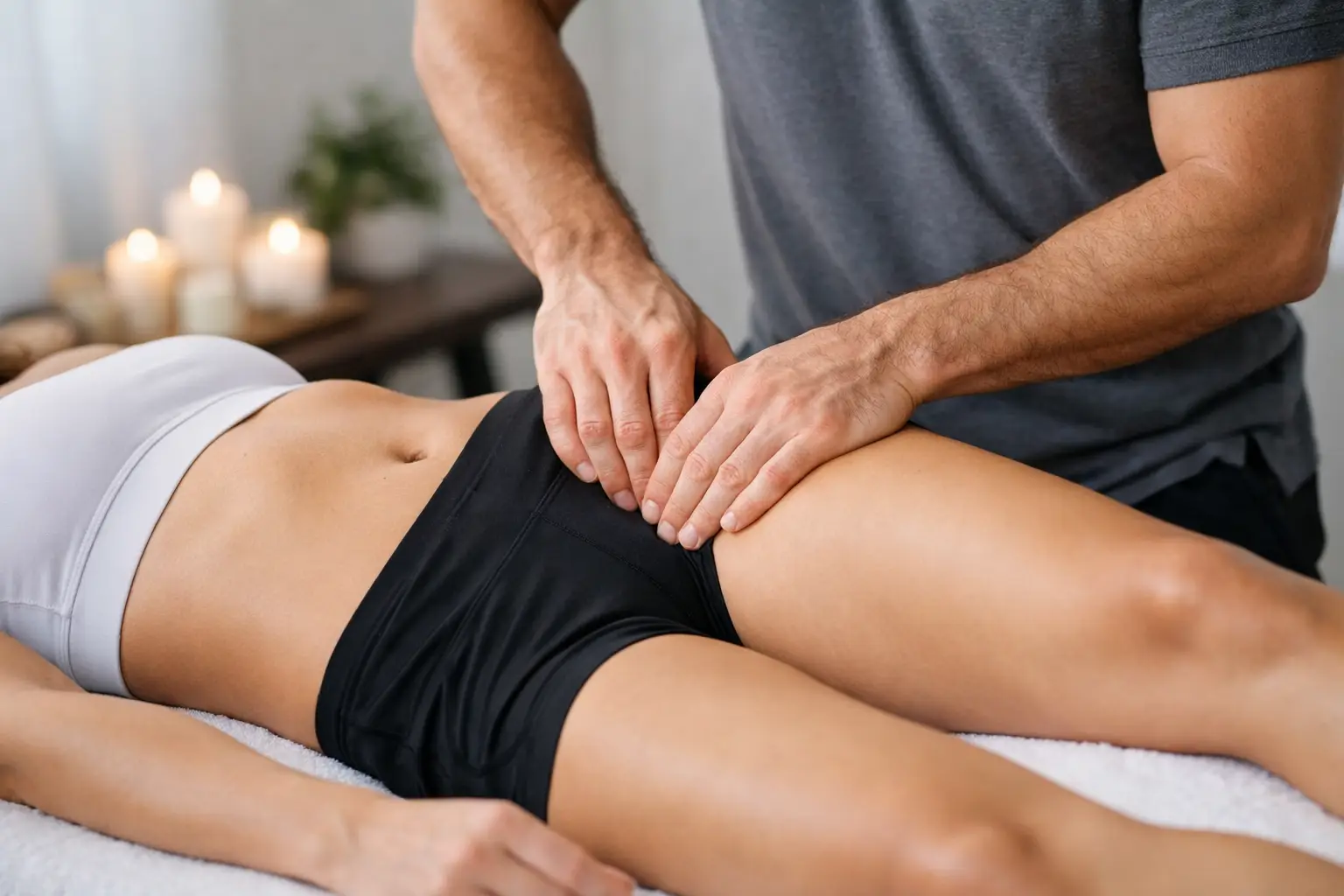
When hip flexor tightness shows up, it rarely feels isolated. It can pull on the low back, limit stride length, make squats feel cramped, and leave you shifting in your chair halfway through the workday. The best massage for hip flexor tightness is usually not one aggressive technique. It is a treatment approach that matches the tissue involved, your sensitivity level, your movement patterns, and how your nervous system is responding to stress and pain.
What actually helps hip flexor tightness?
For most people, the most effective massage is a personalized combination of targeted deep tissue work, myofascial release, and trigger point therapy, balanced with enough downregulation to let the area stop guarding. That balance matters. If treatment is too light, the deeper tissues around the front of the hip may not change much. If it is too aggressive, the body often responds by bracing harder.
The hip flexors are not one simple structure. When people say their hip flexors feel tight, they may be referring to the iliopsoas, rectus femoris, tensor fasciae latae, or even nearby tissues that create similar sensations. Sometimes the front of the hip is genuinely shortened from load and positioning. Sometimes it feels tight because the glutes are underperforming, the lumbar spine is stiff, or the nervous system is holding a protective pattern.
That is why a standardized routine tends to miss the mark. A good treatment starts with assessment, not assumptions.
Best massage for hip flexor tightness: which type works best?
Deep tissue massage
Deep tissue can be very effective for stubborn hip flexor restriction, especially in active people, commuters, and anyone spending long hours seated. The goal is not to force the muscle to release through pain. It is to apply slow, precise pressure to deeper layers that are contributing to tension, reduced range, or discomfort with movement.
This works best when the tissue is actually tolerant of that pressure. If the area is highly reactive, inflamed, or you have pain that feels sharp or pinchy at the front of the hip, more pressure is not automatically better. In those cases, careful work around the surrounding structures may be more productive than directly driving into the front of the hip.
Myofascial release
Myofascial release is often one of the most useful options because it addresses the connective tissue restrictions that can make the whole front and side of the hip feel bound up. This style is slower and more sustained than what many people expect from massage. It can feel subtle at first, but it often creates a clearer sense of space and ease in the joint.
For clients who do not respond well to heavy pressure, myofascial techniques can be a better starting point. They also pair well with movement-based reassessment because changes often show up in gait, hip extension, and ease of standing upright.
Trigger point therapy
If your tightness feels very specific, like one dense spot that refers discomfort into the groin, front thigh, or low back, trigger point therapy can help. This approach targets localized areas of increased tone and irritability within the muscle.
The trade-off is that trigger point work can be intense, particularly in the hip region. In a well-run session, pressure is adjusted to your tolerance and the therapist watches for guarding. Productive treatment does not require gritting your teeth through it.
Relaxation-focused massage
This is the type people sometimes underestimate. If your hip flexors tighten most when stress is high, sleep is poor, or your whole body stays in a low-grade braced state, a relaxation-forward treatment can be clinically useful. It helps shift the nervous system away from constant protection and may make deeper work more effective later.
For some people, especially those with persistent pain or a trauma history, safety and regulation are not extras. They are part of the treatment.
Why direct hip flexor work is only part of the answer
The front of the hip does not operate alone. Effective treatment often includes the quads, adductors, glutes, lateral hip, abdominal wall, and sometimes the low back. If one area is overworking because another area is not doing its job, massaging only the symptom site gives partial relief at best.
A clinically informed session usually checks how the hip behaves in context. Are you lacking hip extension when you walk? Do you hinge through the lumbar spine instead of the hip joint? Is the psoas working overtime because the glutes are not contributing well? These details change treatment choices.
This is also why some clients are surprised when a session for hip flexor tightness includes work at the side or back of the hip. That is often exactly what makes the front of the hip stop feeling constantly loaded.
How the best massage for hip flexor tightness should feel
A good session should feel specific, collaborative, and tolerable. You may notice familiar tenderness, but you should still be able to breathe, stay present, and let the tissue respond. If your body is clenching against the pressure, that is useful information. It usually means the approach needs adjusting.
After treatment, the best-case outcome is not just soreness in the area that was worked. It is easier standing, walking, or extending the hip, with less pulling through the front of the pelvis. Sometimes relief is immediate. Sometimes the first change is simply that the area feels less defended, which then opens the door for better movement.
Mild post-treatment soreness can happen, especially after deeper orthopaedic or sports-focused work. What you do not want is a flare that lasts for days or leaves you more guarded than before.
When massage works well, and when it is not enough
Massage is often very helpful for muscular and fascial tightness, training-related overload, postural strain, and protective holding patterns. It can reduce pain, improve movement, and help you tolerate activity better.
It is less likely to solve the problem on its own if the issue is being driven by hip joint irritation, labral pathology, a lumbar referral pattern, or significant strength and loading deficits. In those cases, massage can still be valuable, but it works best as part of a broader plan.
That plan may include changes to training volume, strength work, mobility drills, walking mechanics, or workstation setup. If your hip flexors tighten up again the same day, that does not mean massage failed. It often means the body is returning to the same demands that created the pattern in the first place.
What to look for in a massage therapist
If you are seeking the best massage for hip flexor tightness, look for a practitioner who does more than apply pressure to a sore spot. Assessment matters. So does communication. The therapist should be able to explain what they think is happening, adjust intensity based on your response, and treat the surrounding structures that influence the hip.
This is especially important in the front hip and groin region, where treatment should be consent-based, professional, and clearly within your comfort level. A trauma-informed, inclusive approach is not separate from clinical quality. It is part of safe and effective care.
A skilled therapist will also avoid the common trap of equating pain with progress. Precision matters more than force.
Should you choose deep tissue or a gentler approach?
It depends on the presentation. If you are athletic, generally tolerant to pressure, and dealing with dense, chronic tissue restriction, deeper work may help more quickly. If your symptoms are easily aggravated, your stress load is high, or the area feels protective rather than simply stiff, a gentler approach may get better results.
Often the best treatment combines both. In practice, that might mean downregulating the nervous system first, then using targeted myofascial or trigger point work where the tissue is ready. At Reset Registered Massage Therapy, that blended approach is often what helps clients get relief without creating an unnecessary flare.
How to make the effects last longer
Massage has the best carryover when it is followed by simple, relevant changes. That might mean getting up more often during the workday, modifying a training block, adding glute-focused strength work, or using gentle hip extension movements after treatment while the body is more receptive.
More is not always better here either. If you aggressively stretch a freshly treated hip that is already sensitive, you may provoke more guarding. Usually, the smarter move is low-threat movement and reassessment over the next day or two.
If your hip flexors have felt tight for months, expect progress rather than a miracle. Good treatment often works in layers. First the area calms down. Then movement improves. Then your body stops returning to the same pattern as quickly.
The most helpful question is not which massage technique sounds strongest. It is which approach gives your body enough precision, enough safety, and enough change that the front of your hip no longer has to do all the work.