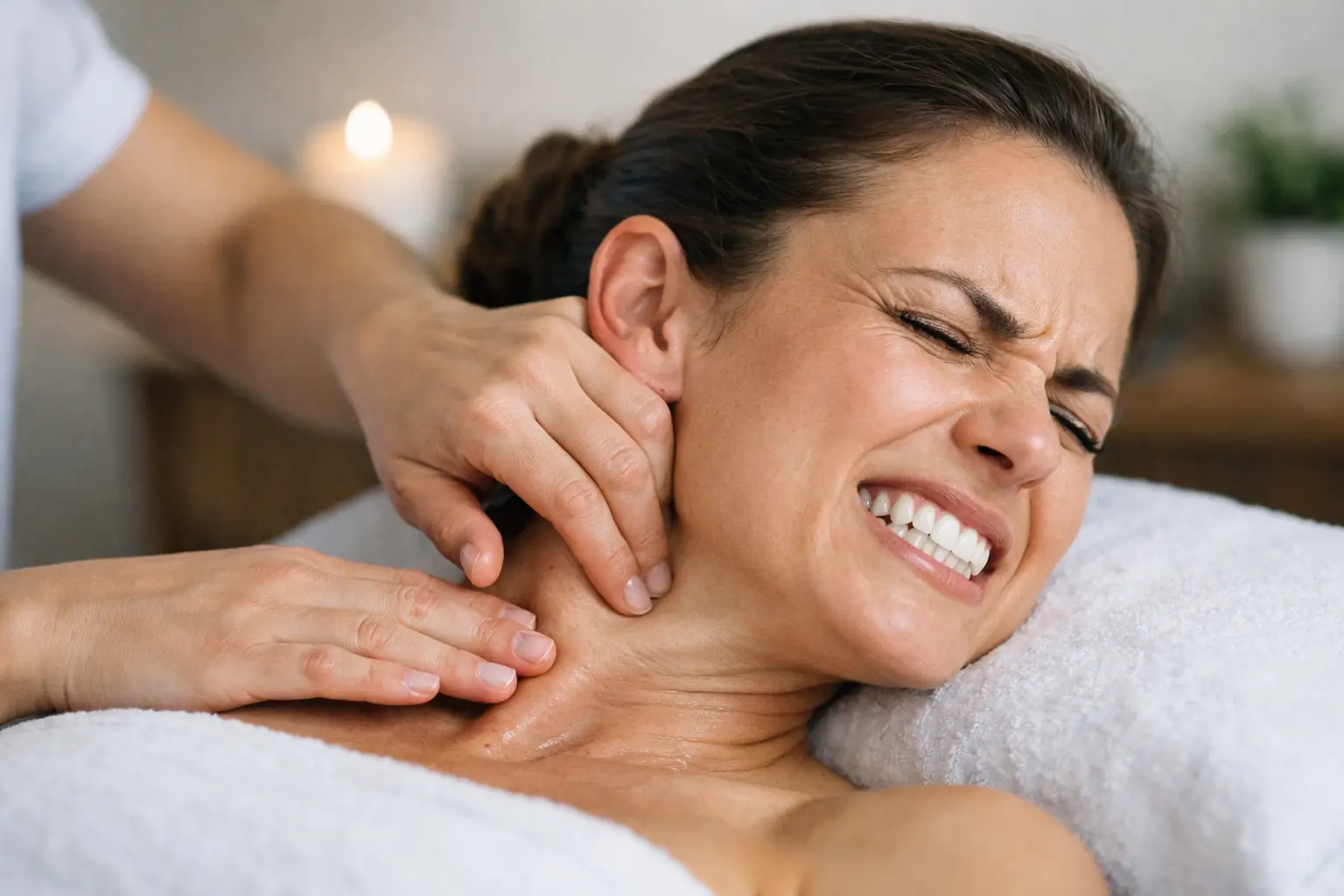
If you wake up with a sore jaw, tight temples, or a headache that seems to start behind your eyes, chronic clenching may already be shaping how your whole body feels. A lot of people ask, can massage help chronic clenching? In many cases, yes – but the useful answer is more specific than a simple yes or no.
Clenching is rarely just a jaw problem. It often shows up as a pattern involving the masseter, temporalis, neck, shoulders, upper chest, and nervous system. For some people it is mostly stress-related. For others it is tied to sleep, bite mechanics, airway issues, TMJ irritation, postural strain, or training load. Massage therapy can be very effective when treatment is based on assessment and adapted to the reason you are clenching, not just the place that hurts.
Can massage help chronic clenching, or just the symptoms?
Massage can help both, but not always in the same way. The most immediate effect is often symptom relief. When the jaw muscles, temples, and surrounding neck tissues are overloaded, skilled manual therapy can reduce muscle guarding, ease trigger points, improve local circulation, and make opening or closing the mouth feel less effortful.
That said, chronic clenching usually has more than one driver. If your nervous system is stuck in a high-alert state, your body may return to the same gripping pattern after treatment. If your teeth are under heavy nighttime grinding forces, massage will not replace a dental evaluation. If jaw pain is being reinforced by poor sleep, airway restriction, or significant TMJ disc irritation, hands-on care may be one part of the solution rather than the whole plan.
This is where evidence-based massage therapy matters. Treatment should address the overloaded tissues while also helping your system shift out of constant threat and bracing. Relief is often better and lasts longer when those two goals happen together.
Why clenching spreads beyond the jaw
People are often surprised that jaw tension can make the neck, shoulders, and even upper back feel worse. The reason is simple: the body does not organize tension in isolated compartments. When you clench, the muscles around the jaw and skull often recruit nearby areas for stability. The sternocleidomastoid, scalenes, upper trapezius, suboccipitals, and chest muscles may all start contributing to a pattern that was initially centered in the face.
This is one reason headaches are so common with clenching. Tight temporalis muscles can create pain at the temples. Overworked suboccipitals can contribute to tension headaches. A guarded neck can change head position and jaw mechanics, making the problem feel bigger by the end of the day.
Stress adds another layer. Many clients are not aware they are clenching until they notice cracked concentration, shallow breathing, or a feeling that their shoulders are living somewhere near their ears. In that setting, massage is not just working on muscle tissue. It can also help reduce the pain-tension-stress cycle that keeps the pattern active.
What massage can actually do for chronic clenching
A well-structured session starts with assessment. Not every jaw pain presentation should be treated the same way, and not every client wants the same level of pressure or the same amount of direct work around the face. A collaborative approach matters here.
For many people, massage helps by decreasing protective muscle tone in the jaw, neck, and upper shoulders. Techniques such as myofascial release, trigger point therapy, and carefully dosed deep tissue work can calm overloaded areas without making them more reactive. When tissues have been clenched for a long time, less is often more. Aggressive pressure into a sensitized jaw can backfire.
Massage may also improve body awareness. That sounds simple, but it matters. Many people with chronic clenching do not notice how often their teeth are touching, how hard they brace through the tongue and throat, or how much their neck tightens during focused work. Hands-on treatment can make those patterns easier to feel early, before they build into pain.
There is also a nervous-system effect. A trauma-informed, safety-centered session can help your body practice a state that is not organized around constant gripping. Slower breath, reduced guarding, and a clearer sense of physical ease can make it easier to stop reenacting the same clenching pattern between appointments.
What areas should be treated?
The obvious targets are the jaw muscles, especially the masseter and temporalis. But chronic clenching treatment often works better when it includes the supporting cast. The neck, base of the skull, upper trapezius, chest, and sometimes even the mid-back can all influence how much force ends up concentrated at the jaw.
In some cases, gentle intraoral massage is appropriate. This technique can address deeper jaw muscles that are hard to access externally. It should always be discussed clearly beforehand, done with explicit consent, and never treated as routine. For some clients it is very helpful. For others, external work and surrounding tissue treatment are the better fit.
A therapist may also look at how you breathe and how you hold your head and ribcage. Forward head posture is not the whole story, but if your neck is constantly working to hold you upright, your jaw often joins the effort.
When massage helps most
Massage tends to be especially useful when chronic clenching is tied to stress, office posture, exercise overload, recurring tension headaches, or persistent tightness through the jaw-neck-shoulder chain. It can also help when clenching has become a learned protective response after pain, injury, or a long period of stress.
Clients often notice that they can open their mouth more comfortably, chew with less fatigue, or get through a workday with fewer headaches. Some sleep more comfortably because the surrounding tension is lower before bed. Others find they are simply catching themselves earlier when they start to brace.
At a clinic like Reset Registered Massage Therapy, this kind of work is usually most effective when the treatment is personalized instead of performed as a standard relaxation sequence. The jaw may be the complaint, but the plan still needs to match your tolerance, triggers, and overall pattern.
When massage is not enough on its own
This is the part that matters if you want honest guidance. Massage can be helpful without being complete care.
If you have locking, clicking with pain, major limitation in opening, facial numbness, tooth damage, frequent morning grinding, or symptoms that suggest dental or joint involvement, you may need assessment from a dentist, TMJ-informed provider, or another medical professional. If sleep-disordered breathing or airway issues are driving nighttime clenching, that piece deserves attention too.
Massage also will not change a poorly fitting night guard, fix a dental bite issue by itself, or resolve pain that is being maintained by a larger neurologic or inflammatory condition. It can still reduce the muscular load around the problem and improve comfort, but expectations should be realistic.
How to make results last longer
The best massage sessions for chronic clenching usually include a simple plan outside the treatment room. Not a long list of chores – just a few targeted changes you can actually follow.
That may mean noticing whether your teeth are touching during the day, keeping the tongue resting gently on the roof of the mouth instead of pressing hard, or taking brief jaw and neck downshifts during computer work. It may mean adjusting training load if heavy lifting is making you brace constantly. It may mean looking at sleep habits, stress levels, and whether you wake feeling like you have been working all night.
A good therapist should also help you understand your own aggravating factors. Some clients clench hardest while concentrating. Some do it while driving. Some brace through the jaw during workouts or emotionally difficult conversations. The more specific the pattern, the more useful treatment becomes.
So, can massage help chronic clenching?
Yes – especially when clenching is contributing to muscle overload, headaches, neck tension, and a stressed, guarded system. Massage can reduce pain, improve jaw comfort, and help interrupt the cycle that keeps you bracing. But the best outcomes come from assessment-led care, appropriate pressure, and a plan that respects both the mechanics and the nervous system side of the problem.
If your jaw has been carrying more than its share for a while, relief does not have to come from forcing it to relax. Often the real shift starts when your body feels safe enough to stop gripping in the first place.