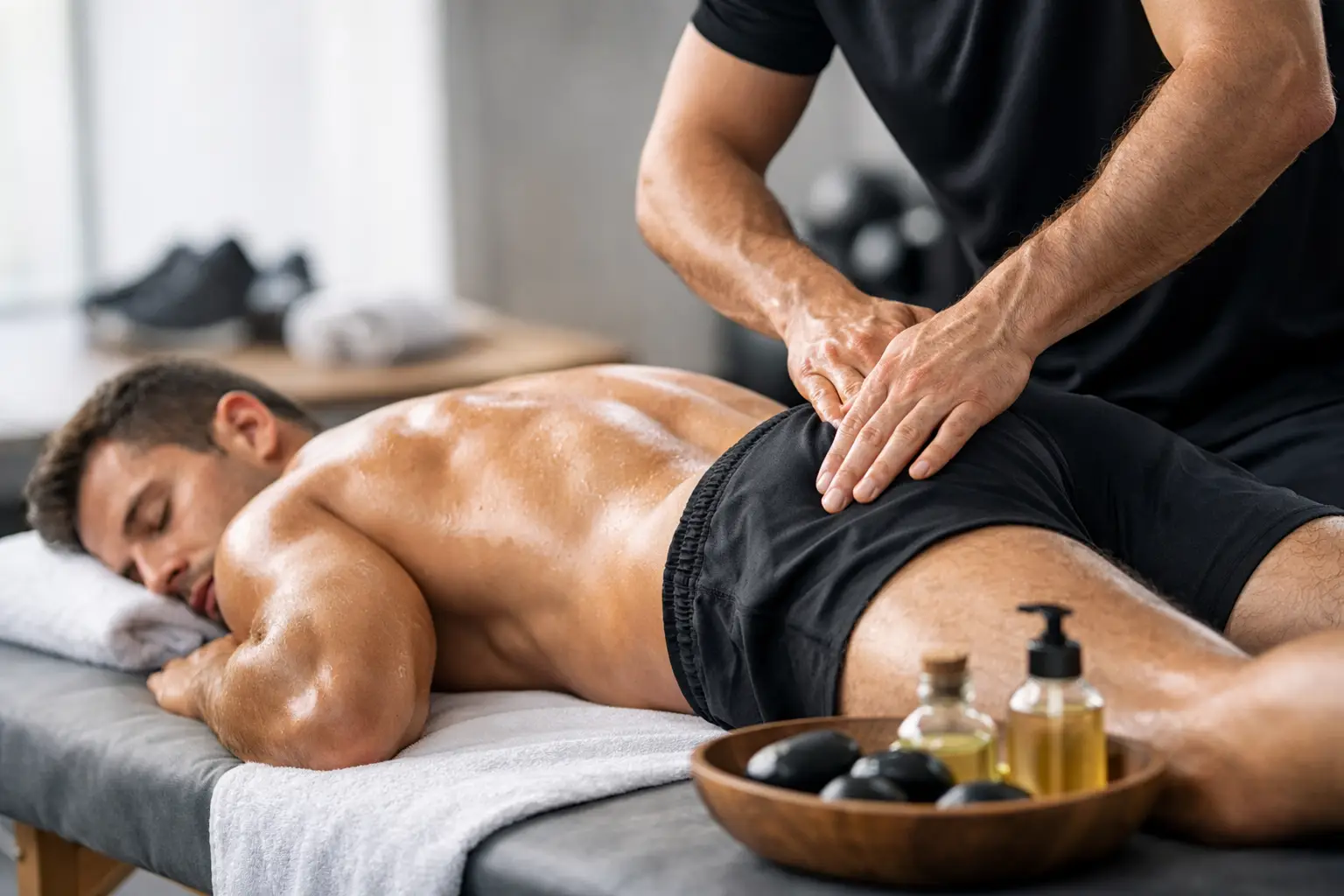
You finished the workout, but your body is still carrying it. Maybe it is the usual post-leg-day stiffness, or maybe your shoulders, calves, or low back are starting to feel less like training fatigue and more like a pattern. When clients ask about the best massage for training recovery, the honest answer is not one technique. It is the right treatment, at the right intensity, for the right stage of recovery.
That matters because recovery is not just about loosening tissue. It is about restoring movement quality, calming protective muscle guarding, supporting circulation, and helping your nervous system shift out of constant go mode. If the treatment is too aggressive, too generic, or poorly timed, it can leave you feeling more depleted instead of more prepared.
What is the best massage for training recovery?
For most active people, the best massage for training recovery is a personalized sports-oriented treatment that combines focused clinical work with enough relaxation to let the body stop bracing. That often means a blend of deep tissue, myofascial release, trigger point therapy, and lighter flushing techniques rather than one fixed style.
A lot of people assume deeper is always better. In practice, that depends on what your body is dealing with. Heavy pressure can feel satisfying in a chronically tight area, but right after a hard training block or race, your system may respond better to moderate pressure and slower pacing. Recovery improves when treatment matches tissue tolerance, current soreness, and overall stress load.
This is where assessment matters. Tightness in the hamstrings is not always a hamstring problem. Limited hip rotation, ankle restriction, core fatigue, or protective tension from an irritated low back can all show up as the same complaint. A more clinical approach looks at the movement pattern, not just the sore spot.
Why massage helps after hard training
Training creates useful stress. Recovery is when your body adapts to that stress. Massage does not replace sleep, nutrition, hydration, or smart programming, but it can support the process in a few meaningful ways.
The first is mechanical. Hands-on treatment can help reduce the feeling of stiffness, improve short-term range of motion, and decrease sensitivity in overloaded tissues. The second is neurological. Many athletes and active professionals are not only physically tired, they are running hot from work stress, commuting, screens, and insufficient downtime. When the nervous system stays activated, muscles often stay guarded. Good treatment helps break that pain-tension-stress cycle.
That is one reason the most effective recovery massage often does not feel like a fight. Precision matters more than force. A therapist may use targeted pressure in one area, then shift into slower, gentler work so your system actually accepts the change.
The main massage styles used for training recovery
Sports massage is usually the closest fit for active recovery, but even that label can be misleading. A strong session before a competition, a flushing session the day after a race, and a focused treatment for recurring hip tightness are all technically sports massage. They should not feel the same.
Deep tissue massage can be useful when a specific area is persistently restricted and tolerates more direct work well. It is often helpful for dense calves, overworked glutes, or upper back tension from lifting. But deep tissue is a tool, not a goal. If pressure makes you brace, hold your breath, or feel wrecked for two days, it was probably too much for that moment.
Myofascial release works well when movement feels sticky, compressed, or limited rather than sharply painful. It tends to be slower and more sustained, and many clients find it useful for shoulders, hips, and ribcage-related restrictions that affect training mechanics.
Trigger point therapy can be effective when pain refers into another area, such as a glute point mimicking hamstring tightness or neck and jaw tension feeding headaches. It is often most helpful when used selectively rather than throughout an entire session.
Swedish-style massage is sometimes underestimated by active clients who think it is only for relaxation. In reality, lighter circulation-focused work can be exactly what a highly fatigued system needs, especially after intense exertion, poor sleep, or emotionally stressful weeks. If your body is already overloaded, more input is not always better input.
Choosing the best massage for training recovery based on timing
Timing changes the treatment plan.
If you are dealing with general soreness 24 to 72 hours after training, a moderate recovery-focused session often works well. The goal is to reduce that heavy, stiff feeling without adding more irritation. Broad, rhythmical techniques and a few focused areas usually beat an all-out deep tissue approach.
If you are in the middle of a heavy training block, maintenance treatment should support performance, not leave you flattened. That may mean shorter, more targeted sessions with clear priorities such as calves and feet for runners, hip flexors and glutes for cyclists, or shoulders and lats for swimmers and lifters.
If you have an event coming up, the best massage is usually lighter and more strategic. You want to feel mobile, fresh, and coordinated, not sore from treatment. Pre-event work tends to be shorter, less intense, and more stimulating than restorative.
If you are recovering from a competition or unusually hard effort, your body may be more sensitive than usual. This is often when clients expect deep work and actually benefit from gentler care. The goal is to support recovery, not prove how much pressure you can handle.
When deeper treatment is useful – and when it is not
There are absolutely times when deeper orthopaedic or sports-focused work is the right call. Chronic bandedness through the quads, restricted pecs affecting shoulder mechanics, or longstanding glute tension that is limiting hip extension may respond well to more specific pressure. But that only works when the tissue is ready for it and the treatment is dosed well.
Deeper is less helpful when soreness is widespread, sleep is poor, stress is high, or your body already feels inflamed and reactive. It is also not ideal when you are chasing relief from a problem that actually needs more than massage, such as significant load mismanagement, technique issues, or a developing injury.
A good therapist should be willing to adjust pressure in real time, explain why they are choosing certain techniques, and work with your feedback rather than pushing through it. That is not a luxury. It is part of safe, evidence-based care.
Signs your recovery massage should be more clinical
Sometimes training recovery stops being simple soreness and starts affecting function. If you notice recurring pain in the same area, reduced range of motion, changes in form, or discomfort that keeps building instead of clearing, a standard relaxation session may not be enough.
This is where assessment becomes more valuable. A clinically grounded session can identify whether your issue is likely coming from overload, compensation, joint restriction, or protective guarding. That changes treatment. A shoulder problem might need upper back, ribcage, and neck work. Tight hip flexors might not improve until glutes, adductors, and low back mechanics are addressed too.
At Reset Registered Massage Therapy, this is often where a blended approach serves clients best. Orthopaedic and sports deep tissue techniques can target the performance-limiting issue, while slower nervous-system downregulation helps your body stop defending the area.
What to expect from a good recovery session
The best recovery massage should feel purposeful, not generic. That starts with a brief check-in about your training load, current symptoms, event timing, and how your body responded to previous treatment. If a therapist skips that step and gives everyone the same routine, it is harder to get meaningful results.
During the session, treatment should adapt to your tolerance. Some areas may need precise work. Others respond better to broad pressure, movement-based techniques, or simply enough time for the tissue to soften without force. You should feel worked on, not worked over.
Afterward, the goal is usually one of three things: easier movement, less soreness, or a noticeable drop in tension. Sometimes all three happen. Occasionally, an area can feel temporarily tender, especially after focused work, but you should not feel blindsided by the response. Clear communication before and after treatment matters.
The real answer: the best massage is personalized
If you are looking for one winner between sports massage, deep tissue, Swedish, or myofascial release, that is the wrong frame. The best massage for training recovery depends on your sport, your volume, your injury history, your stress level, and where you are in the training cycle.
For one person, the right session is focused calf and foot work before a marathon taper. For another, it is full-body downregulating treatment after weeks of overreaching and poor sleep. For someone else, it is careful shoulder and thoracic treatment that improves lifting mechanics without aggravating an already sensitive neck.
The common thread is personalization. Good recovery work is not about chasing pain or checking a style off a menu. It is about using the right clinical tools, at the right dose, in a way your body can actually use.
If your training matters to you, your recovery care should be just as intentional. The best session is the one that helps you return to movement feeling clearer, steadier, and more ready for the work ahead.