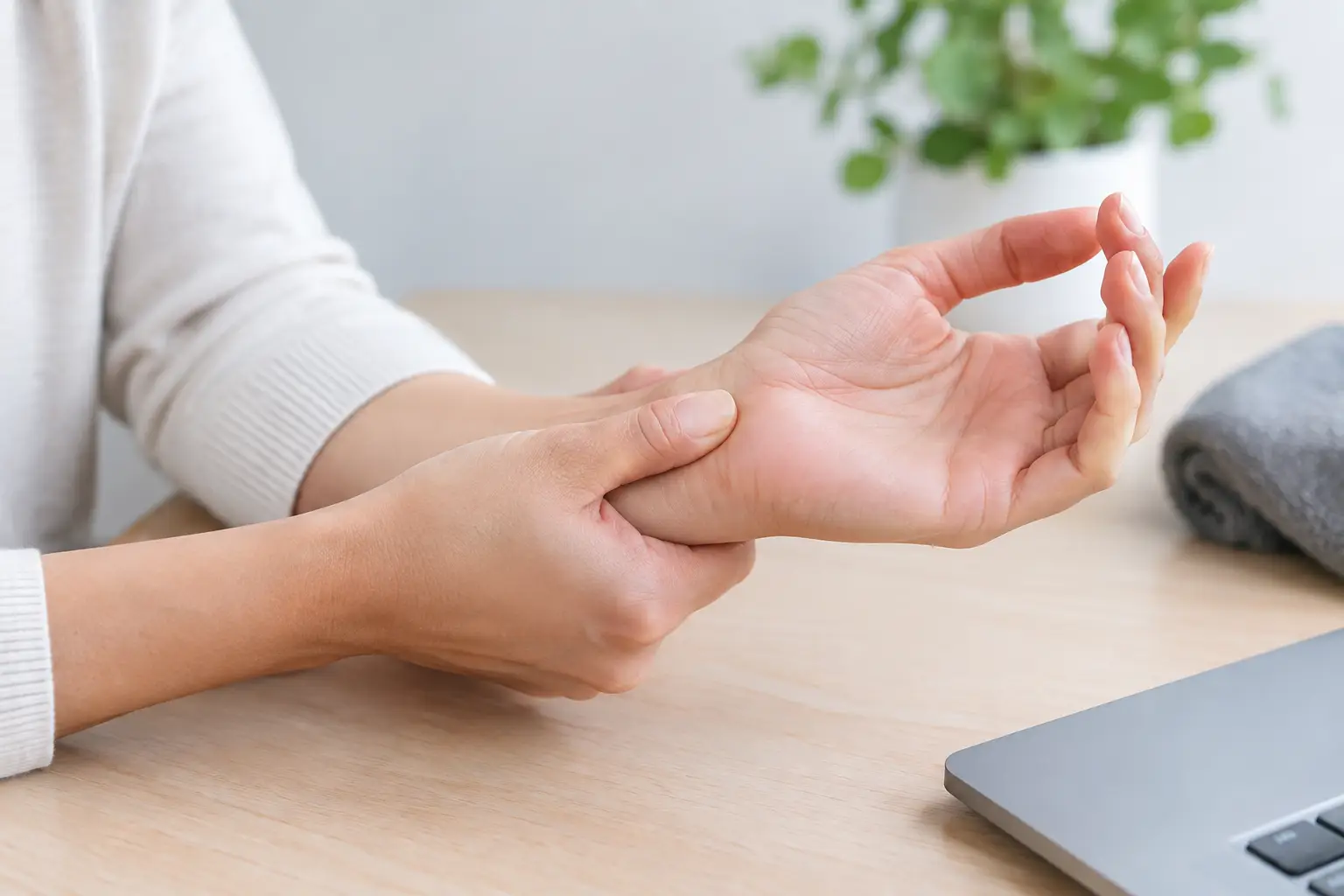
Tingling in the thumb, index finger, middle finger, or part of the ring finger can make a keyboard, steering wheel, or coffee mug feel unexpectedly demanding. Carpal tunnel massage can be useful when surrounding muscle tension is contributing to discomfort, but it is not a shortcut for every case of carpal tunnel syndrome. The best approach starts by separating irritated soft tissue from signs that the median nerve needs medical assessment.
At Reset Registered Massage Therapy, treatment is never built around a generic routine or the idea that more pressure is always better. A careful assessment, clear communication, and respect for your nervous system help determine whether massage is appropriate, where to focus, and when a referral is the safer next step.
What carpal tunnel syndrome actually involves
Carpal tunnel syndrome occurs when the median nerve is compressed or irritated as it travels through a narrow passage at the wrist called the carpal tunnel. The tunnel is formed by wrist bones and a firm ligament. Swelling of nearby tissues, repetitive strain, sustained wrist positions, certain health conditions, pregnancy, and individual anatomy can all affect the space around the nerve.
Symptoms often include numbness, tingling, burning, or pain in the thumb, index, middle, and ring fingers. Some people wake at night with symptoms or notice that shaking their hand provides short-lived relief. As symptoms progress, grip can weaken, buttons become harder to manage, and small objects may be dropped.
Not every sore wrist or tingling hand is carpal tunnel syndrome. Neck irritation, shoulder mechanics, forearm overuse, tendon conditions, and other nerve-related concerns can create overlapping symptoms. That is why a clinical massage assessment should consider your symptom pattern, work demands, training load, sleep, posture, and what aggravates or settles the problem.
Where carpal tunnel massage may help
Massage does not widen the carpal tunnel or cure nerve compression. It can, however, support comfort and movement by addressing the tissues that may be adding unnecessary load around the wrist, forearm, shoulder, and neck.
For a person who spends long hours mousing, typing, gripping tools, climbing, cycling, or lifting, the forearm flexors and extensors can become persistently guarded. That guarding may change how the wrist moves and how much force is required for everyday tasks. Targeted manual therapy may reduce muscular sensitivity, improve short-term mobility, and make it easier to tolerate an ergonomic change or a graded return to activity.
A session may include measured work through the forearm, myofascial release for restricted or sensitive areas, and trigger point therapy where it is clinically appropriate and well tolerated. Treatment may also include the upper arm, shoulder girdle, chest, and neck when assessment suggests those areas are influencing symptoms. The goal is not to chase pain. It is to reduce avoidable tension while keeping the nervous system calm enough to respond well.
For some clients, the most meaningful result is not a dramatic feeling during the appointment. It is being able to work through the afternoon with less gripping, sleep with fewer flare-ups, or return to training with a clearer sense of what their body can handle.
Why direct pressure at the wrist is not always the answer
The wrist is a small, sensitive area with important nerves, tendons, and blood vessels close together. Aggressive pressure over the carpal tunnel can provoke tingling, pain, or lingering irritability. If a technique produces electric sensations, increased numbness, or a feeling that symptoms are traveling into the hand, it should be modified or stopped.
Effective treatment is often less dramatic than people expect. Work may be broader and gentler, with attention directed to the forearm and proximal arm rather than deep pressure directly over the wrist. Your response during and after treatment matters more than a therapist following a predetermined sequence.
What a personalized massage assessment looks like
Before treatment, an RMT should ask questions that help clarify whether massage is likely to be useful. When do symptoms occur? Are they worse overnight, while driving, or after exercise? Which fingers are affected? Is there weakness, loss of coordination, swelling, or a recent change in workload?
The assessment may include observing wrist and elbow movement, checking tolerance in the forearm and hand, and considering the role of the neck and shoulder. It is not a substitute for a physician’s diagnosis, imaging, or nerve-conduction testing when those are indicated. It is a practical way to choose a treatment plan that matches what your body is showing that day.
A trauma-informed approach also matters here. Hands and wrists can feel especially vulnerable to have treated, and nerve symptoms can make touch unpredictable. You should know what area is being treated, why it is being treated, and how to signal for a change. Pressure, positioning, draping, and treatment pace should be collaborative, not assumed.
Massage works best alongside load changes
If the activity driving symptoms remains unchanged, even excellent hands-on care may only provide temporary relief. Massage can create a window of comfort, but the next step is using that window well.
For desk-based work, small adjustments often matter more than a perfect posture. Consider whether your mouse is too far away, whether your wrists are held in extension while typing, and whether you grip your mouse or pen throughout the day. Short movement breaks, varying tasks, and keeping frequently used tools close can reduce repeated strain.
For active clients, it may mean temporarily modifying the volume or intensity of gripping-based training. Pulling exercises, barbell work, racquet sports, cycling, and climbing do not necessarily need to stop completely. The right adjustment depends on symptom severity, recovery between sessions, and whether numbness or weakness is increasing. A gradual return is generally more useful than pushing through escalating nerve symptoms.
A massage therapist may also recommend simple movement strategies based on your presentation. Nerve glides, tendon glides, or gentle forearm mobility can be helpful for some people, but they are not universally appropriate. If an exercise increases tingling during or after practice, that is useful feedback, not a reason to force more repetitions.
When massage should pause and medical care should lead
Massage is not the right first response when symptoms are severe, changing quickly, or accompanied by significant weakness. Seek medical assessment promptly if you have constant numbness, worsening loss of grip, visible shrinking at the base of the thumb, new hand clumsiness, or symptoms following a significant injury.
It is also wise to speak with a medical professional when symptoms disrupt sleep regularly, fail to improve with practical changes, or create uncertainty about the diagnosis. Conditions affecting the neck, nerves, circulation, or inflammatory system can resemble carpal tunnel syndrome and need different care.
If you have had carpal tunnel surgery, massage may be part of recovery only when cleared by your surgical or rehabilitation team. Timing, scar sensitivity, swelling, and nerve healing all influence what is appropriate. A cautious, coordinated plan protects the result of surgery better than rushing into deep work.
A calmer, more precise way forward
Carpal tunnel symptoms can be frustrating because they interrupt the ordinary things that make a day run smoothly. A thoughtful massage plan can help reduce forearm tension, support comfortable movement, and give you clearer information about what your body is tolerating. But meaningful care stays honest about its limits: nerve symptoms deserve attention, not pressure to simply work through them.
The most helpful next step is often a careful conversation about your symptoms and daily demands. When treatment, activity modification, and medical assessment are used in the right proportions, your hands have a better chance to feel capable again without asking your body to ignore its warning signs.