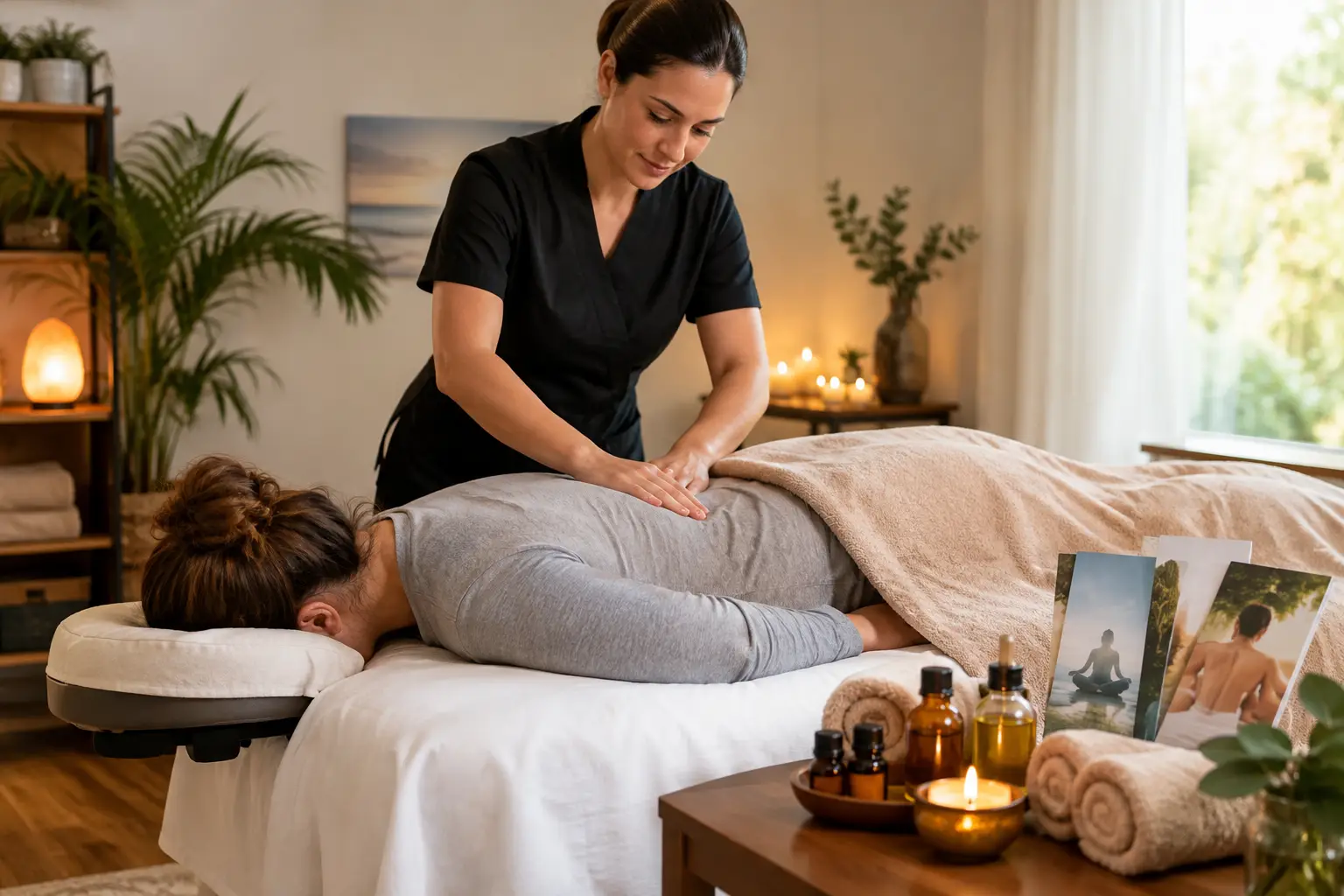
When your neck is braced after a week of screens, commuting, and deadlines, more intensity is not always the answer. This guide to Swedish massage benefits explains why slower, rhythmic touch can be a clinically useful part of care – especially when pain, stress, poor sleep, and muscle guarding start feeding one another.
Swedish massage is often described as relaxing, which is true, but relaxation should not be dismissed as an extra. A body that feels safer and less guarded may be easier to move, assess, and treat. For many people, that makes Swedish-style work a valuable starting point, a recovery tool between demanding training sessions, or a deliberate counterweight to a high-stress routine.
What Swedish Massage Is Designed to Do
Swedish massage uses generally broad, flowing strokes alongside kneading, gentle friction, and passive movement. Pressure can range from light to moderate, but the defining feature is not a fixed pressure level. It is a steady, predictable pace designed to support comfort and reduce unnecessary muscle guarding.
In a therapeutic setting, Swedish techniques are not a one-size-fits-all sequence. A registered massage therapist may use them across the back, shoulders, hips, legs, hands, or jaw-adjacent muscles depending on your goals, tolerance, health history, and the findings of an assessment. They may also combine this work with more focused manual therapy when appropriate.
That distinction matters. Swedish massage is not “less effective” because it is gentler. It serves a different purpose than deep tissue work. If a sore area is already reactive, forcing deeper pressure can make it clamp down further. The useful dose is the one your body can tolerate and integrate.
Guide to Swedish Massage Benefits for Body and Mind
It can reduce the feeling of everyday muscle tension
Long hours at a desk, repetitive work, travel, and training can leave muscles feeling dense, achy, or constantly switched on. Swedish massage may help reduce that subjective sense of tightness by providing comfortable input to the tissues and nervous system. Many clients notice easier movement afterward, particularly through the neck, shoulders, upper back, hips, and calves.
This does not mean massage permanently “breaks up knots” or realigns the body. Those explanations oversimplify how pain and tension work. A better framework is that massage can temporarily change sensitivity, circulation, muscle tone, and your perception of stiffness. When paired with movement, load management, and appropriate rehabilitation, that relief can create a useful window to move with more confidence.
It supports nervous-system downregulation
Stress is not only a mental experience. It can show up as jaw clenching, shallow breathing, tension headaches, restless sleep, a guarded low back, or shoulders that seem to live near your ears. Swedish massage offers slow, non-threatening sensory input that may help shift the body away from a sustained stress response.
The outcome is not guaranteed, and massage is not a replacement for mental health care or medical treatment. Still, many people experience a quieter internal state during or after a session: slower breathing, a sense of heaviness in the limbs, less urgency, or simply a brief break from being “on.” For clients caught in a pain-tension-stress cycle, that pause can be meaningful.
It may improve sleep quality and recovery routines
A calmer body is often better positioned for rest. Some people sleep more deeply after massage, while others feel pleasantly tired and benefit from an earlier night. The effect varies with the person, timing, pressure, hydration, and how activated their system was before treatment.
For active clients, Swedish-style massage can fit well on a recovery day or after a period of high training load. It is not a substitute for sleep, nutrition, progressive strength work, or medical evaluation after an injury. It can, however, be a restorative part of a broader routine when the goal is to feel less beat up and more ready to return to movement.
It creates a comfortable entry point to massage therapy
Not everyone wants, needs, or tolerates deep pressure. If you are new to massage, living with persistent pain, returning to activity after a flare-up, or feeling anxious about treatment, Swedish massage can offer a lower-intensity introduction. You remain an active part of the session by giving feedback about pressure, positioning, temperature, areas to avoid, and what helps you feel comfortable.
This is particularly relevant in trauma-informed care. Predictability, clear consent, and the ability to pause or change course are not add-ons. They are central to treatment quality. A safe, non-judgmental environment allows the therapist to work with your nervous system rather than against it.
When Swedish Massage May Be a Better Choice Than Deep Tissue
Deep tissue massage can be useful for some presentations, particularly when there is a clear goal, adequate tolerance, and a thoughtful assessment. But “deeper” is not synonymous with “better.” Pressure that feels overwhelming can increase bracing, leave you unnecessarily sore, and make it harder to distinguish productive discomfort from a body that is saying no.
Swedish massage may be the better fit when you are depleted, highly stressed, sore after travel, sensitive to touch, dealing with widespread tension, or preparing for an important event where post-treatment soreness would be unhelpful. It may also be the right starting point after a pain flare, before gradually introducing more focused work.
Often, the most effective session blends approaches. Your therapist might use broad Swedish strokes to settle the system and warm an area, then add targeted myofascial release, trigger point therapy, or orthopedic techniques where they are indicated. The plan should remain responsive throughout the appointment, not locked into a preset menu.
What a Personalized Session Can Look Like
At Reset Registered Massage Therapy, the treatment begins with listening and assessment rather than assuming that a tight shoulder needs the same approach as everyone else’s. A shoulder complaint may relate to training load, desk setup, sleep position, an old injury, jaw tension, or a nervous system that has had little opportunity to settle.
Your therapist can discuss what you want from the session: relief from a tension headache, recovery after a long run, help with hip discomfort, or space to decompress after an intense work stretch. They can then adapt positioning, pressure, draping, pace, and techniques to match your goals and comfort.
Communication should continue during treatment. Useful feedback is specific but simple: “That pressure is good,” “I feel myself tensing there,” “Can we stay away from that area today?” or “Could you use a slower pace?” You do not need to endure pain to make the appointment worthwhile.
How to Get More From Swedish Massage
Give yourself a few minutes after the session before rushing into a meeting, hard workout, or long commute if your schedule allows. Gentle walking, ordinary hydration, and a quieter evening can help you notice how your body responds. There is no need for aggressive stretching or a detox routine afterward.
Pay attention to patterns over time. Do your headaches arrive after high-pressure work weeks? Does your upper-back tension build after cycling or lifting? Do you sleep better when appointments are scheduled before your busiest stretch? These observations help shape treatment frequency and home strategies more effectively than chasing a generic recommendation.
Massage is most useful when it supports the life you want to live. Sometimes that means a focused clinical plan for a painful shoulder. Other times, it means an hour of steady, respectful care that helps your body remember it does not have to stay braced all the time.