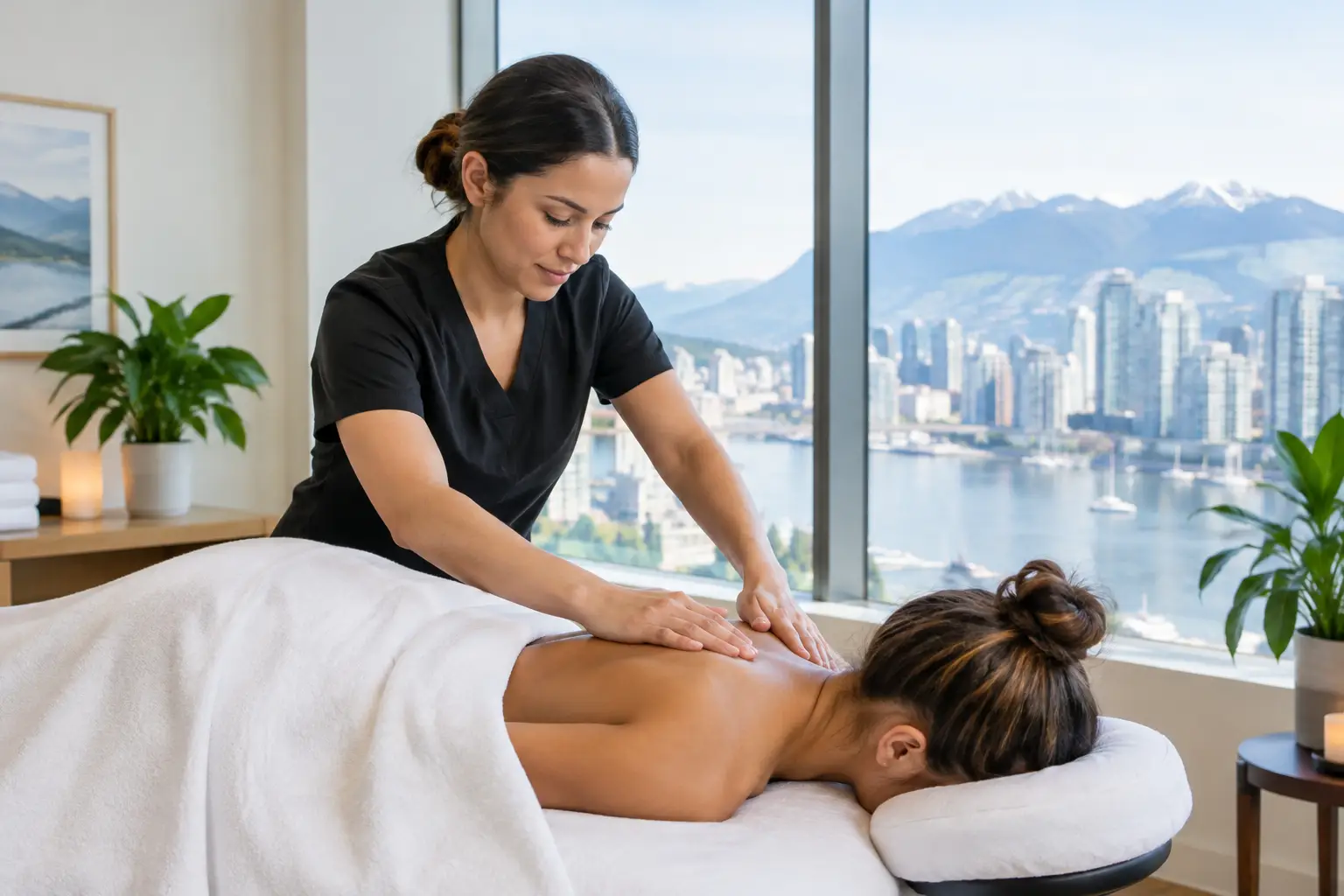
A stiff neck before a presentation, a shoulder that catches during training, or a jaw that will not let go after a demanding week can make even a short commute feel like work. Downtown Vancouver massage therapy should offer more than a quick break from discomfort. It should give you a focused clinical assessment, treatment that respects your tolerance, and a calmer nervous system to carry into the rest of your day.
For people who work, train, and live in the center of the city, convenience matters. So does knowing that the practitioner has a reason for every technique they use. The most useful massage treatment is rarely a standardized routine. It is a collaborative session built around what your body is doing now, what aggravates it, and what you need to return to.
What Good Downtown Vancouver Massage Therapy Looks Like
Registered massage therapy is hands-on care delivered by a regulated health professional. It can support recovery from muscle and joint discomfort, persistent tension, overuse, and stress-related body symptoms. But the quality of a session is not determined by how intense it feels.
A thoughtful RMT appointment starts with listening. Your practitioner should ask about your symptoms, health history, work or training demands, previous injuries, and goals. They should also reassess as treatment progresses. A hip that feels tight may be reacting to training load, sitting, a recent change in movement, or sensitivity elsewhere in the body. The plan needs room to adapt.
At Reset Registered Massage Therapy, that assessment guides a blend of orthopaedic and sports-focused work with gentler Swedish-style relaxation. The goal is not to force tissue to change. It is to use targeted manual therapy, appropriate pressure, and nervous-system safety to help reduce protective tension and improve comfortable movement.
Assessment is part of treatment
Assessment does not need to feel intimidating or overly complicated. It may include discussing symptom patterns, observing how a movement feels, and checking the tissues and joints that may be contributing. If lifting your arm causes pain, for example, the session may consider the shoulder itself as well as the neck, upper back, rib movement, and daily postures that keep the area irritated.
This approach is especially useful when symptoms are recurring. A massage can feel great in the moment, but lasting improvement often depends on identifying the pattern that keeps bringing discomfort back. That might mean pacing training differently, taking short movement breaks, adjusting a workstation, or simply recognizing when stress is showing up physically.
Treatment Should Match Your Body, Not a Routine
Deep tissue work has a place in massage therapy, particularly for active people or clients who enjoy firmer pressure. Still, deep does not automatically mean better. Painful pressure can cause bracing, breath-holding, and next-day soreness that outweigh any benefit.
Effective treatment stays within your tolerance and responds to your feedback. Some areas may benefit from focused work, while others respond better to slower, broader contact that gives the nervous system time to settle. The right pressure is the pressure that is useful for you that day.
Techniques with a clear purpose
Massage therapists may use several modalities in one appointment. Myofascial release can address the connective tissue and movement restrictions that contribute to a feeling of pulling or stiffness. Trigger point therapy may help with sensitive, referred-pain patterns in muscles. Craniosacral therapy uses very gentle contact and may be appropriate when a client is highly stressed, sensitive to pressure, or experiencing tension patterns that do not respond well to forceful work.
None of these techniques should be presented as a cure-all. Bodies are complex, and response varies. What matters is clinical reasoning: why a technique is being used, how it feels, and whether it is helping you move or feel better. A skilled practitioner explains the plan in plain language and changes course when your body asks for something different.
When Stress Is Part of the Pain Pattern
Stress does not make pain imaginary. It can make the body more guarded, disrupt sleep, alter breathing, and increase the sense that everyday movement takes effort. This is one reason a purely mechanical approach can fall short for chronic neck tension, tension headaches, jaw discomfort, or generalized tightness.
A neurocentric, trauma-informed approach recognizes that treatment happens to a whole person, not just a muscle. A quiet room, clear communication, consent before changing techniques, and the ability to pause or adjust are all parts of good care. They help create the conditions in which the body can downshift from protection toward recovery.
That does not mean every session must be light or relaxation-focused. An athlete managing a training-related calf issue may need specific, focused work. A desk-based professional with a headache and poor sleep may benefit from a slower session that prioritizes the neck, jaw, breath, and overall regulation. Often, the best plan combines both: enough targeted work to address the problem area and enough calm to interrupt the pain-tension-stress cycle.
Common Reasons Clients Seek RMT Care
People often book massage therapy for a specific issue, but the treatment can be more useful when the goal is functional. Rather than only asking for tight shoulders to be loosened, consider what you want to do with more comfort: turn your head while cycling, sleep without waking from neck pain, complete a workout, sit through a meeting, or open your mouth without jaw tension.
RMT care may be appropriate for shoulder and hip discomfort, persistent upper-back tension, sports-related muscle soreness, headaches linked to neck and jaw tension, and the accumulated strain of computer work or commuting. It can also be a valuable part of a broader care plan alongside medical assessment, physiotherapy, strength training, or dental care for TMJ concerns.
There are times when massage is not the first step. New severe pain, unexplained swelling, numbness or weakness, fever, a significant injury, or symptoms that are rapidly worsening deserve medical evaluation. A responsible practitioner will screen for concerns and refer when massage is not appropriate.
Choosing a Massage Studio Where You Can Be Honest
The best results depend on honest communication. You should feel comfortable saying that pressure is too much, an area feels vulnerable, a position is uncomfortable, or you would rather avoid a certain technique. These are not interruptions to treatment. They are essential information.
For many clients, the environment matters as much as the modality. A safe, non-judgmental, and inclusive space can reduce the anxiety that makes it harder to relax or speak up. Explicitly welcoming 2SLGBTQIA+ clients and allies is part of providing ethical, client-centered care, not an extra feature.
Before your appointment, think about the symptoms you want to address, when they are most noticeable, and what tends to help or aggravate them. Wear clothing that allows you to move comfortably to and from the studio, and let your therapist know about injuries, health changes, or concerns about draping and consent. If direct billing is available through your plan, bring the information needed to make that process easier, while remembering that coverage varies by insurer.
A well-designed massage therapy session should leave you with more than the temporary feeling of having been worked on. It should help you understand your body a little better, feel safer in it, and make the next ordinary movement – the walk home, the train ride, the next workout, the next full breath – feel more possible.