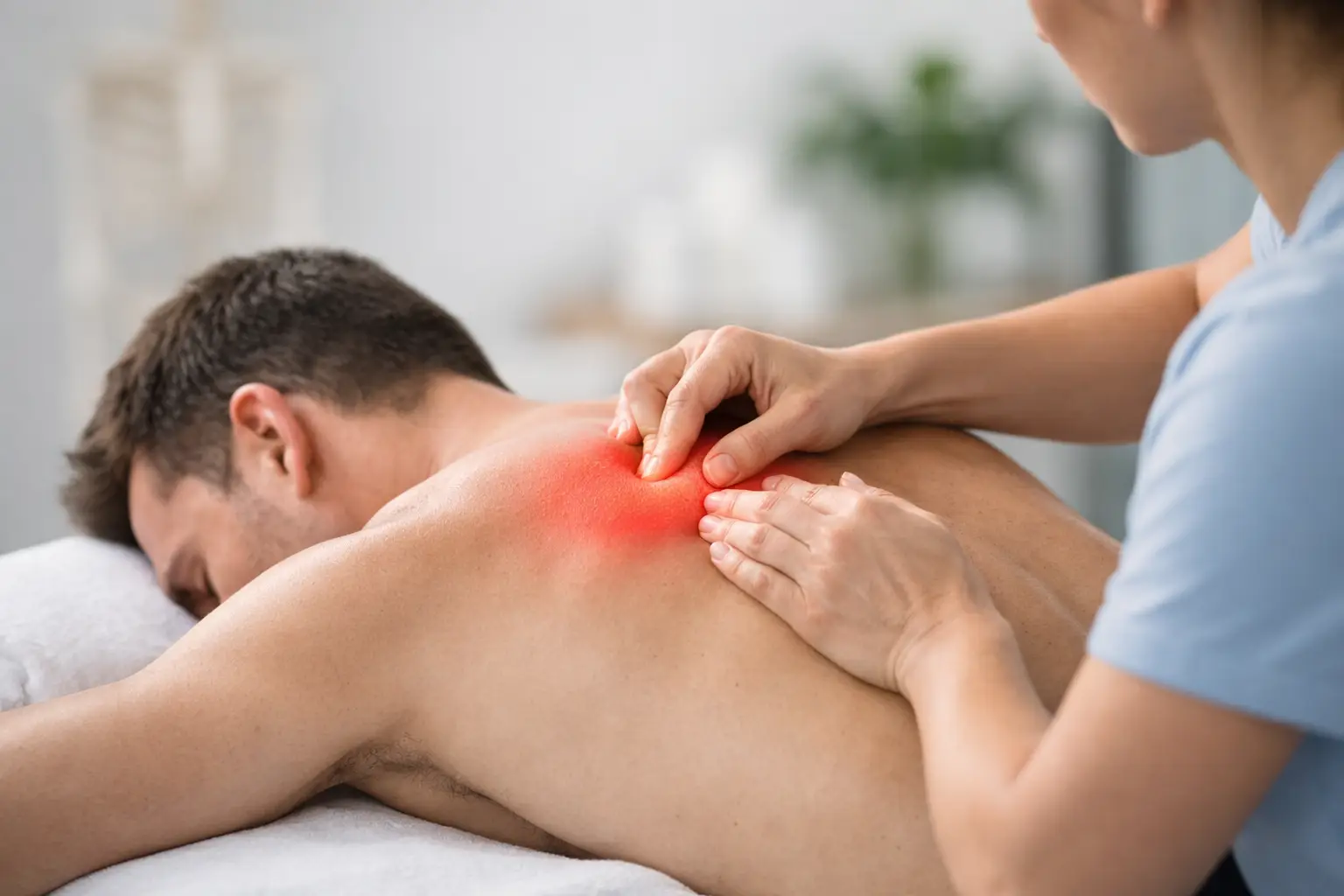
A knot between your shoulder blade and spine can make a full workday feel longer than it is. It may ache while you sit, pinch when you turn your head, or send discomfort toward your neck or arm. Understanding how trigger point therapy works can make targeted massage feel less mysterious and help you decide whether it is a useful part of your care.
Trigger point therapy is a manual therapy approach used to address sensitive, irritable areas within muscle and connective tissue. In registered massage therapy, it is not simply about pressing hard on every tight spot. Effective treatment begins with assessment: where you feel symptoms, what movements reproduce them, how your body responds to pressure, and what may be contributing to the pattern in the first place.
What is a trigger point?
A trigger point is a tender, sensitive area in a muscle that can feel like a taut band, a small nodule, or a broader zone of tension. Some trigger points are painful only when pressed. Others are associated with referred pain, meaning pressure in one location may reproduce discomfort somewhere else.
For example, sensitive tissue in the upper trapezius may contribute to pain that spreads into the side of the neck or temple. Areas around the glutes and hip can sometimes refer discomfort down the leg. These patterns are not a shortcut to diagnosis, and they vary widely from person to person. A skilled assessment matters because shoulder, jaw, hip, or headache symptoms can have many possible sources.
The term “muscle knot” is useful shorthand, but it does not mean a muscle has literally tied itself in a knot. Painful tissue is more complex than that. Muscle tone, local sensitivity, workload, sleep, stress, movement habits, previous injury, and the nervous system’s level of protection can all influence what you feel.
How trigger point therapy works in massage treatment
Trigger point therapy generally involves sustained, tolerable pressure or slower, focused contact on a sensitive area. Your RMT may use a thumb, fingers, knuckles, elbow, or a supported position that lets the tissue soften without forcing it. The goal is to provide a precise input your body can respond to, not to overpower the area.
Pressure may briefly recreate a familiar ache or referral pattern. That information can be clinically helpful, but it should remain within your tolerance. More intensity does not automatically create better results. If the pressure causes sharp pain, guarding, breath-holding, numbness, or a feeling that you need to endure the treatment, it is a sign to adjust.
Several processes may contribute to relief. Focused manual pressure can temporarily change how sensitive an area feels, encourage a muscle to reduce protective holding, and improve your awareness of a region that has been difficult to move comfortably. It may also provide a calming sensory signal to the nervous system, especially when the pace, pressure, positioning, and communication feel safe.
This is why trigger point work is often most useful when combined with broader treatment. Your therapist may first use Swedish-style massage, myofascial techniques, heat from the hands, or slower breathing cues to help the area settle. After targeted work, gentle movement or reassessment can show whether the original painful movement has changed. The session stays responsive to your body rather than following a fixed sequence.
Why a sore spot can feel better after pressure
A common experience is that a tender point feels intense during treatment, then less reactive afterward. This does not necessarily mean adhesions were broken apart or that waste products were flushed from the muscle. Those explanations oversimplify what happens in the body.
A more evidence-based explanation is that manual therapy can modulate pain and muscle tone for a period of time. The nervous system continuously evaluates signals from the body and the environment. Comfortable, well-dosed touch may reduce the perceived threat around movement and make it easier to relax, move, or use the area normally again. The effect may be immediate, gradual, short-lived, or longer lasting depending on the person and the condition.
Trigger point therapy is not meant to be painful
There is a persistent belief that deep tissue work must hurt to be effective. In clinical massage therapy, pain is not the target. Trigger point therapy can feel focused, intense, and distinctly “productive” when it reproduces a familiar sensation, but you should still be able to breathe and communicate comfortably.
A trauma-informed approach treats consent and predictability as part of treatment quality. Your RMT should explain what they are doing, check in before changing pressure or working around more sensitive regions, and respond when you ask for an adjustment. You are always allowed to say no, pause, change position, or choose a different technique.
For some clients, gentler contact is more effective than deep pressure. This can be especially true when pain has been present for a long time, stress levels are high, sleep is poor, or the body is already guarding. For others, such as an athlete managing a familiar training-related muscle overload, a deeper approach may be appropriate when it is carefully paced and followed by movement-based reassessment.
What happens in a personalized session
At Reset Registered Massage Therapy, trigger point work is selected based on your presentation, goals, and tolerance, not added as a standard feature of every appointment. An initial assessment may include questions about your symptoms, training or work demands, health history, and what has helped or aggravated the issue. Your therapist may also observe movement, compare sides, and palpate tissues with your ongoing consent.
If trigger point therapy is appropriate, treatment may begin away from the most painful spot. A stiff neck, for instance, can be influenced by the upper back, chest, shoulder girdle, breathing mechanics, and sustained desk posture. Working only where it hurts can sometimes be too provocative or simply miss the larger pattern.
During treatment, your RMT may hold pressure for several breaths, make small changes in angle, or combine pressure with a gentle movement. They may then reassess the movement that brought you in. This assessment-treatment-reassessment process helps guide decisions in real time. It also keeps the session focused on meaningful changes, such as turning your head more easily, lifting an arm with less discomfort, or feeling less jaw tension at rest.
When trigger point therapy may help
Targeted work can be useful for many common musculoskeletal complaints, including tension-related neck and shoulder discomfort, upper-back tightness, training-related muscle soreness, hip and gluteal tension, some tension headache patterns, and jaw muscle discomfort. It may support recovery when muscle sensitivity is contributing to limited movement or a pain-tension-stress cycle.
It is not a cure-all, and it is not always the best first choice. Persistent radiating pain, progressive weakness, unexplained numbness, severe headache, new dizziness, fever, significant swelling, or pain after major trauma need appropriate medical assessment. Massage therapy can be an important part of care, but it does not replace diagnosis or emergency care.
Trigger point therapy may also be postponed or modified around acute injury, active infection, certain vascular concerns, fragile skin, recent surgery, or medications and health conditions that affect bruising or sensation. Your RMT can help determine what is safe within their scope and when referral or coordination with another health professional is warranted.
How to make results last longer
Massage often creates a window of easier movement. What happens after the session can influence how useful that window becomes. If your therapist recommends a simple movement, a change to your workstation setup, recovery time between hard training sessions, or a more supportive sleep position, the aim is not to give you an overwhelming homework list. It is to reduce the load that may be repeatedly irritating the area.
Hydration is fine if it helps you feel well, but you do not need to “flush toxins” after massage. More useful aftercare is usually practical: take a short walk, move within a comfortable range, avoid suddenly testing maximum effort, and notice how your symptoms respond over the next day or two. Mild tenderness can occur after focused work, particularly if the area was very sensitive, but it should not feel alarming or escalate significantly.
A collaborative approach to stubborn tension
The best trigger point therapy is specific enough to address the problem and gentle enough for your nervous system to stay engaged rather than defensive. That balance looks different for a commuter with jaw clenching, a climber with an overworked forearm, and someone whose shoulders have been braced through a demanding season of life.
If a painful spot has been asking for attention, you do not have to push through it alone. A thoughtful assessment, clear consent, and treatment that respects both your tissue and your nervous system can offer a more comfortable way forward.