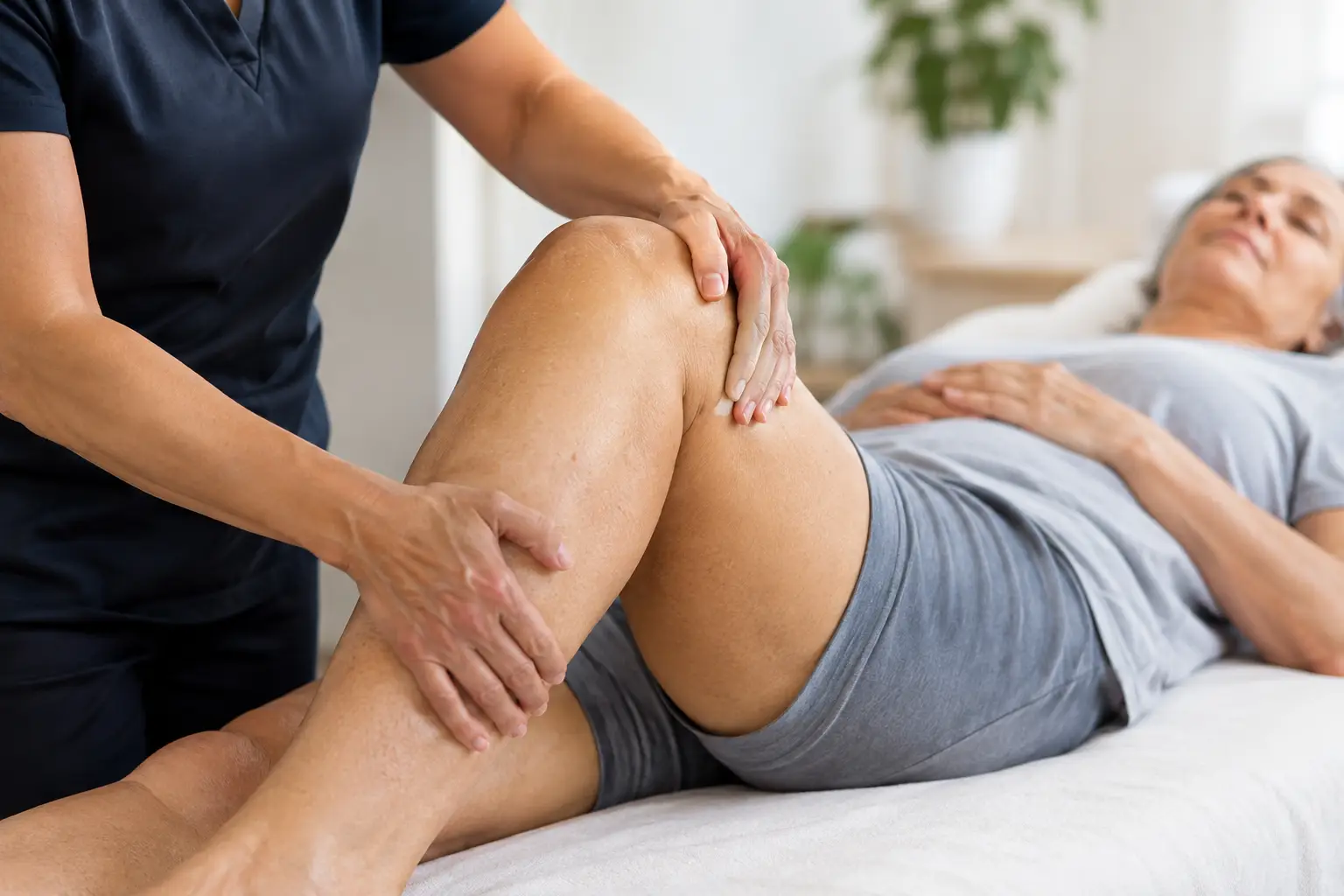
Arthritis can make ordinary decisions feel like calculations: Is this chair too low? Will a walk help or leave the joint angrier? Is massage for arthritis likely to provide relief, or will pressure make things worse? The honest answer is that it depends on the type of arthritis, the state of the joint that day, and how thoughtfully treatment is adapted to your body.
For many people, massage therapy can be a useful part of a broader arthritis care plan. It does not reverse joint changes or replace medical care, medication, movement, or rehabilitation. What it can do is address the muscle guarding, stress, reduced movement confidence, and secondary aches that often build around painful joints. A well-planned session should feel responsive rather than routine.
What massage for arthritis can and cannot do
Arthritis is not one condition. Osteoarthritis involves changes in the joint over time and is common in weight-bearing joints such as the knees and hips, as well as the hands, spine, and shoulders. Inflammatory conditions, including rheumatoid arthritis and psoriatic arthritis, involve immune-system activity and require particular attention to disease activity, medications, and flares.
Massage does not “break up” arthritis, put worn cartilage back, or force an inflamed joint to move better. Claims like those can lead to unnecessary pain and unrealistic expectations. The more meaningful role of massage is often indirect: reducing protective tension in surrounding tissues, supporting circulation and comfort, and helping the nervous system turn down the volume on persistent pain signals.
When pain has been present for a long time, the body may brace automatically. A sore knee can change how the hip, calf, or low back works. A painful hand can lead to tension through the forearm, shoulder, neck, and jaw. This does not mean the pain is imagined. It means the joint is part of a larger system, and treatment can consider more than the single area that hurts.
Research on massage for arthritis suggests it may help some people with short-term pain relief, reduced stiffness, improved mood, and easier movement. Results vary, and the research is stronger for some populations than others. That is why a clinical assessment and your own response to treatment matter more than a promise of a standard outcome.
The right pressure is rarely the deepest pressure
A common misconception is that arthritis-related stiffness needs aggressive work. In reality, painful or sensitized tissue often responds better to measured, tolerable pressure. Deep tissue techniques may be appropriate for a guarded quadriceps, gluteal muscle, forearm, or upper back, but they are only one option. The goal is not to overpower the body. It is to create a useful change without provoking a flare.
An evidence-based massage approach may combine Swedish-style relaxation techniques with focused manual therapy such as myofascial release or trigger point work. Slow, comfortable contact can help reduce the threat response that keeps muscles switched on. More specific work may be used where an assessment suggests a muscle is contributing to restricted movement or compensatory pain.
Pressure should be collaborative throughout the appointment. A sensation of productive tenderness can be acceptable for some clients, but sharp pain, breath-holding, bracing, or a sense that you need to endure treatment are not signs of effective care. The best treatment dose is one that supports function after the session, not one that leaves you depleted for several days.
When massage may be most helpful
Massage therapy can be particularly valuable when arthritis pain is accompanied by muscle tension, sleep disruption, stress, or a feeling that movement has become difficult to trust. For a desk-based professional, that might look like hip and low-back tightness layered on top of knee osteoarthritis. For an active person, it may be calf, glute, or shoulder tension that develops as training is modified around an arthritic joint.
It can also offer a structured space to reconnect with your body without pushing it. Chronic pain can make touch, exercise, and even rest feel unpredictable. A trauma-informed approach respects that history. It includes clear communication, consent before changing areas or techniques, options for positioning and clothing, and the freedom to pause or change course at any time.
At Reset Registered Massage Therapy, sessions are designed around this kind of real-time assessment. Treatment may focus on the tissues around a painful joint, related movement patterns, or the broader pain-tension-stress cycle. There is no requirement to receive full-body massage when a more targeted session would better suit your goals, energy, and tolerance.
When to postpone or modify treatment
There are times when massage should be gentler, limited to areas away from the joint, or postponed entirely. An active inflammatory flare can involve marked warmth, swelling, redness, escalating pain, fatigue, or a significant loss of function. Direct pressure over a hot, acutely inflamed joint is generally not appropriate.
Before booking, speak with a medical professional promptly if you have sudden severe joint pain, fever, unexplained swelling, a suspected infection, a recent fracture or surgery, a blood clot concern, or new numbness or weakness. Massage therapy is not the right first step for those symptoms.
Medication and medical history matter, too. Blood thinners can increase bruising risk, long-term corticosteroid use may affect skin and tissue tolerance, and joint replacements or injections can change what is appropriate. A skilled therapist will ask relevant questions and adjust treatment rather than treating your diagnosis as a fixed protocol.
What a thoughtful arthritis massage appointment looks like
A useful session starts before hands-on work. Your therapist should ask which joints are affected, what a typical day feels like, whether symptoms are stable or flaring, and what you want to do more comfortably. That goal may be climbing stairs, getting through a workday, sleeping with less discomfort, returning to the gym, or simply feeling less guarded.
Assessment continues during treatment. A therapist may check how you tolerate different positions, notice whether your hip or shoulder muscles are working overtime, and adapt techniques based on your feedback. Pillows, bolsters, side-lying positioning, and shorter periods in one position can make a substantial difference when joints are sensitive.
Afterward, the most useful feedback is not only whether you felt relaxed on the table. Notice how you feel that evening and the following day. A temporary mild soreness can occur, particularly if muscles have been very guarded, but a significant increase in joint pain or fatigue is a sign that the next session should be modified. Your response helps determine pressure, treatment areas, and scheduling.
Pairing massage with the care that keeps you moving
Massage tends to work best as a complement to the habits and treatments that support joint health over time. Depending on your diagnosis and goals, that may include guidance from a physician, rheumatologist, physical therapist, or occupational therapist. Strength work, mobility practice, pacing, supportive footwear, medication, and adequate recovery all have a place.
The right balance is individual. Some people benefit from massage during periods of higher stress or reduced activity; others use it periodically alongside a training or rehabilitation plan. More frequent treatment is not automatically better. If a session helps you move, sleep, or participate more comfortably, that is useful information. If it consistently aggravates symptoms, the plan needs to change.
Arthritis asks for flexibility, not resignation. A careful massage session can be one place to feel listened to, supported, and more at ease in your body while you build the routines that help you keep doing what matters to you.