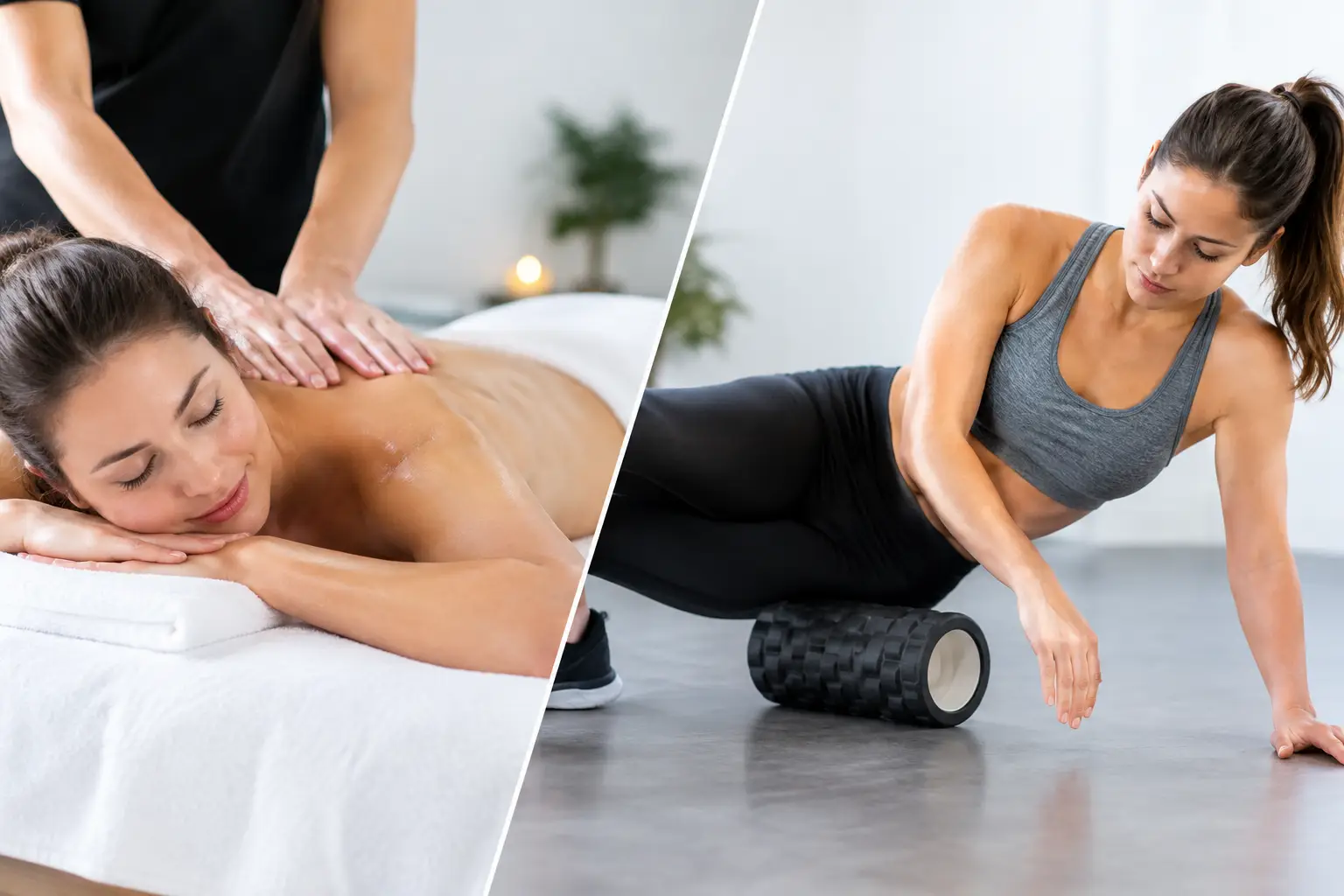
A foam roller can be a useful part of your routine. It can also become the tool you reach for when your neck is stiff after a long workday, your calves are sore after a run, or your hips feel restricted before the gym. But massage versus foam rolling is not a contest with one universal winner. They are different forms of input to the body, with different levels of precision, comfort, and clinical oversight.
For many people, the most useful question is not, “Which one works better?” It is, “What does my body need right now, and what can I tolerate safely?” A short self-release session may be exactly right for general post-training tightness. Persistent shoulder pain, recurring headaches, jaw tension, or pain that changes how you move often calls for a more detailed assessment and a hands-on plan.
Massage versus foam rolling: the practical difference
Foam rolling is a form of self-myofascial work. You use your body weight and a roller to apply pressure to a broad area, often the quads, glutes, calves, upper back, or lats. It is accessible, relatively inexpensive, and easy to repeat between appointments. For some people, it creates a temporary sense of ease, improves comfort with movement, and can help them feel more prepared for activity.
Massage therapy is a clinician-guided treatment that can include myofascial release, trigger point therapy, Swedish-style relaxation techniques, joint-informed soft-tissue work, and nervous-system downregulation. An RMT can assess the pattern behind a complaint, notice compensations you may not feel, and adjust technique, pressure, positioning, and pace as your body responds.
That distinction matters. A roller applies broad, fixed pressure. A skilled therapist can work with changing tissue tone and sensitivity in real time. They can also avoid areas that are irritated, refer pain patterns that need medical attention, and treat the surrounding contributors rather than repeatedly pressing directly on the sore spot.
What both options can realistically help with
Neither massage nor foam rolling literally “breaks up” adhesions or flushes toxins from the muscles. Those explanations are common, but they oversimplify how the body responds to pressure and movement. The benefits are more likely related to a combination of sensory input, temporary changes in pain sensitivity, improved comfort with movement, circulation, relaxation, and the confidence to move again.
Both can be helpful when the goal is short-term range of motion or post-exercise comfort. For example, rolling the calves or quadriceps for a brief period may make a squat or run feel easier. Massage may similarly reduce the feeling of stiffness and support recovery after a demanding week of training or desk work.
The effect is not always permanent, and that does not mean the treatment failed. Bodies are adaptive, and symptoms are influenced by sleep, workload, stress, training volume, past injury, and many other factors. The goal is often to create enough relief and safety that you can return to meaningful movement, work, rest, or rehabilitation with less guarding.
When foam rolling makes sense
Foam rolling works well as a self-management tool when symptoms are familiar, mild, and not worsening. It is especially practical for active people who want a brief warm-up or cooldown, or for professionals who need a simple reset after hours at a desk.
Keep the dose modest. More pressure is not automatically more effective. Rolling slowly over an area for 30 to 90 seconds, then checking how you feel when you stand, squat, reach, or walk is often more useful than aggressively grinding through discomfort. Aim for pressure that feels productive but manageable, not sharp, burning, numb, or breath-holding intense.
A softer roller is often a better starting point than a hard, textured one. The most intense tool is rarely necessary, particularly if you are new to self-release, have a sensitized nervous system, or tend to bruise easily. Pairing a short rolling session with gentle movement, hydration, adequate recovery, and gradual strength training usually makes more sense than relying on the roller alone.
There are also places where direct rolling is not a good idea. Avoid forceful pressure over joints, the front or side of the neck, the low back, bony areas, varicose veins, open skin, acute injuries, and locations with unexplained swelling. If an area produces tingling, numbness, radiating pain, or a significant increase in symptoms, stop.
When massage therapy may be the better choice
Massage is especially valuable when your pain pattern is specific, recurring, or difficult to interpret on your own. Perhaps your shoulder feels tight, but the issue appears only when you reach overhead. Perhaps your hip discomfort returns during longer runs, or tension in your upper back is tied to headaches and a clenched jaw. These situations benefit from assessment rather than a generic routine.
A registered massage therapist can look at how symptoms behave: what aggravates them, what eases them, whether they are local or referred, and how your breathing, posture, movement, and stress load may be involved. Treatment can then be tailored to your goals. That might mean focused work around the chest, shoulder blade, and neck for desk-related discomfort, or an orthopaedic and sports-informed approach for a training-related limitation.
Massage also offers something a roller cannot fully provide: supported downregulation. When treatment is paced well, pressure is within your tolerance, and consent is ongoing, hands-on care can help reduce the pain-tension-stress cycle. This is not merely a “relaxation extra.” For people whose muscles brace in response to stress, pain, or previous injury, feeling safe enough to soften can be clinically meaningful.
At Reset Registered Massage Therapy, treatment is guided by assessment and collaboration rather than a predetermined sequence. A session may blend deeper, targeted work with gentler techniques depending on what your body needs that day. Pressure can change. Your position can change. The plan can change. That flexibility is particularly important for clients managing chronic pain, trauma histories, sensory sensitivity, or uncertainty about how their body will respond.
The trade-off: convenience versus precision
Foam rolling gives you independence. You can do it for five minutes at home, at the gym, or after a commute. It is a sensible maintenance practice when you know what helps and your symptoms are uncomplicated.
Massage provides greater precision, but it requires an appointment and a practitioner you trust. It is not always necessary for ordinary soreness, and it should not be framed as the only path to recovery. At the same time, self-treatment has limits. If you keep rolling the same painful area without lasting change, that can be useful information: the issue may need a broader look.
The strongest plan is often both. Use a roller lightly and strategically to support movement between sessions. Use massage therapy when you need individualized assessment, care for a stubborn pattern, help regulating an overworked nervous system, or guidance about what to do next.
How to choose based on your symptoms
Choose foam rolling when you have familiar muscle soreness, you want a brief mobility ritual, and pressure feels comfortable and leaves you feeling the same or better afterward. Keep it simple, then move on with your day.
Consider massage therapy when pain persists beyond a few weeks, keeps returning, affects sleep or activity, changes your gait or range of motion, or comes with headaches, jaw discomfort, numbness, weakness, or radiating symptoms. Massage therapy can be part of care, but some symptoms also warrant assessment from a physician, physiotherapist, dentist, or other qualified provider.
Urgent symptoms require urgent medical attention. Seek prompt care for sudden severe pain, chest pain, difficulty breathing, new significant weakness, loss of bowel or bladder control, fever with unexplained pain, or major swelling after injury.
Your body does not need punishment to make progress. Whether you choose a foam roller, massage therapy, or a combination of both, look for an approach that leaves you feeling more supported, more informed, and more able to move through your life with confidence.