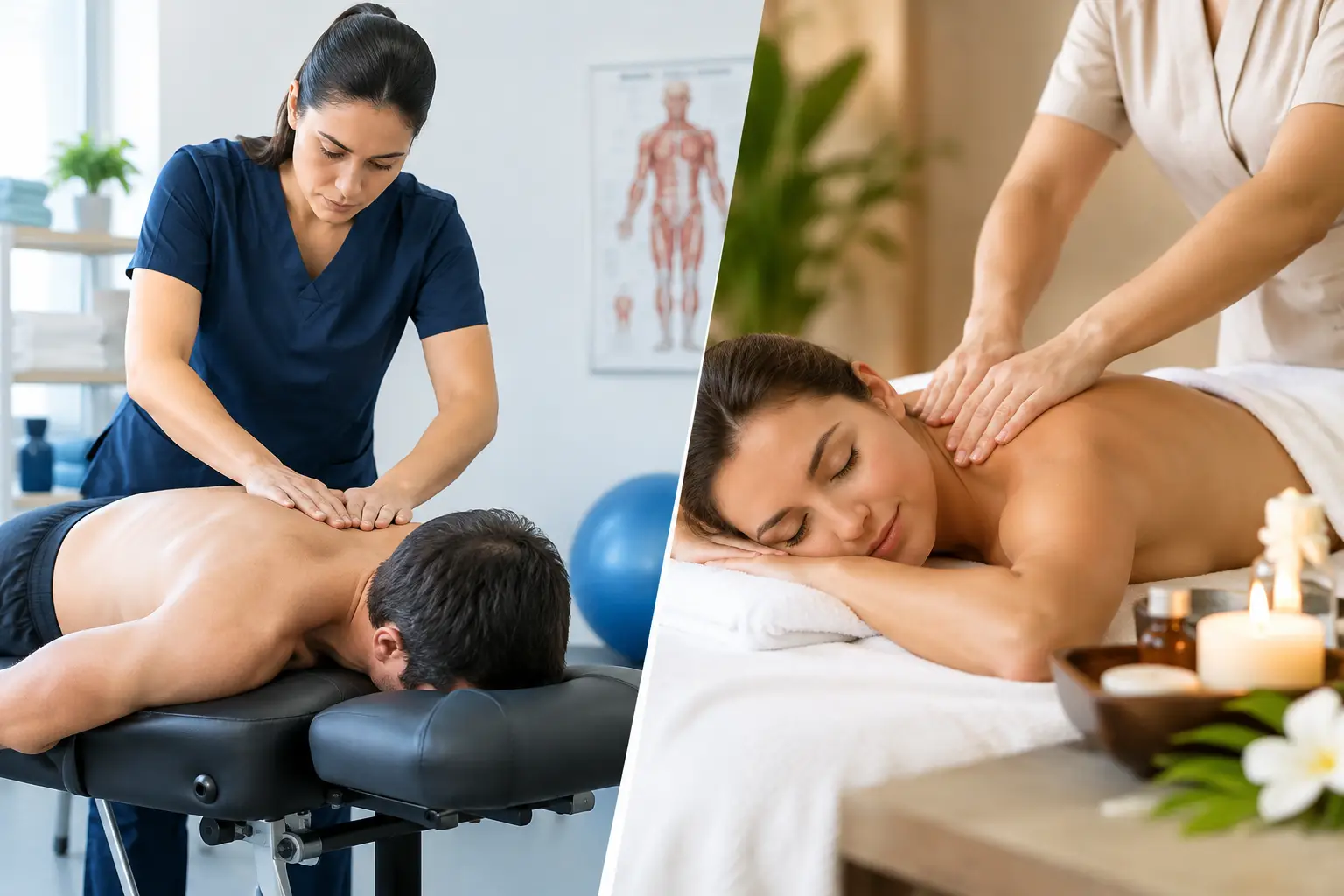
A massage can feel wonderful and still not be the right kind of care for what your body needs. The choice between RMT versus spa massage is less about whether one is “better” and more about your goal: Are you looking for a restorative break, or do you need a practitioner to assess pain, movement, training load, or recurring tension?
Both can support relaxation. But the training, treatment structure, and level of clinical reasoning behind the session can be very different. Knowing what to expect helps you book with more confidence, especially if you are managing an injury, persistent headaches, jaw tension, stress-related pain, or a body that never seems to fully switch off.
RMT versus spa massage: the central difference
An RMT, or Registered Massage Therapist, is a regulated health professional in Canadian provinces such as British Columbia. RMT education includes anatomy, physiology, pathology, orthopedic assessment, ethics, clinical decision-making, and hands-on treatment. An RMT is trained to determine whether massage is appropriate, adapt treatment to your presentation, and refer out when symptoms require another type of care.
Spa massage is generally designed around rest, comfort, and sensory experience. It may take place in a beautiful environment with aromatherapy, exfoliation, hot towels, or a set menu of relaxation-focused services. A spa practitioner may be highly skilled at delivering a calming, enjoyable treatment, but the appointment is not necessarily structured around clinical assessment or a specific functional goal.
That distinction matters when your shoulder hurts every time you reach overhead, your hips tighten after a long commute, or a hard training block has changed how you move. In those situations, the quality of pressure matters, but so does the practitioner’s ability to ask why the pattern is happening and adjust the treatment accordingly.
What an RMT appointment is designed to do
A registered massage therapy session starts with information, not assumptions. Your therapist may ask about your symptoms, work setup, sleep, activity level, health history, previous injuries, and what has or has not helped. They may observe movement, assess range of motion, or use orthopedic testing when relevant. The purpose is not to turn every appointment into a lengthy exam. It is to make the treatment more precise and safer.
From there, treatment may include deep tissue techniques, myofascial release, trigger point therapy, Swedish-style massage, joint-focused work, or gentler techniques such as craniosacral therapy. The approach should change based on your tissue tolerance, nervous system state, goals, and response during the session.
For example, a runner with calf tightness may need more than intense work directly on the calf. An RMT may consider ankle mobility, training volume, recovery habits, hip function, and the way the nervous system is protecting the area. A client with tension headaches may benefit from attention to the neck, upper back, jaw, breathing patterns, and overall stress load rather than simply receiving firm pressure on the shoulders.
At Reset Registered Massage Therapy, this means treatment can be clinically focused without feeling cold or overly aggressive. An orthopedic and sports-informed assessment can sit alongside slower, calming work designed to help reduce the pain-tension-stress cycle.
Clinical treatment does not have to be painful
Many people assume therapeutic massage must hurt to work. That is not a reliable measure of quality. Excessive pressure can cause guarding, increase soreness, or make it harder for your nervous system to settle. Productive treatment is often specific, tolerable, and responsive.
An RMT may use firmer pressure when it is appropriate and well tolerated, but pressure is only one tool. Sometimes the most useful choice is gradual work, a broader contact, reduced intensity, or time spent helping the body feel safe enough to release protective tension. You should be able to give feedback throughout the appointment without feeling that you are interrupting the treatment.
When spa massage may be the better choice
Spa massage can be exactly right when your main goal is relaxation, comfort, and a temporary step away from a demanding week. If you are on vacation, celebrating a special occasion, or simply want a full-body treatment without discussing a painful shoulder in detail, a spa setting may fit beautifully.
The sensory elements can also be meaningful. A quiet room, calming music, warm linens, and an unhurried experience can help many people decompress. There is real value in rest, pleasure, and feeling cared for, even when the session is not intended to address a clinical concern.
Spa massage may be less suitable if you have a new injury, unexplained symptoms, recurring pain, a complex health history, or a performance goal that requires more structured treatment planning. It may also be the wrong fit if you need documentation for extended health benefits, although coverage rules vary by plan and location.
When an RMT is likely the stronger fit
An RMT is often the more appropriate choice when massage is part of your health care plan rather than an occasional treat. This can include pain that interferes with work, sleep, exercise, or daily movement. It can also include issues that seem minor but keep returning: a stiff neck after every laptop-heavy week, low back tension that flares with travel, or jaw tightness linked to stress.
Consider registered massage therapy if you want a practitioner to work with:
- Sports-related strain, training fatigue, or return-to-activity goals
- Shoulder, hip, neck, or low back discomfort that affects movement
- Tension headaches, TMJ-related jaw tension, or persistent upper-body tightness
- Stress-driven muscle guarding and difficulty settling after demanding days
- A treatment plan that evolves based on how your body responds
This does not mean every RMT appointment needs to be intense or problem-focused. Many clients want both targeted care and deep relaxation. A thoughtful RMT can blend those goals rather than forcing you to choose between clinical treatment and a calming experience.
Training, insurance, and practical expectations
In British Columbia, RMTs are regulated professionals who complete extensive education and meet registration requirements. This is why many extended health plans reimburse treatment provided by an RMT. Direct billing may also be available, depending on the clinic and your insurer.
For US readers, the title and licensing framework vary by state. You may see Licensed Massage Therapist, Licensed Massage and Bodywork Therapist, or another credential. If you are seeking clinically oriented care, ask about the practitioner’s training, experience with your concern, assessment process, and whether they work collaboratively with other health providers when needed.
A credential alone does not tell you everything about fit. The best practitioner for you should communicate clearly, explain choices without talking over you, and respect your preferences. You deserve to know what areas will be treated, why a technique is being used, and how to modify the session if something does not feel right.
Safety, consent, and nervous system comfort
Massage quality is not only about technical skill. It is also about whether you can relax enough to receive care. A trauma-informed approach recognizes that pressure, positioning, draping, touch, and even silence can affect people differently.
A safe, non-judgmental and inclusive treatment environment makes room for communication before and during the session. You can request adjustments to pressure, avoid an area, remain partially clothed, change positions, or pause treatment. Those choices are not inconveniences. They are part of informed consent and effective care.
This is especially relevant for clients who have felt dismissed in health settings, are navigating chronic pain, or feel anxious about bodywork. When the body anticipates threat, muscles often brace. Clear boundaries and collaborative communication are not separate from treatment outcomes – they can support them.
How to choose based on your goal
If you want an enjoyable reset and have no specific issue to investigate, spa massage may give you exactly what you need. If you want help understanding a recurring pattern, recovering from activity, improving movement tolerance, or managing pain with a practitioner-led plan, an RMT is generally the more appropriate starting point.
There is room for both in a well-rounded self-care routine. You might choose spa massage for restorative downtime and see an RMT when your body needs focused assessment and treatment. The key is setting expectations honestly before you book.
Your appointment should leave you feeling heard, not judged for being tense, stressed, injured, or unsure of what you need. Start with the care that matches your goal, then let your response guide the next step.