Your calf feels like it has a knot with its own personality. Your hip flexor tugs every time you lengthen your stride. And your easy runs keep turning into “why does my body feel like this?” runs.
That’s usually the moment runners start searching for sports massage – not as a luxury, but as a practical tool to keep training consistent.
Sports massage for runners can be genuinely helpful, but it works best when it’s treated like any other part of training: specific, timed well, and adjusted to your current load and tolerance. A session that’s perfect the week after a race can be the wrong move the day before speed work. And “deep tissue no matter what” can be counterproductive if your nervous system is already stuck in high alert.
What “sports massage” should mean for runners
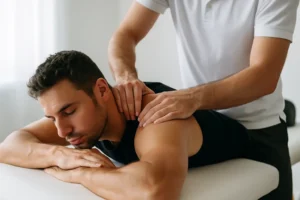
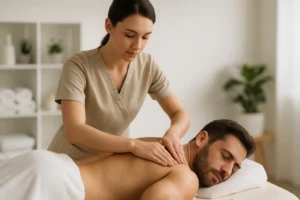
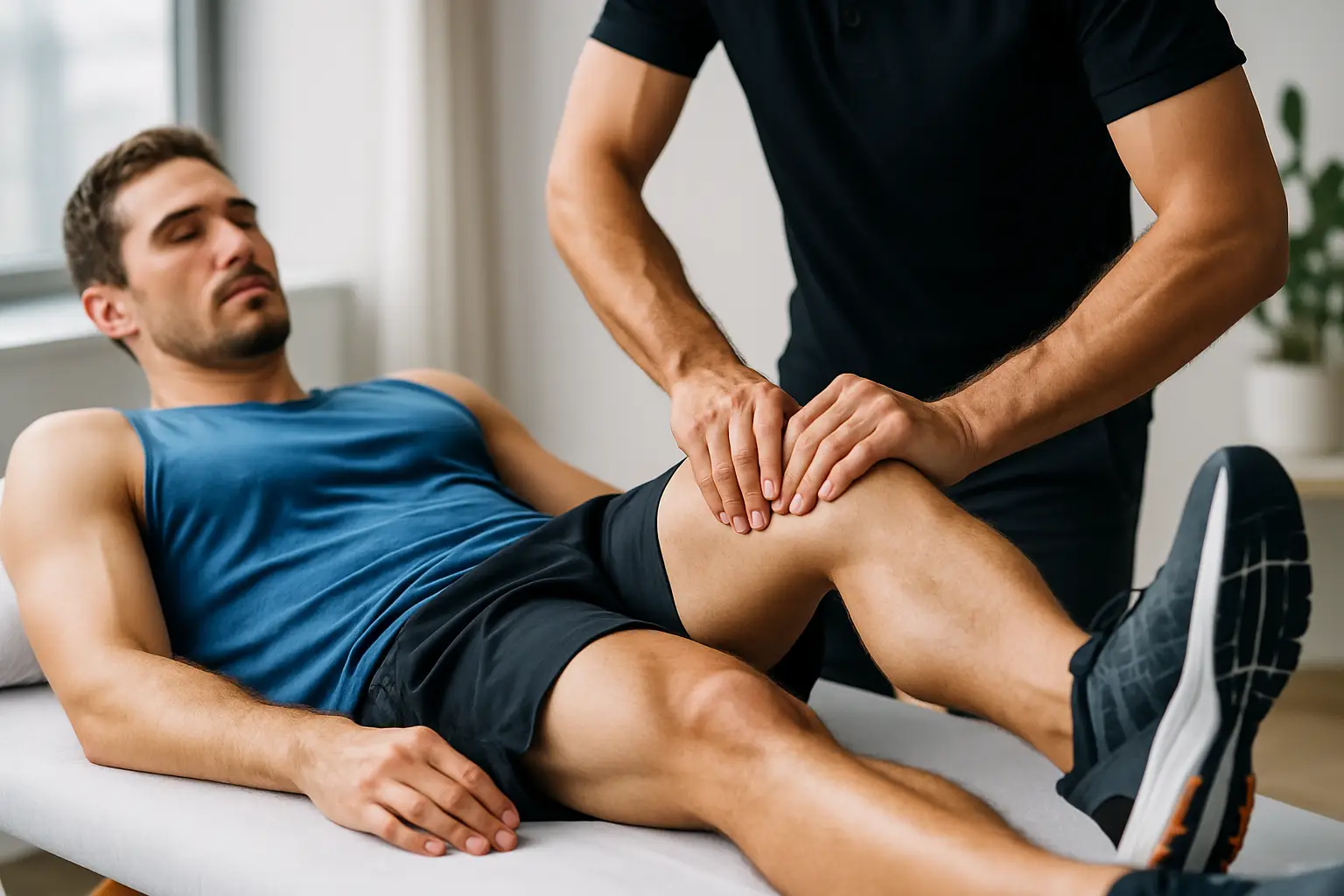
A runner-friendly sports massage is not just a harder massage with more pressure. It’s a clinical approach that uses assessment, targeted manual therapy, and smart dosage to change how tissues move and how your body perceives threat.
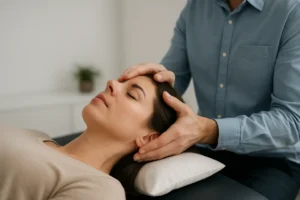
In practice, that can include myofascial release to improve glide between tissue layers, trigger point therapy for locally sensitive spots that refer pain, and joint and soft-tissue work to support range of motion where your stride actually needs it. It can also include slower, calming techniques when your system is guarding – because relaxation is not fluff if it reduces protective tone and makes movement feel safe again.
The best sessions for runners have a clear goal. Sometimes the goal is recovery (downshift, reduce residual tone, improve sleep). Sometimes it’s performance support (restore hip extension, address calf stiffness, or reintroduce comfortable loading after a flare-up). And sometimes it’s pain modulation – calming a cranky area enough that you can keep training while you address the bigger drivers.
What the research says – and what matters more in real life
Massage research is mixed because “massage” can mean anything from light relaxation work to aggressive deep pressure, and outcomes are measured in different ways. But a few takeaways tend to hold up well for runners:
Massage can reduce delayed-onset muscle soreness and improve perceived recovery. That matters because perception influences how you move, how you sleep, and how confident you feel loading the area again.
Flexibility changes can happen, but they’re often modest and may be as much about nervous system tolerance as tissue length. In runner terms: it may feel easier to access a stride position, not because something was “broken up,” but because your system is less protective.
Performance changes are inconsistent. A massage is not a fitness builder. If you’re looking for a guaranteed pace boost, you’ll be disappointed. If you’re looking for a tool that supports better training continuity by reducing flare-ups and helping you recover, you’re thinking about it the right way.
The real-world value tends to come from individualization: picking the right tissues, the right intensity, and the right timing, then pairing it with training decisions that make sense.
The runner problems sports massage can help with
Runners usually don’t need a full-body routine. They need someone to understand the patterns that show up with mileage, hills, and speed.
Calf and Achilles tightness is a common one, especially with faster work or a jump in volume. Manual work can help reduce tone in the gastrocnemius and soleus, improve ankle mechanics, and calm sensitive tendon-adjacent tissue – with the important caveat that irritated tendons often hate aggressive pressure. This is a “it depends” area where skill and restraint matter.
Plantar fascia discomfort can also benefit, not because you dig into the arch until you see stars, but because you address the entire chain: calf stiffness, foot intrinsic load tolerance, and sometimes hip control that changes how the foot accepts force.
Hip flexor and quad overload shows up when you’re sitting a lot and running a lot. Targeted work can help you access hip extension and reduce the “front of hip pinch” feeling that sometimes creeps in. If that pinch is sharp or positional, assessment is key – it may not be a tissue problem you can muscle through.
IT band pain is often misunderstood. The band itself is not something you can meaningfully lengthen with pressure. But you can treat the surrounding tissues (gluteal complex, lateral quad, TFL), improve hip mechanics, and reduce local sensitivity so the area is less reactive during runs.
Low back tightness and glute guarding are frequently nervous-system driven, especially when stress is high. A session that blends downregulation with specific hip and lumbar work can change how your back feels during impact, even if nothing “structural” changed.
Timing matters: pre-race, post-race, and during training blocks
Massage is a stimulus. Like any stimulus, you want to place it where it helps, not where it adds noise.
In the 24 to 72 hours before a race, many runners do best with lighter, circulation-focused work and gentle mobility support. The goal is to feel loose and confident, not tender. Deep, intense work right before an event can leave you sore or neurologically flat, especially if you’re sensitive to pressure.
In the first few days after a race, a lighter recovery session can help with soreness and that “my legs feel like cement” sensation. Extremely deep work on already damaged tissue is often a bad trade. Your body is already inflamed and repairing.
During a high-load training block, consistent maintenance sessions can be useful if they’re scaled to your schedule. Some runners love a weekly appointment, others do better every 2 to 4 weeks. The right frequency depends on how you recover, how much you sit for work, your injury history, and whether you’re currently managing a specific hot spot.
If you’re ramping mileage or adding speed, consider booking after the hardest workout of the week or the day after. That’s often when you can take advantage of recovery support without interfering with key sessions.
What a good sports massage for runners feels like
“Good” does not mean maximum pressure. It means effective pressure that your nervous system can accept.
You should expect clear communication: what’s being treated, why it’s being treated, and how it may feel during and after. You should also expect consent to be ongoing, not a one-time question at the start. Runners often have a high tolerance and low patience, but pushing through sharp pain can backfire by increasing protective tone.
Afterward, you might feel looser, lighter, or more spacious through your stride. You might also feel slightly tender in specific areas for 24 to 48 hours. If you feel bruised, overly sore, or your symptoms spike for several days, that’s usually a sign the dosage was too high or the tissue choice was off.
When massage is the wrong tool (or not enough)
Some situations deserve a different plan.
If you have acute swelling, redness, unexplained calf pain, or symptoms that feel systemic, massage is not the place to start.
If you suspect a stress fracture, significant tendon tear, or you have pain that worsens with each run regardless of modifications, you need assessment and a load-management strategy first.
And if your “tightness” is actually a strength or control problem, massage can provide temporary relief but won’t solve the driver. In those cases, the best massage plan is one that supports a return to loading: calming the sensitive area, improving tolerance, then pairing it with progressive strength work and smarter run programming.
How to get more out of your session as a runner
A helpful appointment starts before you get on the table. Show up with a few specifics: where you feel it, when it started, what workouts aggravate it, and what you’ve already tried.
Be honest about your next 72 hours of training. If you have intervals tomorrow, your therapist should treat you differently than if you have a rest day and an easy run.
Also, don’t underestimate the nervous system side. If you’ve been grinding through work stress, sleeping poorly, and running on adrenaline, your tissues often feel “tight” because your system is guarded. A trauma-informed, neurocentric approach that intentionally downshifts your baseline can make the targeted work more effective and longer lasting.
If you’re looking for registered massage therapy in downtown Vancouver with a clinical and relaxation blend that’s tailored for athletes, Reset Registered Massage Therapy focuses on assessment-led sessions that support both tissue function and nervous-system regulation.
A final thought to keep in mind: the most effective recovery tool is the one that helps you train consistently. Massage is at its best when it’s not chasing perfection in a single session, but supporting a body that can keep showing up – calmly, confidently, and with less friction in every step.