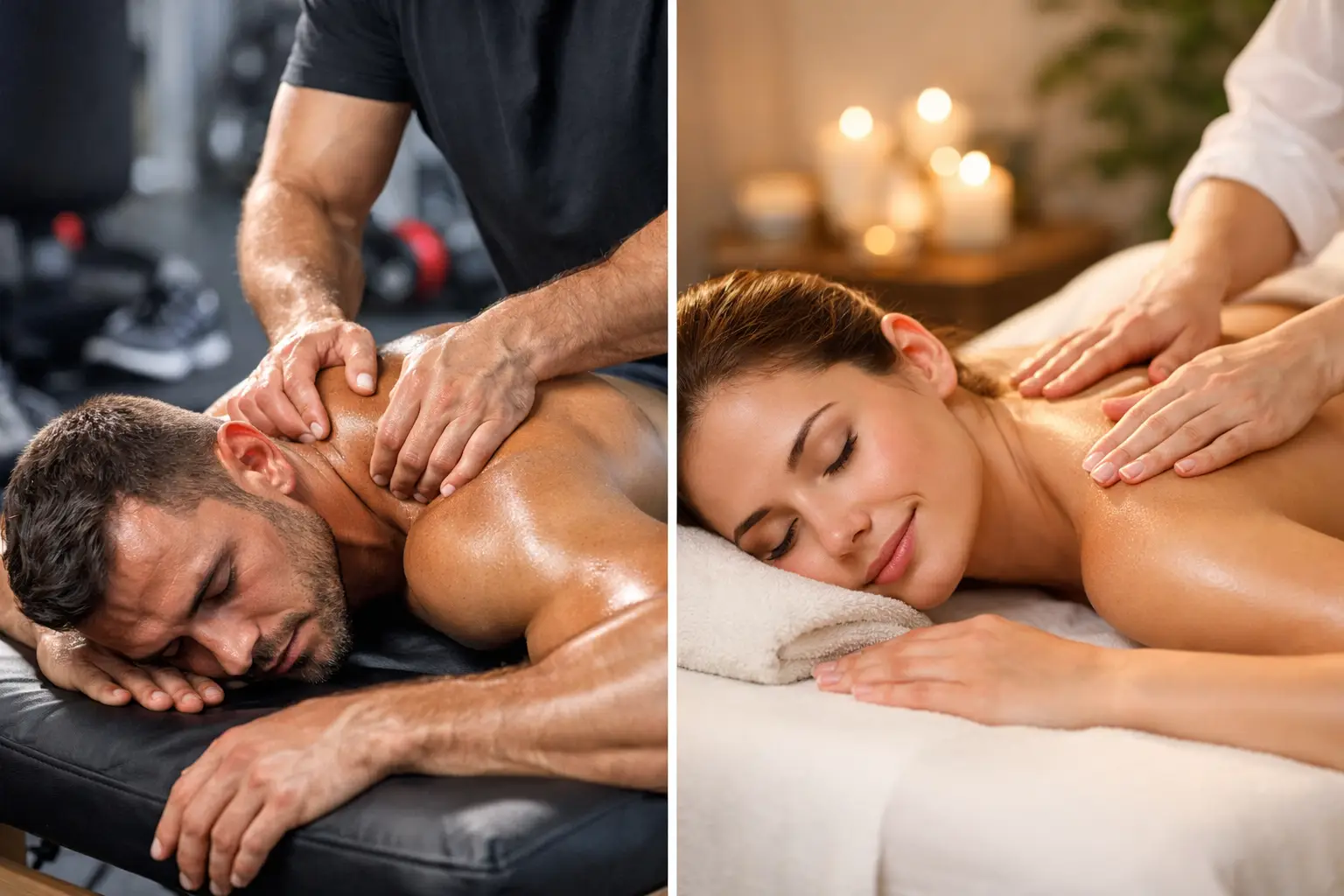
A hard training week, a desk-bound workday, and a stressful season can all leave the body feeling tight. But the right response is not always more pressure. When considering sports massage versus relaxation massage, the useful question is not which one is better. It is what your body needs right now: focused support for movement and recovery, nervous-system downregulation, or a thoughtful combination of both.
Massage therapy is most effective when it is built around an assessment, your goals, and your tolerance on the day of treatment. A runner with calf tightness before an event may need something very different from a professional carrying tension in their jaw, shoulders, and low back after months of poor sleep. Both experiences are valid, and both can benefit from skilled, personalized care.
Sports Massage Versus Relaxation Massage: The Core Difference
Sports massage is a goal-oriented treatment approach often used by active people and athletes. It focuses on how the body moves, manages training load, and responds to repetitive demands. A session may address a specific region, such as a hip that feels restricted during squats, a shoulder affected by climbing, or calves that are struggling to recover between runs.
Relaxation massage is designed primarily to reduce stress, settle muscle guarding, and create a calmer physical and mental state. It often uses slower pacing, broad Swedish-style strokes, comfortable pressure, and a full-body approach. While it can still help ease muscular discomfort, the central goal is less about preparing for or recovering from a particular activity and more about helping the whole person feel settled.
The categories overlap more than many people expect. Sports massage does not need to be punishing to be effective, and relaxation massage is not “just a treat.” Stress can heighten pain sensitivity, disrupt sleep, and contribute to persistent muscle tension. Addressing the nervous system can be clinically relevant, especially when discomfort has become part of a pain-tension-stress cycle.
What Sports Massage Is Designed to Address
Sports massage is often useful when a movement pattern, activity, or training goal gives the treatment a clear focus. Your therapist may assess range of motion, tissue sensitivity, load tolerance, and the daily or athletic demands that may be contributing to symptoms. Treatment can include myofascial release, trigger point therapy, targeted deep tissue techniques, and active movement where appropriate.
The pressure can be moderate to firm, but pressure alone is not what makes a massage “sports” focused. Effective treatment is precise. Working deeply into already irritated tissue simply because it feels intense can leave you sore without improving function. A well-planned sports massage considers where the tissue is sensitive, what you need to do afterward, and how your body responds during the session.
For example, someone preparing for a race may benefit from a shorter, lighter session that supports comfortable movement without creating post-treatment soreness. Someone in a lower-volume training phase may have more room for focused work on persistent restrictions. After a demanding event, recovery needs can vary widely. Some people feel better with gentle circulation-focused work and calming touch; others may need rest before receiving more targeted treatment.
Sports massage can be a strong fit if you are managing training-related tightness, recurring mobility limitations, or a sense that a particular area is not keeping up with the demands you place on it. It can also support people who are active in less formal ways, including commuters who cycle, workers who stand all day, and recreational lifters returning to exercise after time away.
Sports massage is not a test of toughness
Pain is not proof that treatment is working. Some techniques may create temporary, manageable discomfort, particularly around sensitive or overloaded areas, but you should be able to communicate clearly and feel heard. Numbing out, holding your breath, or bracing against the table are useful signals to slow down, change the approach, or use a different technique.
A collaborative therapist will check in, explain what they are assessing, and adapt the work to your goals. This matters for athletic clients and for anyone with a history of painful treatments, injury, or stress-related body tension.
What Relaxation Massage Is Designed to Address
Relaxation massage gives the body an opportunity to shift out of constant effort. Slow, rhythmic techniques and comfortable contact can help reduce the sense of being wound up, particularly when work stress, caregiving, travel, poor sleep, or prolonged screen time have accumulated in the body.
Many people notice their stress in predictable places: the upper traps, chest, jaw, forearms, hips, and low back. A relaxation-focused session may include gentle work in these areas while maintaining a broader, more connected pace. Rather than chasing every knot, the therapist creates conditions that help the nervous system perceive greater safety and allow muscle guarding to soften.
This approach may be especially helpful for tension headaches, stress-driven shoulder discomfort, generalized tightness, and fatigue that makes deep work feel overwhelming. It can also be the better choice when you do not have a specific injury or performance goal but know you have not felt comfortable in your body for a while.
Relaxation massage should still be personalized. You can request focus on a specific area, choose a pressure that feels supportive, and set boundaries around areas you would prefer not to have treated. A safe, non-judgmental, and inclusive treatment space is not separate from quality care. It is part of what allows your body to relax.
Why the Best Session May Combine Both
The choice between sports and relaxation massage is rarely absolute. A client may arrive with a clear orthopedic concern, such as a limited shoulder or sore hip, while also carrying the stress that keeps the area guarded. In that case, a purely deep approach may not be the most helpful option.
A blended session can begin with focused assessment and treatment for the primary concern, then incorporate slower techniques to help the body integrate the work. Conversely, a primarily relaxation-focused massage may include specific myofascial or trigger point work when a particular area needs more attention.
At Reset Registered Massage Therapy, treatment is designed around this kind of clinical flexibility. The aim is not to force your body into a preset category. It is to use evidence-based manual therapy, clear communication, and an awareness of the nervous system to support meaningful relief and more comfortable movement.
How to Choose the Right Massage for Today
Start with what you want to be different after the appointment. If you want help with a training-related restriction, are working toward an activity goal, or have a specific movement that feels limited, a sports-focused treatment may make sense. Be ready to describe when symptoms appear, what activities aggravate them, and whether you have an upcoming event or demanding workout.
If your main concern is feeling overstimulated, exhausted, generally achy, or unable to let go of tension, relaxation massage may be a better starting point. This does not mean your symptoms are less real or less deserving of care. It means that lowering overall stress and muscle guarding may be the most useful clinical priority.
Also consider timing. Avoid scheduling an aggressive treatment immediately before an event when you need to perform at your best. If you are already highly sore, sleep-deprived, or recovering from illness, gentle work may be more appropriate than intense tissue-focused techniques. Your response to previous massage matters too. If deep pressure has left you flared up for days, mention it.
What a Personalized RMT Appointment Should Feel Like
You should not have to guess what will happen once the session begins. A quality appointment includes a conversation about your health history, current symptoms, activity level, preferences, and treatment goals. Consent should be ongoing, not a one-time question at the beginning.
During treatment, your therapist may adjust pressure, positioning, techniques, and the pace of the session based on your feedback and what they observe. They may also offer straightforward home-care suggestions, such as modifying training load, using gentle movement, or noticing patterns that trigger symptoms. These recommendations should be practical, not overwhelming.
Whether you choose a sports-focused, relaxation-focused, or blended approach, the most valuable massage is one that leaves you feeling respected, informed, and better able to meet the demands of your life. Your body does not need to earn gentle care, and it does not need to endure unnecessary pain to make progress.