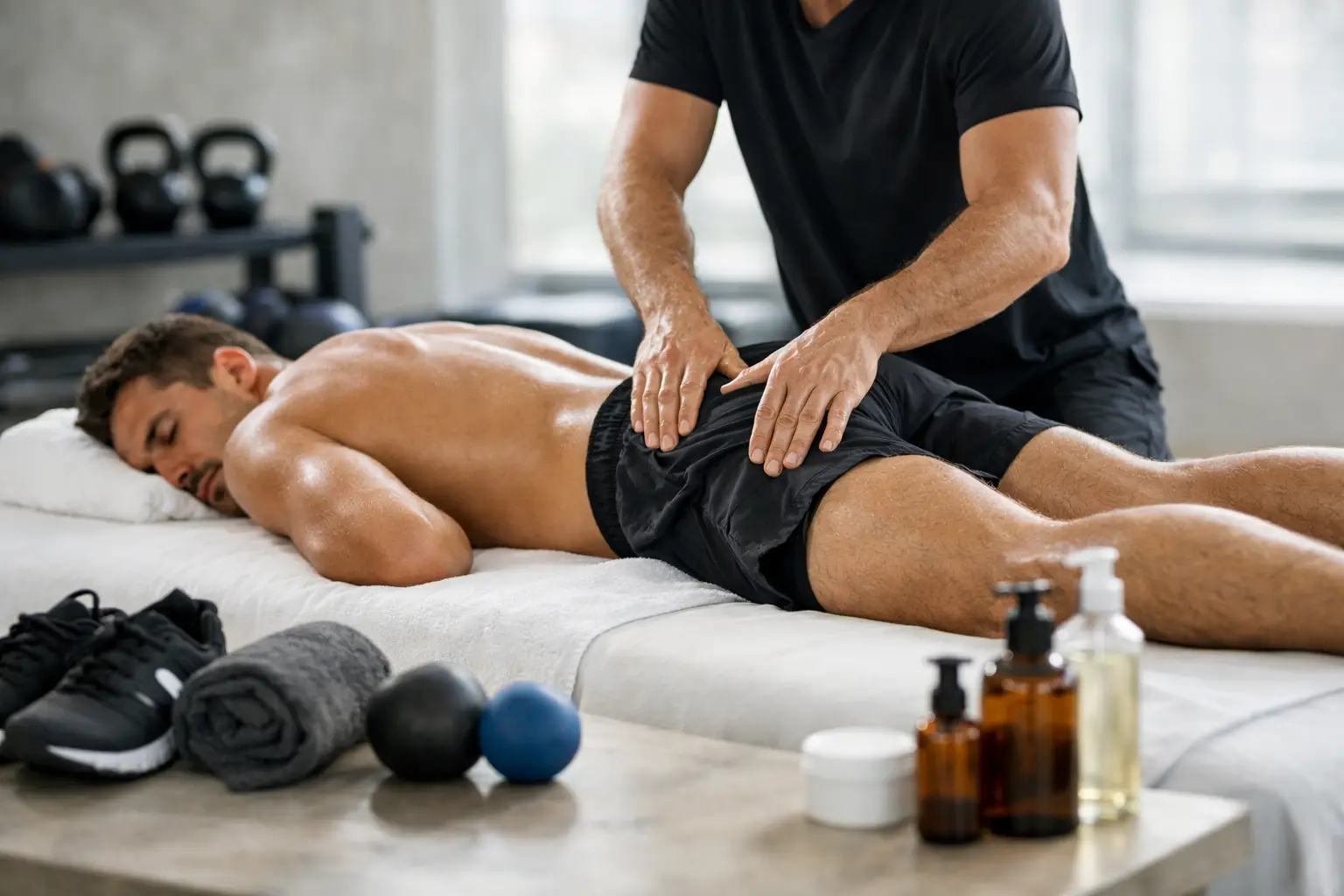
A hard workout can leave you feeling productively tired, or it can leave you guarding a hip, avoiding stairs, and wondering whether tomorrow’s training is realistic. A guide to sports massage recovery plan design should make that distinction clearer. The goal is not to push through pain or schedule massage by habit. It is to match treatment, movement, rest, and training load to what your body is actually managing.
Sports massage can be useful for runners, lifters, cyclists, recreational athletes, and active professionals whose training is competing with long workdays and accumulated stress. When it is assessment-led and adapted to your tolerance, it can support short-term comfort, range of motion, body awareness, and nervous-system downregulation. It is one part of recovery, not a substitute for sleep, fueling, progressive training, or medical assessment when an injury needs it.
Start Your Sports Massage Recovery Plan With Assessment
Recovery begins before hands-on treatment. A useful sports massage appointment includes a conversation about your sport, recent training changes, goals, symptoms, previous injuries, and what you need to be able to do next. For one person, that may mean running comfortably on the weekend. For another, it may mean sitting through a workday without neck tension escalating into a headache.
This context matters because soreness after a new strength program is different from a sudden sharp pain during a sprint. A stiff shoulder after several hours at a desk may respond well to targeted manual therapy and changes in movement habits. Shoulder pain that includes weakness, instability, numbness, or pain after a fall needs a different level of assessment.
An RMT can assess movement, tissue sensitivity, symptom behavior, and your response to pressure throughout the session. That does not mean every appointment needs to feel intense. Deep tissue work is a tool, not a measure of quality. Myofascial release, trigger point therapy, Swedish-style techniques, and calmer nervous-system-focused approaches may each have a place, depending on your presentation that day.
Know the difference between soreness and a warning sign
Delayed-onset muscle soreness often appears 12 to 48 hours after unfamiliar or demanding exercise. It is usually diffuse, improves as you gently warm up, and settles over several days. Massage may help you feel more comfortable moving during that period, but aggressive pressure on very tender tissue can make you feel more bruised and depleted.
Pause training and seek appropriate medical guidance for severe or worsening pain, visible swelling, significant bruising, inability to bear weight, a joint that feels unstable, numbness or tingling, fever, or pain that repeatedly wakes you at night. Massage should never be used to work around a potentially serious injury.
Time Massage Around Training, Not Just Pain
The right timing depends on your event schedule, training volume, recovery capacity, and how your system responds to treatment. There is no universal rule that says athletes need massage every week or that more pressure creates better results.
In the days before an event, many people benefit from a lighter, more focused session. The aim is to reduce the feeling of restriction, check in with areas that are working hard, and leave you feeling settled rather than heavily treated. A demanding deep-tissue session immediately before a race, tournament, or lifting test may leave some people temporarily tender or fatigued. If you are trying a new therapist or technique, avoid making your first session a day before an important event.
After a demanding workout or competition, the best choice may be gentle treatment, easy movement, hydration, food, and sleep. If the body feels guarded and overstimulated, slower techniques and a quieter pace can be more useful than chasing every tight spot. Your nervous system influences muscle tone, pain sensitivity, and how safe movement feels. Recovery is not only mechanical.
Between training blocks, a more targeted session can be a good time to address persistent limitations such as calf tightness affecting ankle motion, hip discomfort during squats, or neck and jaw tension that builds under work stress. The treatment plan should be reassessed as your training changes, rather than repeated as a fixed routine.
Build the Rest of Your Recovery Around the Session
Massage works best when it fits into a broader plan. The hours after treatment are an opportunity to notice how your body responds, not a test of whether you can immediately train harder.
Keep the rest of the day simple when possible. Gentle walking, mobility work you already tolerate well, and normal hydration are often appropriate. Eat enough overall, including protein and carbohydrates after demanding training, so your body has the resources to repair and adapt. Prioritize sleep, especially after high-intensity sessions or long endurance efforts. No manual therapy can fully compensate for chronic under-fueling and short sleep.
Your next workout should be guided by symptoms and function. If you feel looser and more coordinated, return to planned training gradually. If a treated area feels tender, reduce load, range, speed, or volume for a day or two. This is not lost progress. Adjusting a session can prevent a minor flare-up from becoming a longer interruption.
A practical recovery plan also includes progressive strength and mobility work when indicated. Massage can make movement feel more available, but it does not replace the capacity-building work that helps tissues tolerate sport. If your hip repeatedly becomes painful on hills, for example, treatment may ease protective tension while a well-designed training and strengthening plan addresses the demands that keep provoking it.
Use Feedback to Personalize Pressure and Frequency
A useful question after massage is not simply, “Did it hurt enough?” Ask: “How did I feel later that day, the next morning, and in my next training session?” Better recovery signals may include easier movement, less protective guarding, improved sleep, a calmer baseline, or more confidence in a previously uncomfortable activity.
Some post-treatment tenderness can happen, particularly after focused work in sensitive areas. It should be mild, temporary, and proportionate to the session. Feeling significantly worse for several days is feedback that pressure, duration, timing, or treatment focus may need to change.
Communication is central to a safe plan. Tell your therapist if pressure feels sharp, burning, alarming, or like you are bracing against it. You can ask for lighter pressure, more time in a specific area, fewer techniques, or a change in position at any point. Consent is ongoing, and a trauma-informed approach recognizes that comfort and control are clinical considerations, not extras.
At Reset Registered Massage Therapy, sports-focused care can combine orthopedic assessment and targeted manual therapy with a relaxing pace that helps clients shift out of the pain-tension-stress cycle. That combination can be especially valuable for people whose training load and professional demands are both contributing to symptoms.
A Simple Guide to Sports Massage Recovery Plan Check-Ins
Rather than scheduling treatment based only on a calendar, check in with three areas each week: training load, symptoms, and recovery resources. Training load includes recent increases in mileage, intensity, lifting volume, or competition demands. Symptoms include pain location, stiffness, headaches, altered movement, and whether symptoms are improving or spreading. Recovery resources include sleep, nutrition, stress, and the time you realistically have for rest.
When all three are strained, the answer may be a lighter session and a temporary reduction in training rather than more aggressive treatment. When training is stable and symptoms are low-grade but persistent, a targeted treatment plan alongside active rehabilitation may be appropriate. When symptoms are new, severe, or unpredictable, prioritize assessment over trying to force a quick fix.
Keep brief notes after key workouts and massage sessions. You do not need a complicated tracker. Recording what you trained, where you felt symptoms, your sleep quality, and how you felt 24 hours after treatment can reveal patterns that memory misses. That information also helps your therapist make more precise choices at your next appointment.
The most effective recovery plan should leave you feeling more informed about your body, not more dependent on treatment. Choose care that respects your goals, your boundaries, and your changing capacity, then let each session become a calmer, more confident step back toward the movement you enjoy.