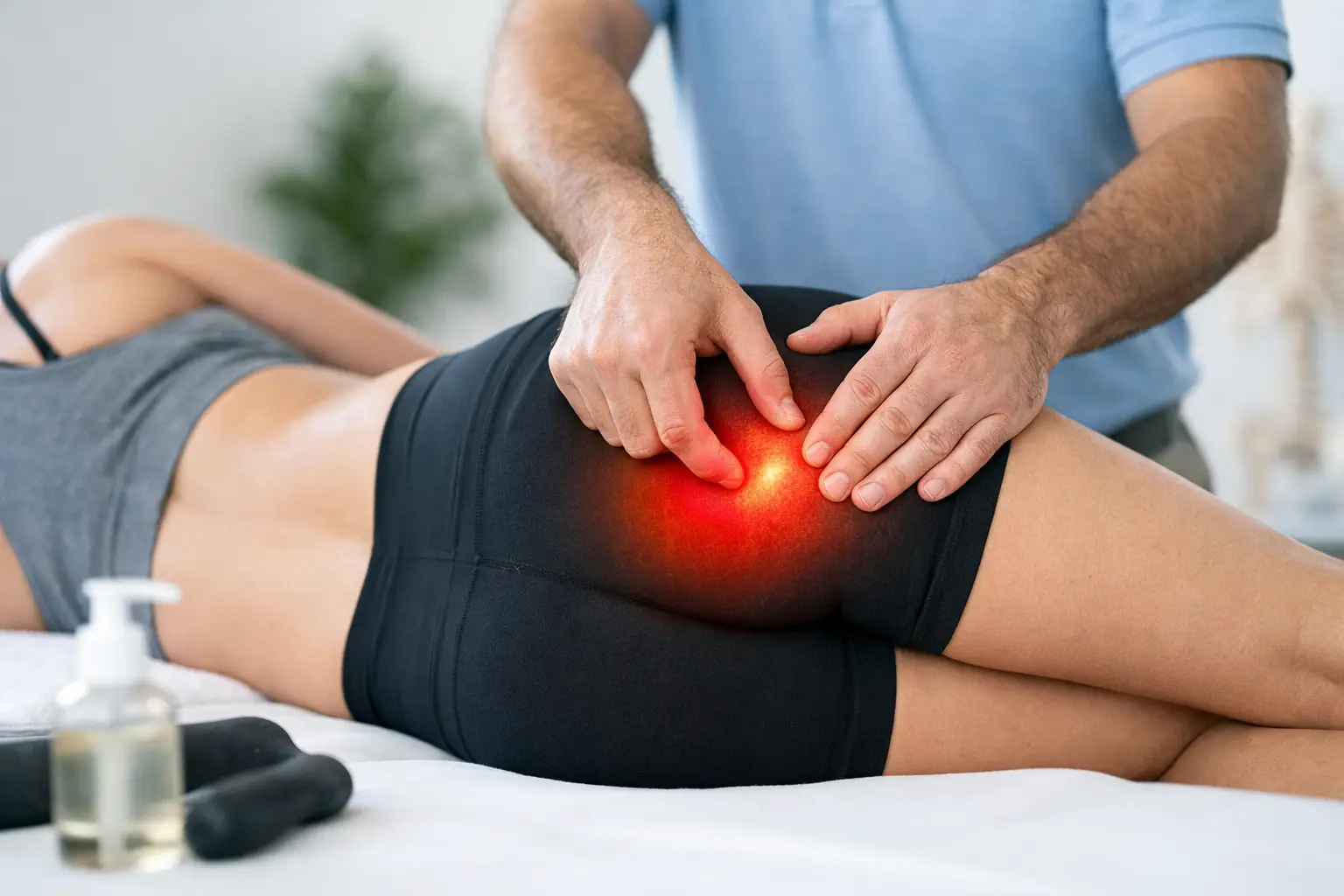
A deep ache in one side of the buttock can make a desk chair, a long walk, or the first few steps after sitting feel surprisingly difficult. Trigger points in glutes treatment is not about pushing through that discomfort with maximum pressure. It starts by determining what is actually contributing to your symptoms, then choosing hands-on care and movement strategies your body can tolerate.
The glutes are powerful hip muscles, but they are also frequent witnesses to stress, prolonged sitting, training changes, low-back irritation, and altered movement after an injury. A sensitive spot in the glute may be part of the problem, yet it is not always the whole story. Effective care should be specific, collaborative, and responsive to how your nervous system and tissues respond in the moment.
What are glute trigger points?
A trigger point is a tender, irritable area within muscle tissue that can be painful when pressed and may contribute to pain felt nearby. In the glutes, pressure on one area can sometimes reproduce a familiar ache in the hip, low back, outer thigh, or back of the leg. That referral pattern is one reason self-diagnosis can be confusing.
The gluteal muscles include the gluteus maximus, which supports powerful movements such as climbing and rising from a chair, as well as the gluteus medius and minimus, which help stabilize the pelvis while you walk or run. Smaller, deeper muscles around the hip can also become sensitive. A person may describe this as a knot, a tight band, a bruise-like spot, or a feeling that one hip simply will not move freely.
Muscle tenderness does not automatically mean the muscle is damaged or needs aggressive release. Pain is influenced by tissue load, sleep, stress, prior injuries, sensitivity of the nervous system, and how confidently you can move. This is why a thoughtful assessment matters more than chasing every tender area.
Trigger points in glutes treatment begins with assessment
At Reset Registered Massage Therapy, treatment is shaped around your symptoms, goals, health history, and preferences. An RMT may ask when the pain began, what makes it better or worse, whether it travels below the knee, and how it affects walking, training, work, or sleep. They may also look at comfortable hip and low-back movement, basic loading tolerance, and whether pressure over a particular area recreates your familiar symptoms.
This does not mean every appointment needs to feel like a sports performance evaluation. It means the treatment has a reason behind it. If side-lying on the tender hip is aggravating, positioning can be adjusted. If direct pressure feels unsafe or overwhelming, there are other ways to work with the area. Consent, comfort, and communication are central clinical information, not extras.
A glute trigger point can also be one feature of a broader pattern. Hip joint irritation, lumbar spine referral, hamstring or sacroiliac symptoms, and nerve sensitivity can overlap with glute pain. Massage therapy can be useful for many musculoskeletal presentations, but a responsible practitioner should recognize when symptoms need medical assessment or another member of your care team.
What hands-on treatment may involve
Treatment often combines several approaches rather than relying on one intense technique. Sustained, tolerable pressure may be used over a sensitive area, followed by gentler massage to surrounding tissues. Myofascial techniques can address the way tissues glide around the hip and pelvis. Swedish-style work may help reduce guarding and create a calmer baseline before more targeted orthopedic or sports massage techniques are used.
The right pressure is not necessarily the deepest pressure. A useful sensation is often focused and tolerable, with the ability to breathe normally and relax into the table. Sharp, burning, electric, or escalating pain is a signal to change course. Bruising, significant next-day pain, or a flare that lasts several days is not proof that treatment worked harder or better.
For some clients, slower contact, paced breathing, and a quiet treatment environment are as clinically relevant as direct work on the glute. When the nervous system is highly alert, muscles can maintain protective tension even when there is no benefit to forcing them to relax. A trauma-informed approach leaves room for choice: you can request lighter pressure, check in before a position change, or decline any technique without needing to justify it.
Why glute pain may keep returning
Manual therapy can reduce pain and improve movement in the short term, but durable change usually depends on what happens between sessions as well. If glute symptoms appear after a sudden jump in running mileage, a return to heavy squats, or weeks of long workdays with little movement, the answer is rarely to stop moving forever. More often, it is to find a manageable level of load and build from there.
A massage therapist may suggest simple movement options based on your presentation, such as comfortable walking, gentle hip range-of-motion work, or gradually reintroducing strength training. If you are already working with a physiotherapist, trainer, or physician, massage can complement that plan by helping manage symptoms and improve your tolerance for rehabilitation.
At home, avoid turning self-treatment into a daily battle with a foam roller or massage ball. Brief, moderate pressure can feel relieving for some people, but forcing a ball into a highly sensitive glute can increase guarding. Start with a supported position against a wall rather than placing full body weight on the floor. Stay away from numbness, tingling, sharp pain, and any sensation that travels strongly down the leg. Follow with easy movement instead of remaining still.
Your work setup can matter too, particularly if symptoms are tied to long periods of sitting. There is no single perfect posture, but changing positions regularly is often more helpful than trying to hold one ideal position all day. A short walk, a few stairs, or standing for a call can interrupt the same sustained load on the hips.
When deep tissue helps, and when it does not
Deep tissue massage can be appropriate when there is a clear muscular component, you tolerate pressure well, and the work is integrated with reassessment and recovery. It may be particularly helpful for active people who feel restricted after a training load change or for professionals carrying persistent hip and low-back tension from long days at a desk.
But deeper is not automatically more therapeutic. If pain is highly reactive, sleep is poor, stress is elevated, or even light touch feels threatening, gentler treatment may produce a better response. The goal is not to make a trigger point disappear under a therapist’s thumb. The goal is to help you move, sit, sleep, train, and live with less pain and more confidence.
This is also why one session may be enough for a minor flare, while a recurring pattern may benefit from a short course of care with reassessment. Progress can look like less intense pain, fewer flare-ups, greater hip range of motion, easier stairs, or a faster return to the activities you value. It does not have to mean you never notice your glutes again.
Symptoms that need prompt medical attention
Not every buttock or hip symptom should be treated as a muscle trigger point. Seek prompt medical care for new bowel or bladder changes, numbness in the groin or saddle area, rapidly worsening leg weakness, fever, unexplained weight loss, significant trauma, or severe pain that is unrelenting at rest.
A medical evaluation is also appropriate for persistent numbness or tingling, pain that travels below the knee, marked swelling or redness, or symptoms that do not improve as expected. These signs do not always indicate something serious, but they deserve assessment beyond local massage treatment.
The most useful plan for glute pain is one that respects both the body’s capacity and your sense of safety. A skilled, individualized session can make space for relief without treating your body like a problem to be forced into submission. Start with what feels manageable, notice how you respond over the next day or two, and let that response guide the next step.