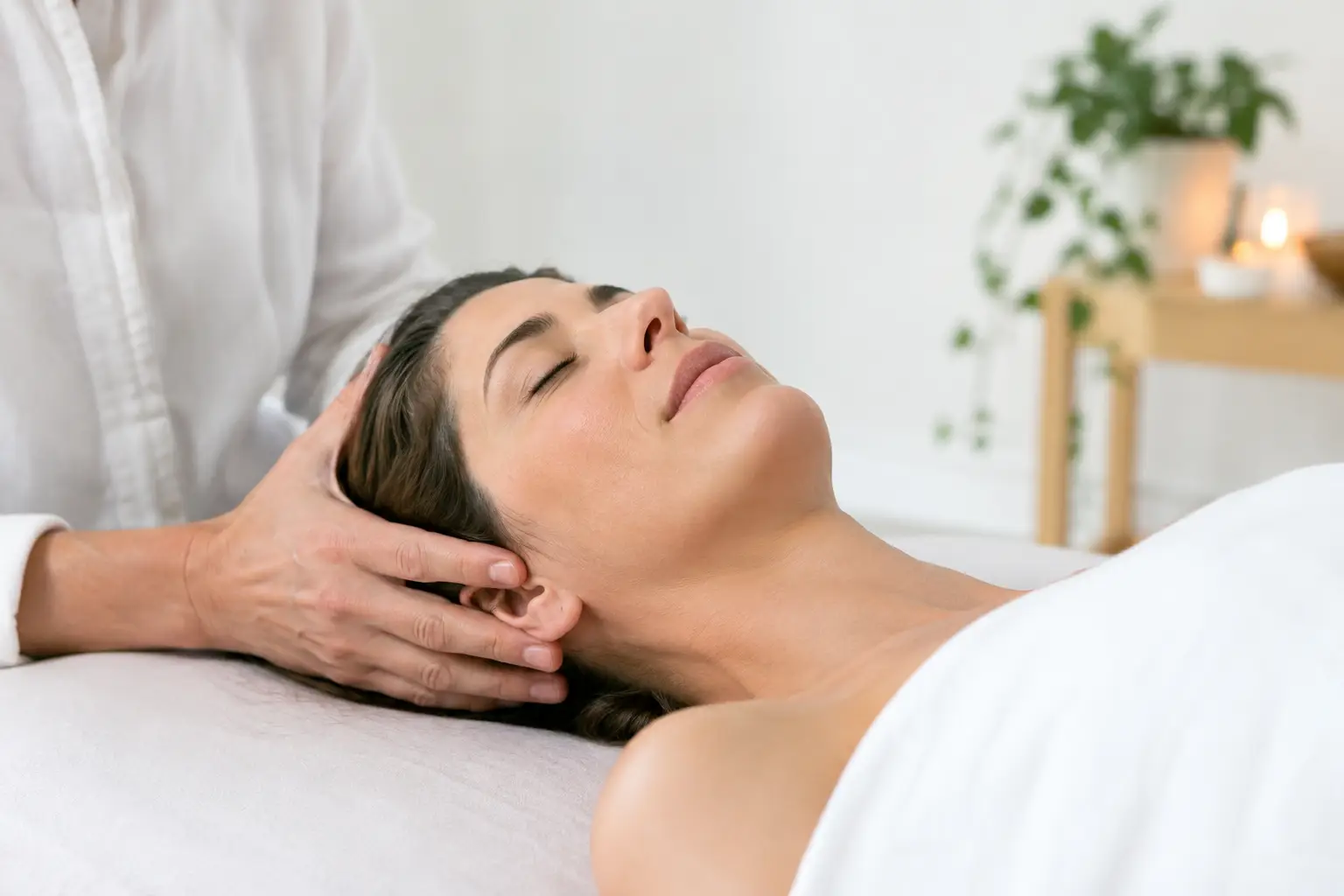
A body that has been bracing through deadlines, commuting, training, pain, or poor sleep does not always respond well to more force. Sometimes the most useful clinical choice is to slow down. Understanding how craniosacral therapy supports relaxation can help you decide whether this gentle, hands-on approach belongs in a treatment plan for tension, stress-related discomfort, headaches, jaw clenching, or a nervous system that feels stuck in high alert.
Craniosacral therapy is not a replacement for medical assessment, rehabilitation, or targeted orthopedic treatment when those are needed. It is a gentle manual therapy approach that may be used alongside massage techniques such as myofascial release, Swedish massage, and focused deep tissue work. At its best, it is not a scripted routine. It is a responsive, consent-based way to create conditions in which your body can settle.
How Craniosacral Therapy Supports Relaxation
Craniosacral therapy generally uses light, sustained contact at areas such as the head, neck, sacrum, shoulders, or feet. The pressure is far lighter than deep tissue massage. Rather than trying to force a muscle to release, the practitioner observes tissue response, breathing, guarding patterns, and your comfort, then adapts their contact accordingly.
For many clients, this slower pace makes it easier to notice the difference between holding tension and allowing support. When you feel physically safe, warm, and adequately supported on the treatment table, the nervous system may shift away from the protective, mobilized state associated with stress. Breathing can become easier, muscles may feel less guarded, and the mind may have fewer demands competing for attention.
That experience matters even when your original concern is highly physical. Persistent neck tension, tension headaches, jaw discomfort, and hip or shoulder tightness can all be influenced by how often the body is asked to brace. Relaxation does not erase an injury or correct every movement pattern, but reduced guarding can make manual therapy, movement, and recovery feel more manageable.
The research on craniosacral therapy is still limited and mixed, particularly around specific mechanisms and outcomes. It would be misleading to present it as a cure or to claim that a practitioner can feel or correct every subtle rhythm in the body. What is more clinically useful is to focus on the experience: gentle therapeutic touch, a quiet setting, attuned pacing, and collaboration can help some people feel calmer and less physically defended. Your response is individual, and it deserves to guide the treatment.
Why Gentle Contact Can Feel So Different
When pain or stress has been present for a long time, the body can become sensitive to pressure. A firm technique may be helpful for one person and too stimulating for another, especially when sleep is poor, symptoms are flared, or previous treatment has felt overwhelming. More pressure is not automatically more effective.
Gentle contact can offer a different kind of input. It gives the practitioner time to assess tissue tone without demanding that your system tolerate intensity. It gives you time to register what feels comfortable, neutral, unpleasant, or relieving. This is particularly relevant for clients who arrive with a racing mind, shallow breathing, generalized tension, or a sense that they cannot fully switch off.
A trauma-informed approach is central here. No client should have to push through discomfort, remain silent about pressure, or accept contact that does not feel right. Before and during treatment, communication about positioning, touch, boundaries, and preferences helps create a safer experience. You can ask for changes, decline work in any area, stay fully clothed for portions of a session when appropriate, or choose a different technique altogether.
Relaxation is not about becoming passive. It is about having enough safety and choice to let your body stop working quite so hard.
When Craniosacral Work May Be a Useful Addition
Craniosacral therapy often fits best as one component of personalized massage therapy, rather than the entire session by default. A client with a training-related shoulder issue may benefit from orthopedic assessment and targeted work around the shoulder, upper back, and rib cage, followed by gentler contact to help reduce residual guarding. Someone with TMJ tension may need careful work around the neck, jaw, and scalp, with a pace that does not provoke more clenching.
It can also be useful when a client has reached the point where familiar strategies are no longer helping. If you regularly stretch, use a massage gun, or book deep tissue massage but still feel wired afterward, the issue may not be a lack of intensity. Your system may need a treatment plan that balances symptom-focused work with downregulation.
That said, craniosacral therapy is not the right fit for every appointment. If your priority is returning to sport after a clear injury, improving range of motion, or addressing a specific load-related pain pattern, more active orthopedic treatment and home-care guidance may take the lead. If you are uncomfortable with stillness or head contact, other relaxation-focused techniques may feel more appropriate. A good treatment plan is based on your goals, tolerance, history, and what changes your symptoms, not on loyalty to a single modality.
What a Session Can Feel Like
During craniosacral work, some people notice warmth, a sense of heaviness, easier breathing, softening in the jaw or shoulders, or the urge to take a deeper breath. Others feel very little during the session and recognize the benefit later, perhaps through better sleep or less end-of-day tension. Some simply enjoy a quiet hour where nothing is required of them.
There is no correct response. Emotional reactions can occasionally arise when someone finally has space to slow down, but they are not required and should never be treated as proof that treatment is working. The goal is not to produce a dramatic release. The goal is to provide skilled, respectful care that leaves you feeling more supported in your body.
It is also normal to prefer a more active session. If relaxation feels uncomfortable or you tend to feel restless with gentle touch, say so. Your practitioner can adjust the pace, incorporate movement, use more familiar massage techniques, or focus on practical symptom relief. Collaboration is part of effective care, not an interruption to it.
Building Relaxation Into a Clinical Treatment Plan
For clients with ongoing pain-tension-stress cycles, the most effective care often combines approaches. Targeted manual therapy may address areas that are overloaded or restricted. Relaxation-oriented work can reduce the sense of threat that keeps the surrounding muscles switched on. Education and realistic movement recommendations can then help you carry some of that progress into a workday, commute, or training week.
At Reset Registered Massage Therapy, sessions are designed around that balance. Assessment guides the treatment, pressure is adjusted to your tolerance, and techniques are selected for what your body needs that day. For some people, craniosacral therapy is a meaningful part of that work. For others, the same therapeutic goal is better met through Swedish-style massage, myofascial techniques, focused deep tissue treatment, or a combination.
The setting matters, too. A quiet room, unhurried communication, clear consent, and an inclusive, non-judgmental environment are not extras. They can shape whether your nervous system perceives treatment as supportive. This is especially meaningful for 2SLGBTQIA+ clients and anyone who has felt dismissed, rushed, or uncomfortable in health care spaces.
A Practical Way to Decide If It Is Worth Trying
You do not need to be certain that craniosacral therapy is for you before booking. Bring a clear description of what you have been noticing: when your symptoms worsen, what type of touch helps or aggravates them, whether sleep has been affected, and what you want to feel differently after treatment. That information gives your practitioner a better starting point than a label alone.
If you are curious, ask to include a short period of gentle work within a broader massage session. Notice how you feel during the treatment, later that day, and the following morning. Relief may show up as less jaw tension, a quieter headache pattern, easier movement, or simply a greater sense of ease. If it does not feel useful, the plan can change.
Your body does not need to earn rest by reaching a breaking point. A thoughtful, individualized session can make room for recovery before tension becomes the only language your nervous system knows.