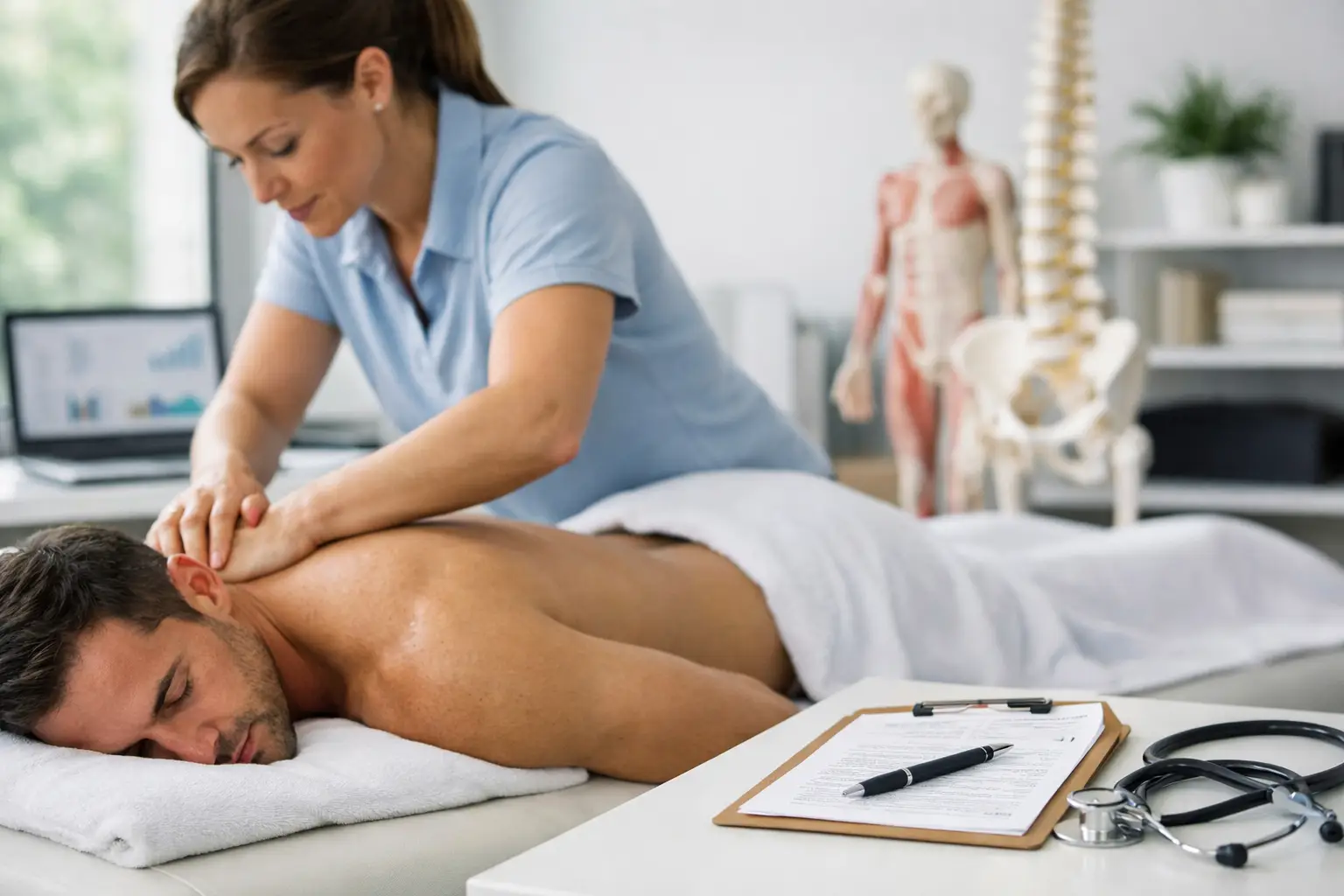
A sore shoulder after long laptop days does not automatically need deep pressure. A runner’s tight calf does not always need more stretching. An evidence based massage approach starts by asking better questions: What is limiting you? What changes your symptoms? What feels safe and tolerable in your body right now? From there, treatment is chosen with purpose rather than following a fixed routine.
For many people, massage is most useful when it does two things at once: it helps reduce the immediate discomfort that is getting in the way, and it gives the nervous system enough safety to stop bracing against every movement. That combination can support more comfortable movement, better recovery, and a clearer sense of what your body needs.
Evidence Based Massage Is More Than a Technique
“Evidence based” can sound like a promise that one technique has all the answers. It is not. In clinical care, evidence-based practice brings together three pieces: the best available research, practitioner expertise, and your individual goals, preferences, history, and response to treatment.
Research can help guide decisions about massage for common concerns such as persistent neck and low-back pain, tension headaches, sports-related soreness, and stress-related muscle tension. It also shows that pain is rarely explained by one tight muscle or one structural finding. Sleep, workload, training volume, stress, past injuries, fear of movement, and general health can all influence how symptoms feel.
That is why a thoughtful massage therapy session does not begin with assumptions like “your hips are out of alignment” or “you need to break up scar tissue.” Those explanations can sound convincing, but they often oversimplify a complex body. A more useful approach is to assess what is happening, test what helps, and adjust the plan as your symptoms and capacity change.
What an Evidence Based Massage Approach Looks Like in Practice
The clinical work begins before hands-on treatment. Your therapist may ask when symptoms began, what aggravates or eases them, how they affect work, training, sleep, or daily tasks, and what you have already tried. They may also look at relevant movement, load tolerance, or joint function when appropriate.
This assessment is not about finding a single “bad” muscle. It is about forming a working picture. If turning your head during a commute triggers neck pain, for example, the session may include work around the neck, upper back, jaw, or shoulders, but it may also include simple movement reassessment and a conversation about workstation position, recovery, or pacing.
Hands-on treatment is then selected for a reason. Depending on your presentation, that might include myofascial techniques, trigger point therapy, Swedish-style massage, orthopedic soft-tissue work, or gentle craniosacral approaches. These are tools, not identities. The right tool is the one that fits your goals, tissue tolerance, and current nervous-system state.
A skilled therapist also reassesses during the session. Does the range of motion feel easier? Has the quality or location of discomfort changed? Is the pressure helping, or is it causing you to guard? Your feedback is meaningful clinical information, not a distraction from treatment.
Pressure Is Not a Measure of Quality
Deep tissue work can feel useful for some people and some conditions. It can create a strong sensory input, temporarily reduce the feeling of stiffness, and help certain clients feel more comfortable moving. But more intensity does not reliably mean better results.
Painful pressure can cause a body to tense further, especially when someone is already stressed, sensitized, recovering from injury, or carrying a history that makes unexpected touch difficult. Bruising, soreness that lingers for days, or a feeling that you had to endure the session are not signs of an effective treatment.
An evidence-based clinician works within your tolerance. Pressure may be firm, moderate, light, or change throughout the appointment. The goal is not to prove toughness. It is to create a meaningful input your system can use without overwhelming it.
Why the Nervous System Belongs in Massage Care
Muscles do not exist separately from the brain and nervous system. When your workload is high, sleep is short, or pain has been present for months, the body may stay in a protective state. You may notice jaw clenching, shallow breathing, elevated shoulders, headaches, or a persistent sense of tightness even when you are not actively exercising.
Massage cannot remove every source of stress, and it is not a replacement for medical or mental health care when those services are needed. Still, a calm, attentive treatment environment can help shift the body out of constant vigilance. Slow pacing, predictable touch, clear communication, and a quiet setting can all matter as much as the manual technique itself.
This is particularly relevant for chronic tension and pain. When the nervous system is on alert, discomfort can feel louder and movement can feel less safe. A session that combines targeted treatment with downregulation may help interrupt the pain-tension-stress cycle. The aim is not to force relaxation. It is to offer conditions where your body has more room to settle.
Trauma-Informed Care Is Clinical Care
Trauma-informed massage does not require you to disclose personal history. It means the practitioner understands that safety, choice, and predictability affect how people experience touch.
In practice, this includes explaining what will happen, asking permission before changing areas or techniques, checking in about pressure, and respecting a client’s right to pause, redirect, remain clothed in certain areas, or end treatment at any time. Draping, boundaries, and language should be handled professionally and without judgment.
For 2SLGBTQIA+ clients and allies, an explicitly inclusive practice also matters. You should not have to spend your appointment anticipating assumptions about your body, identity, relationships, or goals. Feeling respected is not separate from treatment quality. It helps create the safety needed for collaborative care.
The Role of Movement, Load, and Daily Life
Massage can offer relief, but lasting improvement often depends on what happens between appointments. This does not mean everyone needs a long exercise program. Sometimes the most useful recommendation is to take more breaks from a sustained position, adjust training load for a week, improve sleep consistency, or reintroduce a feared movement gradually.
For an active person, a massage therapist may help distinguish between normal post-training soreness and symptoms that warrant a different plan. For an office professional, the focus may be on reducing the accumulation of strain from long meetings, commuting, and limited movement variability. For someone with TMJ discomfort or tension headaches, it may involve considering jaw habits, neck tension, stress patterns, and referral needs alongside careful hands-on work.
The answer depends on the person. A generic prescription to stretch more, strengthen more, or come in every week is not evidence-based simply because it is common. Good care is specific enough to be useful and flexible enough to change when life changes.
When Massage Needs a Referral or a Different Strategy
Clinical judgment also includes recognizing when massage is not the first or only answer. New numbness, progressive weakness, unexplained swelling, fever, significant trauma, sudden severe headache, chest pain, or symptoms that are worsening quickly deserve prompt medical assessment.
There are also times when massage can be part of a broader plan alongside a physician, physical therapist, dentist, mental health professional, or other provider. Collaboration is not a failure of massage therapy. It is a sign that your care is being matched to the complexity of your situation.
At Reset Registered Massage Therapy, each appointment is designed around this kind of precision: a clear assessment, purposeful hands-on work, and room for your feedback at every stage. Whether you want to train with fewer limitations, sit through a workday more comfortably, or simply stop carrying stress in your shoulders and jaw, the treatment should make sense for your body rather than ask your body to fit a routine.
The most helpful massage is not necessarily the one that feels the most dramatic on the table. It is the one that leaves you feeling heard, safer in your body, and a little more able to do what matters to you.