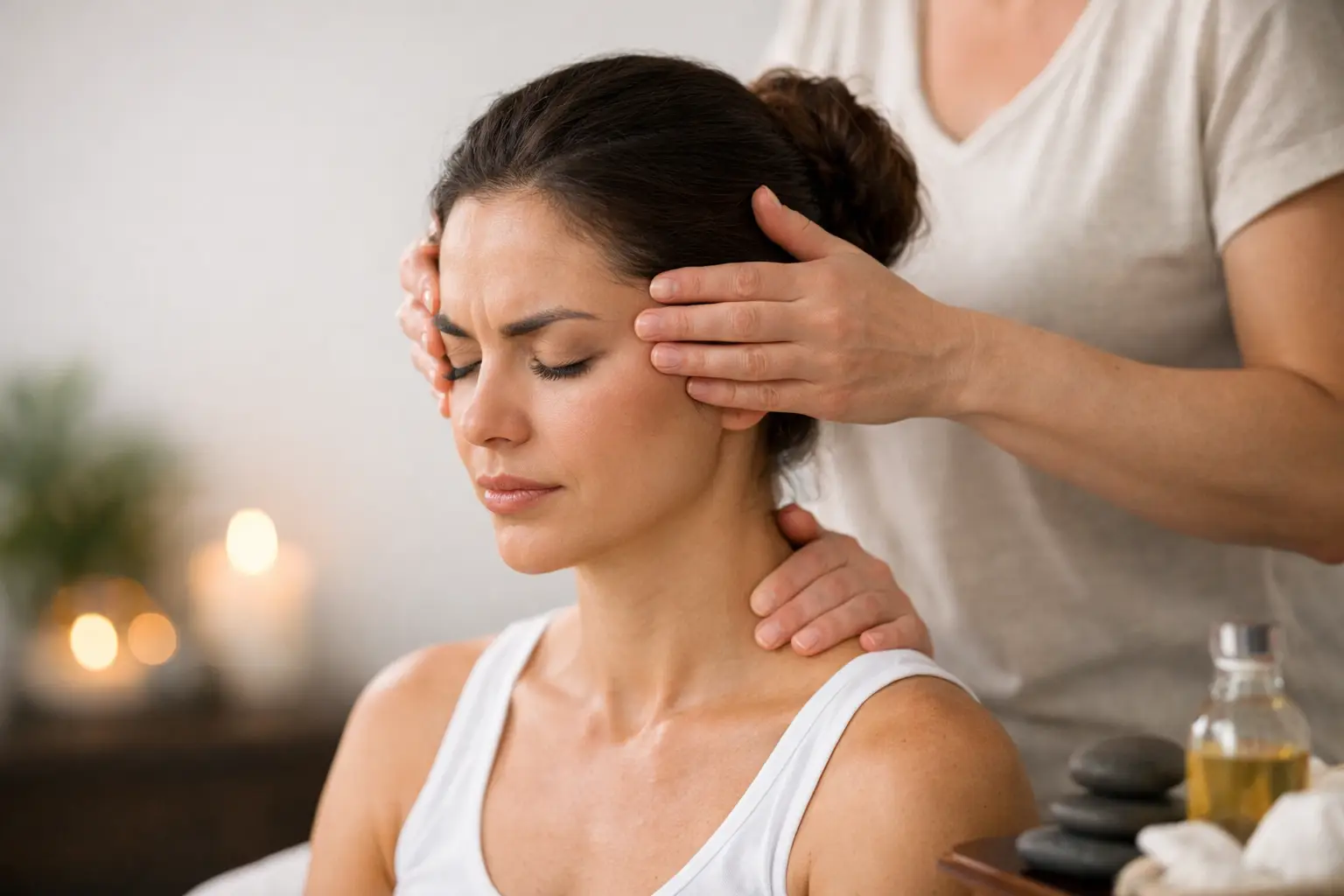
A tension headache can make a normal workday feel physically demanding. The pressure may begin at the base of the skull, creep across the temples, or settle behind the eyes after hours at a screen, a stressful commute, or a poor night of sleep. This guide to massage for tension headaches explains how gentle, well-timed massage may help reduce contributing muscle tension, when self-massage is appropriate, and when a clinical assessment is the safer next step.
Massage is not a shortcut around the underlying causes of recurring headaches. It can, however, be a useful part of a broader plan that considers posture, jaw clenching, workload, sleep, stress, hydration, movement, and the way your nervous system is responding to ongoing demands. The goal is not to force tight muscles to release. It is to give your body a safer, more manageable input and build options for relief.
How tension headaches and muscle tension interact
Tension-type headaches are often described as a dull, steady pressure or a band-like feeling around the head. They may occur alongside aching in the neck, upper shoulders, jaw, or scalp. Unlike migraine, they do not typically involve severe throbbing pain, nausea, or significant sensitivity to light and sound, though headache experiences can overlap and are not always easy to sort out without an assessment.
The muscles at the upper neck, including the suboccipitals just below the skull, can become sensitive when the head is held in one position for a long time. The upper trapezius, levator scapulae, temporalis, and jaw muscles may also contribute to a familiar pattern of neck tightness and head pain. That does not mean every headache comes from a “knot,” or that deep pressure is the answer. Pain is influenced by the tissues themselves as well as stress, fatigue, prior injury, breathing patterns, and nervous-system sensitivity.
For some people, massage reduces the feeling of muscular guarding and makes it easier to move the neck comfortably. For others, the most helpful treatment is gentler work combined with rest, pacing, and strategies for reducing jaw or shoulder tension. The right approach depends on the pattern, your health history, and how your body responds.
When not to massage a headache
A new or unusual headache deserves caution, particularly if it is severe, rapidly escalating, or different from your normal pattern. Massage should not delay medical evaluation for symptoms that may indicate something more urgent.
Seek urgent medical care for a sudden, severe “worst headache,” a headache following a significant head injury, or head pain with fever and neck stiffness. Also seek prompt assessment if you notice weakness, numbness, confusion, fainting, changes in speech or vision, persistent vomiting, or a new headache during pregnancy or after age 50.
It is also wise to pause self-treatment and speak with a qualified health professional if headaches are becoming more frequent, pain medication is needed regularly, or your headache consistently wakes you from sleep. A massage therapist can work within their scope of practice, but clinical massage is most effective when it is part of appropriate, coordinated care.
A practical guide to massage for tension headaches at home
Self-massage should feel calming or comfortably relieving, not sharp, nauseating, dizzying, or increasingly painful. Start with light pressure. The temptation to press harder into a tender spot is understandable, especially when the area feels dense or sore, but aggressive pressure can increase guarding and leave you more sensitive afterward.
Begin by settling your system
Sit with your feet supported and let your back rest against the chair if possible. Take several unhurried breaths, allowing the exhale to be slightly longer than the inhale. You do not need perfect posture. You are simply giving your neck and shoulders a break from holding themselves up against unnecessary effort.
Place warm hands over the sides of your neck or across the tops of your shoulders for 30 to 60 seconds. This quiet contact can be more useful than immediately digging into the tightest area, especially if your headache arrived during a stressful day.
Work the upper shoulders and neck with moderate pressure
Use the opposite hand to gently squeeze and release the upper shoulder, beginning near the outside of the shoulder and gradually moving toward the base of the neck. Keep the motion slow. Spend about one or two minutes on each side, then reassess rather than continuing automatically.
For the sides and back of the neck, use the pads of your fingers rather than fingertips. Make small, slow circles along the muscles beside the spine, avoiding direct pressure on the spine itself and avoiding the front and side of the throat. If you find a sensitive spot, reduce the pressure and stay for two or three relaxed breaths. The sensation should ease or remain tolerable, not radiate strongly into the head, arm, or jaw.
Use gentle contact at the base of the skull
The small muscles where the skull meets the neck are common sites of tenderness for people who spend long periods looking at a laptop, phone, or steering wheel. Lie down if that is comfortable, place your fingertips just below the bony edge at the back of your head, and allow the weight of your head to rest into your fingers.
Rather than pushing upward, use minimal pressure and slowly nod your chin a few millimeters toward your throat, then release. Repeat several times. This movement can help you explore the area without straining it. Stop if it causes dizziness, visual changes, or a notable increase in head pain.
Include the temples and jaw when clenching is part of the pattern
If you wake with jaw soreness, notice yourself clenching during concentrated work, or feel pain around the temples, massage may need to include the jaw muscles. With your teeth slightly apart, place two fingers over the temples and make slow circles for 30 seconds. Then place your fingers over the fleshy cheek muscles just in front of the ears and gently massage while keeping the jaw relaxed.
Do not massage inside the mouth without guidance from a trained clinician. External work, paired with a reminder to let the tongue rest softly and keep the teeth apart, is often enough for a brief home practice.
Why more pressure is not always better
Deep tissue work can be appropriate for some people, particularly when there is a clear muscular restriction and your system tolerates it well. But intensity alone does not determine treatment quality. A sore neck after a demanding week may respond better to Swedish-style relaxation techniques, slower myofascial work, or a lighter approach that reduces overall threat and guarding.
This distinction matters for tension headaches. If pressure makes you brace, hold your breath, or feel as though you need to endure the treatment, it may be too much for that day. Effective massage is collaborative: pressure, positioning, pace, and the areas treated should be adjusted based on your feedback. Consent and comfort are clinical information, not an afterthought.
What a personalized massage assessment can add
Recurring headaches benefit from looking beyond the place where pain is felt. A practitioner may assess neck range of motion, shoulder mechanics, jaw involvement, breathing patterns, training load, workstation habits, and the timing of symptoms. They may also ask about migraine features, injuries, medication use, stress, and sleep because these factors shape which treatment choices are appropriate.
A session might include targeted work to the neck and shoulders, trigger point therapy when tolerated, myofascial release, gentle craniosacral techniques, or orthopaedic approaches to areas that are changing how the neck is loaded. It may also include a quieter relaxation component to support nervous-system downregulation. There is no required sequence, and a full-body routine is not automatically the best fit for a headache pattern.
At Reset Registered Massage Therapy, treatment is adapted in real time through assessment, communication, and a trauma-informed approach. The aim is to create meaningful relief while helping you understand the factors that may be keeping the pain-tension-stress cycle active.
Support your results between appointments
The best post-massage plan is usually simple enough to repeat. Brief movement breaks during desk work, a supported sleep position, regular meals and hydration, and a few minutes of gentle neck or shoulder movement can be more sustainable than an elaborate corrective routine. If jaw clenching is a factor, build in small check-ins during the day: lips together, teeth apart, shoulders less effortful.
Keep a short record of when headaches occur, where they begin, what else was happening that day, and what helped. Patterns often become clearer over a few weeks. That information can make your next treatment more precise and help distinguish a tension-driven pattern from a headache that needs further medical investigation.
Your body does not need to be pushed into relaxation. With appropriate screening, comfortable pressure, and attention to the broader pattern, massage can become one practical way to make room for easier movement, a quieter nervous system, and fewer days shaped by head pain.