A sore calf after a hard run and a swollen ankle after an awkward landing may both be called a “sports injury,” but they do not need the same care. A guide to sports injury massage starts with that distinction: effective treatment is not about applying deeper pressure to every painful area. It is about understanding what your body is protecting, what stage of recovery you are in, and what will help you return to movement without adding more irritation.
Sports massage can be a useful part of recovery for active people, from downtown professionals training before work to athletes preparing for their next event. It works best when it is paired with a thoughtful assessment, clear communication, and appropriate medical care when needed.
What sports injury massage is – and is not
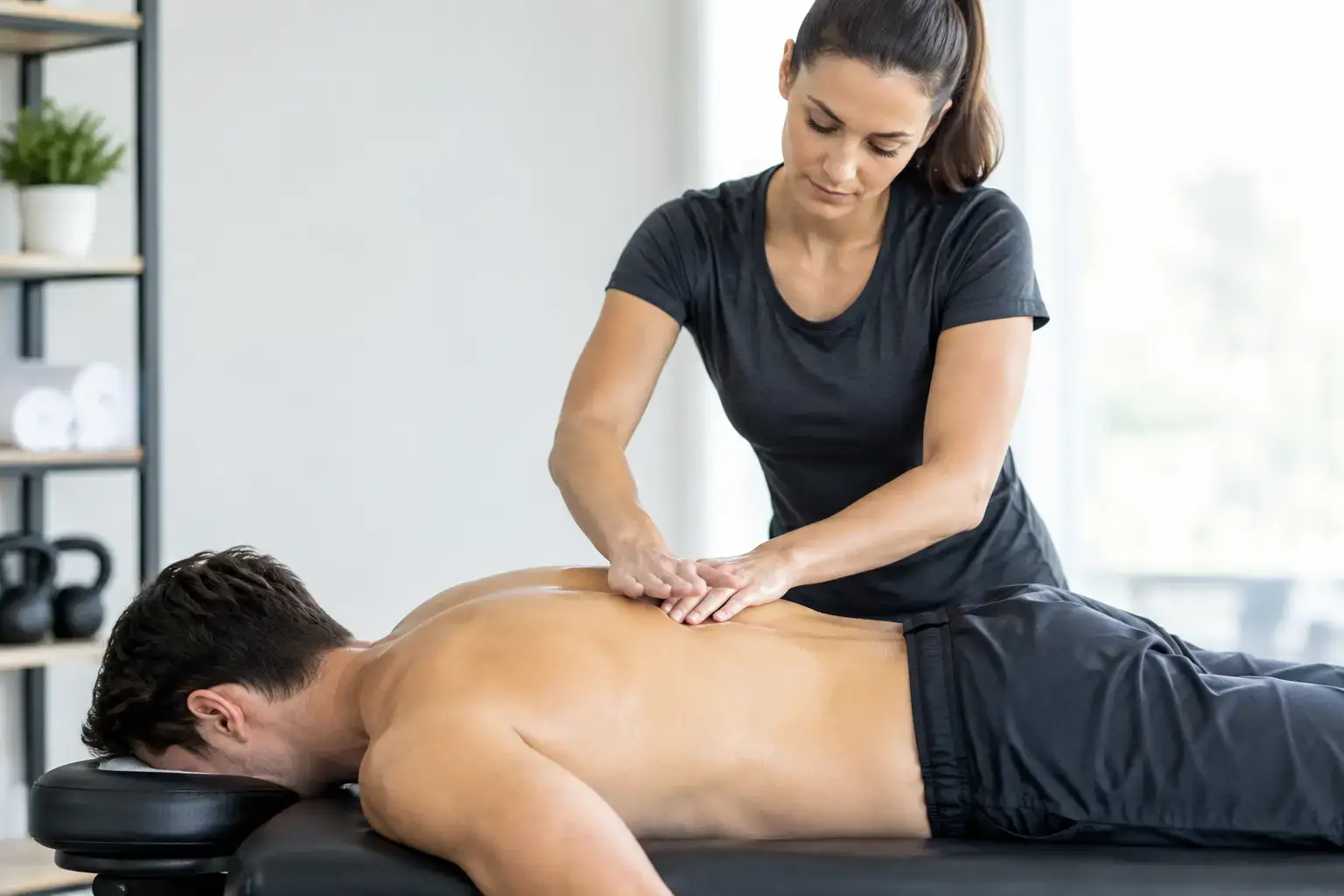
Sports injury massage is a targeted, clinical approach to hands-on treatment for pain, stiffness, muscle guarding, and movement limitations related to activity or training. Depending on the presentation, a therapist may use myofascial release, trigger point therapy, Swedish-style techniques, or carefully applied deep tissue work. The goal is not simply to make a muscle feel looser. It is to support more comfortable movement, reduce protective tension, and help you tolerate a gradual return to load.
Massage does not repair a torn tendon, set a fracture, or replace a medical assessment. It also cannot erase the normal recovery time needed after a significant strain, sprain, or impact injury. Claims that a single session can “break up scar tissue” or flush away all inflammation oversimplify how bodies heal.
What skilled massage therapy can do is create a more useful environment for rehabilitation. When pain, stress, and muscle tension begin feeding one another, a treatment that addresses both the musculoskeletal system and the nervous system can make movement feel more manageable. That may help you sleep better, move with less guarding, and participate more comfortably in the exercises or training modifications that support recovery.
A guide to sports injury massage: timing matters
The right treatment changes as symptoms change. A therapist should adapt the session to your current irritability, not follow a fixed sports massage routine.
The acute stage: protect first
In the first 24 to 72 hours after an injury, the priority is usually protection, symptom monitoring, and medical triage when appropriate. A freshly rolled ankle, direct muscle contusion, or sudden sharp pain during a lift may involve swelling, tissue damage, or joint instability. Aggressive massage over the injured site during this stage can increase soreness and may aggravate bleeding or swelling.
Gentle work away from the area can sometimes be appropriate, especially if compensatory tension is building in the neck, hips, or opposite leg. However, it depends on the injury and your symptoms. Rest from aggravating activity does not always mean complete stillness, but any early movement plan should be guided by pain, function, and clinical advice.
Seek prompt medical assessment for visible deformity, inability to bear weight, rapidly increasing swelling, severe bruising, numbness, progressive weakness, a popping sensation followed by loss of function, or pain that feels disproportionate to the event. Calf pain with unusual swelling, warmth, redness, shortness of breath, or chest pain also requires urgent medical attention rather than massage.
The subacute stage: restore comfortable movement
Once acute symptoms are settling, massage may be more directly useful. This is often the stage when people notice stiffness, reduced range of motion, soreness around the original injury, and compensatory discomfort elsewhere. A runner protecting a painful knee may develop hip flexor or calf tension. A climber with an irritated elbow may start gripping differently and feel strain through the shoulder or forearm.
Treatment at this point should remain responsive. A therapist may use gentle-to-moderate pressure to improve tolerance around sensitive tissue, address overworking muscles, and reduce the nervous system’s alarm response. The session should not leave you feeling beaten up. Some mild, short-lived tenderness can occur, but a major flare that lasts several days is a sign that the dose was too high.
Return to training: build capacity, not dependence
As you resume activity, massage can support recovery between training sessions and help identify patterns that may be limiting performance. It should complement, not replace, progressive loading. If your Achilles tendon hurts during every run, for example, relief in the calf may be helpful, but the longer-term plan also needs a sensible approach to running volume, footwear, strength, and tendon loading.
The best frequency depends on your goals, injury history, training demands, and response to treatment. Some people benefit from a short series during a flare, followed by less frequent maintenance care. Others need only an occasional session alongside a well-designed rehab plan. More treatment is not automatically better.
What a clinical massage assessment should consider
A personalized session begins before hands-on work. Your therapist should ask how the injury occurred, what movements reproduce symptoms, whether you have had similar episodes, and how your symptoms have changed. Training volume, work posture, sleep, stress, and previous injuries all provide useful context.
A practical assessment may include observing movement, checking comfortable range of motion, and comparing how different positions or gentle resistance feel. This is not about forcing a diagnosis from a massage table. It is about identifying what is safe to treat, what may be contributing to your symptoms, and whether a referral is the wiser next step.
Consent belongs in this process as well. Pressure, positioning, and the areas treated should be collaborative decisions. For many clients, particularly those managing chronic pain, prior trauma, or anxiety around health care, feeling informed and in control is part of what allows the body to settle. A trauma-informed approach treats comfort and boundaries as clinical information, not as an afterthought.
What treatment may feel like
Effective sports injury massage is not always deep, and deep is not automatically effective. A guarded muscle may respond better to slower, gentler contact than to intense pressure. Conversely, a chronic area of density may tolerate more focused work when it is introduced gradually and paired with active movement or breathing.
You may notice warmth, easier movement, temporary tenderness, or a feeling of general relaxation after treatment. You should be able to breathe normally and communicate throughout. Sharp, burning, electric, or escalating pain is not a sign that treatment is “working.” Tell your therapist immediately so the technique, pressure, or plan can change.
At Reset Registered Massage Therapy, treatment is designed around this balance: orthopaedic and sports-focused manual therapy is combined with nervous-system downregulation, so the session can address a stubborn movement problem without treating your body like a project to push through.
Make massage part of a realistic recovery plan
The most useful question after a sports injury is rarely, “What technique fixes this?” A better question is, “What can I do now that helps me recover without provoking the problem?” Your answer may include modified training, sleep, hydration, a rehabilitation program, medical follow-up, and massage therapy that fits your current capacity.
After a session, pay attention to the next 24 to 48 hours. Did walking, stairs, reaching, or your warm-up feel easier? Did symptoms return quickly, improve steadily, or flare after treatment? That feedback helps guide the next appointment more effectively than chasing a certain pressure level or technique name.
Recovery is rarely perfectly linear. A well-timed, personalized massage can give you room to move more comfortably and confidently, but lasting progress comes from respecting your body’s signals while gradually rebuilding the capacity your sport requires.