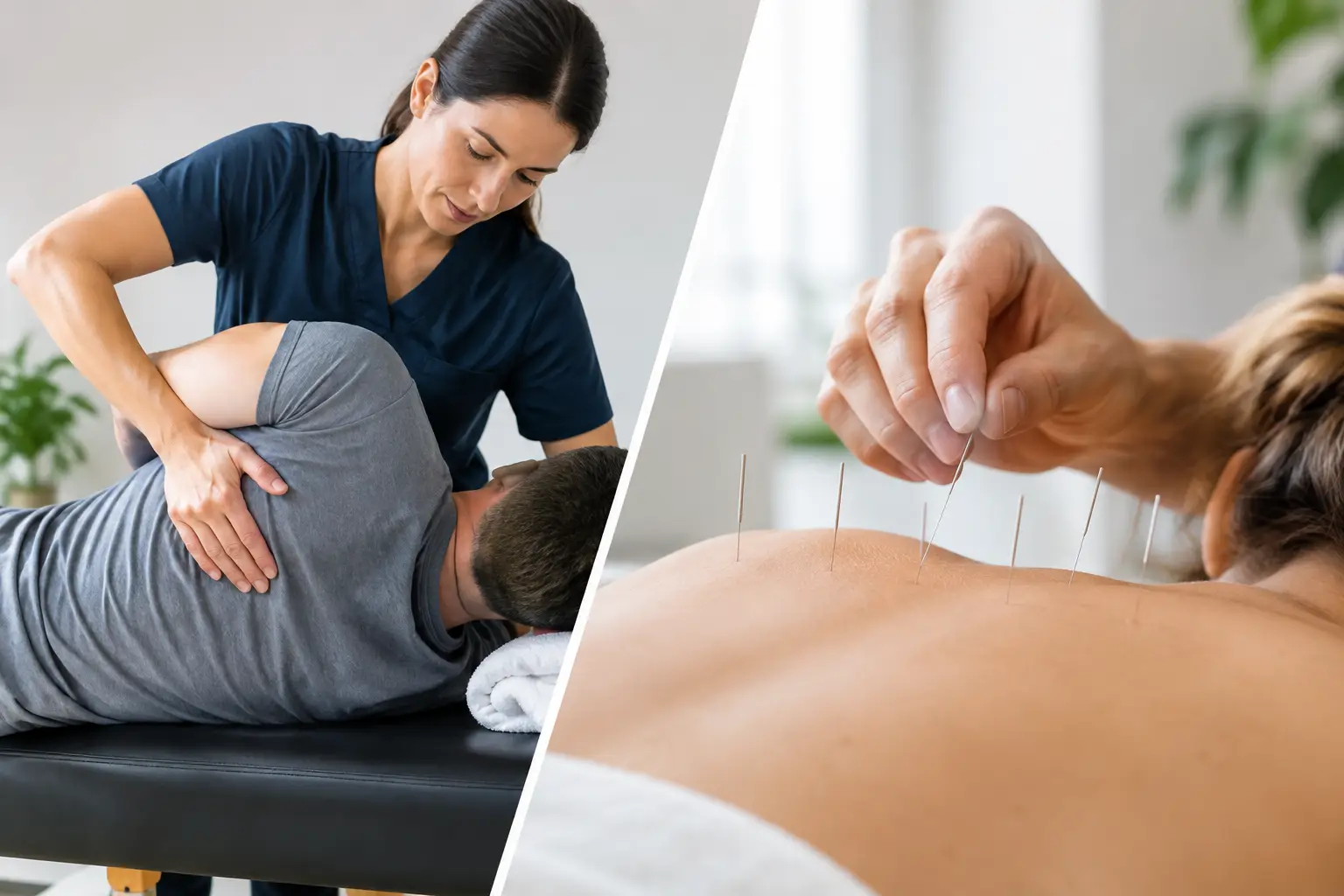
A tight neck before a presentation, a hip that protests after a long run, or a jaw that stays clenched long after the workday ends can all lead to the same question: manual therapy versus acupuncture, which is the better choice? The useful answer is rarely about declaring one treatment superior. It is about matching the approach, the practitioner, and the pace of care to your symptoms, health history, goals, and sense of safety.
For many people, both can be reasonable options for musculoskeletal pain and stress-related tension. They also feel very different. One uses skilled hands to assess and influence tissue, movement, and the nervous system. The other uses very fine needles at selected points. Knowing what each approach can and cannot do helps you make a more confident decision.
Manual Therapy Versus Acupuncture: The Core Difference
Manual therapy is a broad term for hands-on treatment. Depending on the provider’s training and scope of practice, it can include soft-tissue work, myofascial release, trigger point therapy, joint mobilization, stretching, and movement-based assessment. In registered massage therapy, the work often centers on muscles, connective tissue, tolerance to pressure, and patterns that affect daily movement.
Acupuncture involves inserting sterile, single-use needles through the skin at specific points. Some practitioners use a traditional East Asian medicine framework, while others emphasize modern pain science, anatomy, and neurophysiology. A session may also include electrical stimulation, heat, or gentle manual stimulation of the needles, depending on the provider and treatment plan.
The practical distinction is simple: manual therapy gives the practitioner continuous information through touch and movement, while acupuncture creates a needle-based sensory input that may influence pain processing and local tissue response. Neither approach should be treated as a passive fix. The best care includes a conversation about what is changing, what is tolerable, and what supports your goals between appointments.
What Manual Therapy Can Offer
A thoughtful manual therapy session begins before hands-on work. A clinical assessment may look at when symptoms started, what makes them better or worse, sleep, training load, work setup, stress, previous injuries, and movement patterns. The therapist can then reassess throughout the session rather than following a routine that may not fit your body that day.
This is particularly useful when the problem is specific and movement-related. A runner with lateral hip discomfort may need their gluteal muscles, low back, and training volume considered together. Someone with tension headaches may benefit from attention to the neck, shoulders, jaw, breathing pattern, and ability to downshift from sustained stress. For TMJ-related discomfort, a consent-based approach matters especially because the jaw and face are sensitive areas for many clients.
Manual therapy does not need to be intensely painful to be effective. Deep pressure can feel appropriate for some tissues and some people, but more pressure is not automatically better care. A trauma-informed practitioner checks in, adjusts technique, and treats comfort, boundaries, and nervous-system regulation as clinical information. This can be especially meaningful when pain has made the body feel guarded or unpredictable.
At Reset Registered Massage Therapy, sessions can combine orthopaedic and sports-oriented deep tissue techniques with gentler Swedish-style relaxation work. That blend recognizes a reality many busy professionals and active clients know well: a body may need focused treatment for a shoulder or hip while also needing enough calm to stop feeding the pain-tension-stress cycle.
What Acupuncture Can Offer
Acupuncture may appeal to people who prefer a treatment with less sustained touch or who want an option that does not require direct work over a painful area. Needles may be placed near the symptom, farther away from it, or in a combination of locations. After insertion, many people rest quietly for part of the appointment.
The sensations vary. You might feel a brief pinch as a needle enters, followed by warmth, heaviness, tingling, dull pressure, or very little at all. You should not feel obliged to tolerate sharp, burning, or alarming sensations. Tell the practitioner immediately if something does not feel right.
Research suggests acupuncture can provide useful relief for some people with chronic pain conditions, including low back, neck, knee, and headache-related pain. Response is individual. It may work best as one part of a broader plan that includes movement, sleep support, medical assessment when needed, and changes to the aggravating demands of work or training.
What Does the Evidence Actually Say?
Both treatments have evidence behind them, but neither produces identical results for every person or every diagnosis. Manual therapy can provide short-term improvement in pain, range of motion, and perceived stiffness, particularly when it is paired with exercise, education, and an active return to meaningful activity. Acupuncture can also reduce pain for some conditions, sometimes beyond what people experience with minimal or simulated treatment.
That does not mean the mechanism is fully settled or that a technique can repair every source of pain. Pain is influenced by tissue sensitivity, inflammation, strength, workload, sleep, stress, prior experiences, and the nervous system’s threat response. The quality of the assessment and the therapeutic relationship can matter as much as the label of the modality.
Be cautious with claims that either treatment can “realign” the body permanently, release every knot, cure a complex condition in one visit, or replace appropriate medical care. A skilled provider should be able to explain their rationale in plain language, acknowledge uncertainty, and revise the plan when your response calls for it.
How to Choose Between Them
Start with what feels most accessible and acceptable to you. If you want hands-on assessment, gradual pressure adjustments, and treatment that can be integrated with movement testing in real time, manual therapy may be the more natural starting point. It is often a strong fit for people managing training-related tightness, desk-related neck and shoulder discomfort, persistent muscle guarding, or a specific mobility concern.
If you dislike massage pressure, prefer less conversation during treatment, or are curious about needle-based pain modulation, acupuncture may be a better fit. Some people also choose acupuncture when a painful area is too sensitive for direct touch. Others simply find the quiet rest period deeply calming.
Your prior experience matters, but it should not lock you into one path. If massage has helped in the past but now feels too intense, a gentler session with a different clinical strategy may be appropriate. If acupuncture has not helped after a reasonable trial, it may be time to revisit the diagnosis, goals, provider approach, or the role of strength and movement rehabilitation.
Safety, Consent, and When to Get Medical Input
Both modalities are generally low risk when performed by appropriately trained, licensed, or regulated professionals within their scope. Still, safety begins with disclosure. Share medications, recent procedures, pregnancy, skin changes, allergies, fainting history, and any condition that could affect treatment choices.
Acupuncture deserves additional discussion if you use blood-thinning medication, have a bleeding disorder, are pregnant, have a significant needle phobia, or have a history of fainting. Manual therapy may need modification around acute injuries, active inflammation, osteoporosis, recent surgery, open skin, or areas of altered sensation.
Seek medical evaluation promptly for symptoms such as unexplained weakness, loss of bladder or bowel control, fever with severe pain, chest pain, major trauma, sudden severe headache, or persistent numbness and tingling. Hands-on care and acupuncture can be supportive, but neither should delay assessment of a potentially urgent condition.
Consent is not a one-time form at the beginning of an appointment. It is ongoing. You can ask why a technique is being suggested, request a different approach, decline work on an area, or stop treatment at any point. The right setting is safe, non-judgmental, and inclusive, especially for clients whose previous health care experiences have made body-based treatment feel stressful.
Can You Use Both?
Yes. Some people use acupuncture for pain modulation and manual therapy for movement assessment, tissue tolerance, and stress-related muscle guarding. The treatments can complement each other when providers understand your goals and you give your body enough time to show a meaningful response.
Avoid stacking appointments simply because more treatment feels more productive. If you are already sore, fatigued, or overwhelmed, a lighter approach may be more useful than adding intensity. Track simple markers instead: sleep, ease of movement, symptom irritability, training tolerance, and how you feel the day after treatment.
The best choice is the one that leaves you feeling heard, respected, and better equipped to move through your day. Whether that begins with skilled manual therapy, acupuncture, or a coordinated combination, look for care that treats your symptoms as part of a whole person rather than a problem to push through.