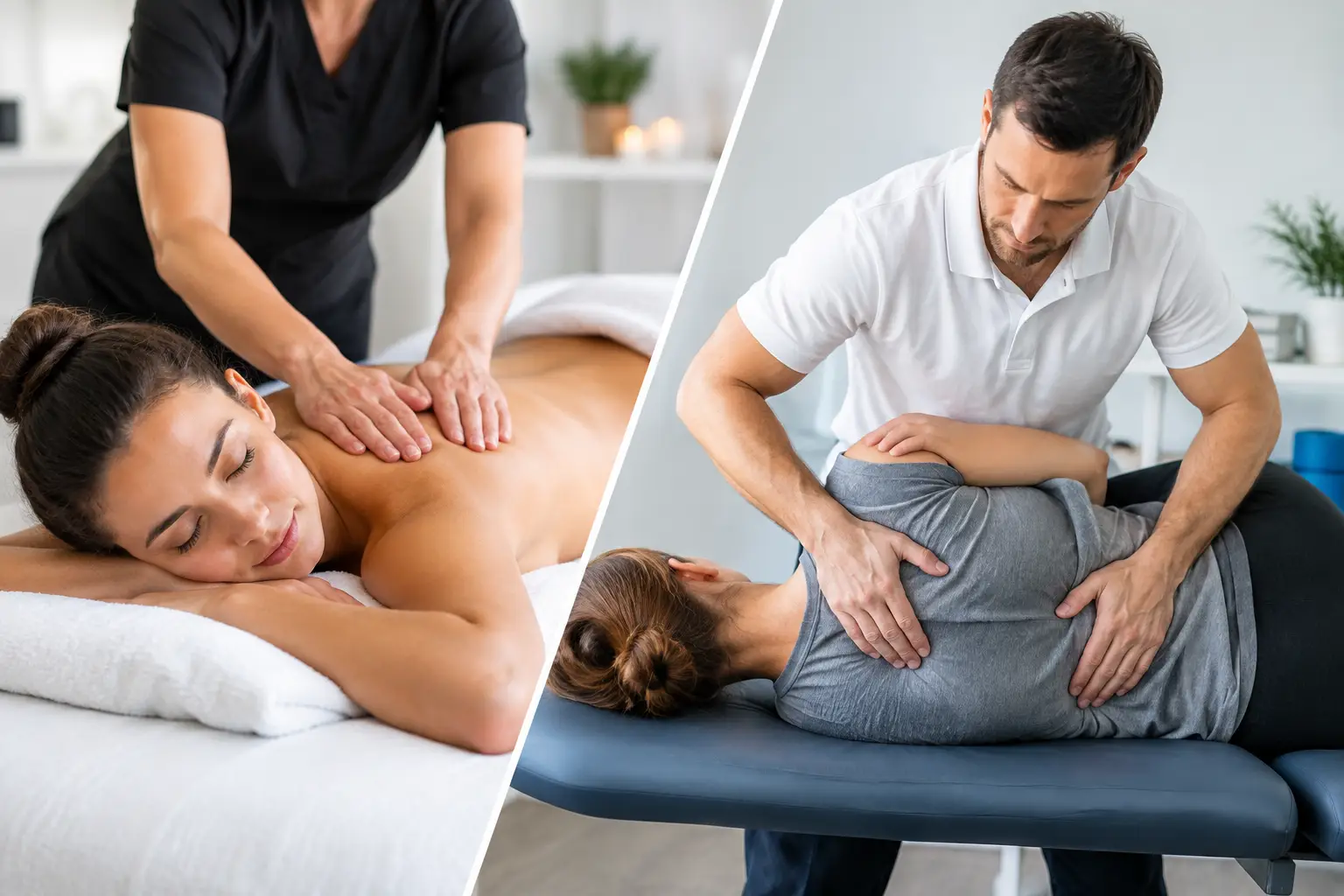
A tight neck before a presentation, a hip that protests after a long run, or headaches that arrive after another demanding week can all prompt the same question: massage versus osteopathy – which is the better choice? The most useful answer is not that one is universally better. It is that the right care depends on your symptoms, your goals, your health history, and how your body responds to treatment.
Both approaches may use hands-on care and both can feel supportive when pain, stiffness, or stress is affecting daily life. Their training, scope, assessment process, and treatment emphasis can differ substantially. Knowing what those differences mean in practice can help you choose care that feels effective, safe, and aligned with what you need.
Massage Versus Osteopathy: The Core Difference
Registered massage therapy is centered on assessing and treating soft-tissue and movement-related concerns. An RMT may work with muscles, fascia, tendons, and the nervous system’s response to pain and stress. Treatment often supports mobility, symptom relief, recovery, and function, whether the issue is a training-related calf strain, persistent upper-back tension, jaw discomfort, or a shoulder that has become difficult to use comfortably.
A clinical massage appointment is not simply a preset sequence of strokes. A practitioner may assess range of motion, aggravating activities, tissue sensitivity, posture, training load, and relevant health history. They then select techniques and pressure based on what is appropriate that day. This can include Swedish massage for relaxation, myofascial release, trigger point therapy, focused deep-tissue work, and gentler approaches when the nervous system is already on high alert.
Osteopathy is more complicated to define because the title and scope vary by location. In the United States, a Doctor of Osteopathic Medicine, or DO, is a fully licensed physician who can diagnose illness, prescribe medication, and provide medical care. In other settings, including parts of Canada, an osteopathic manual practitioner may provide hands-on treatment but is not necessarily a physician. Training, regulation, and permitted services can vary, so it is wise to ask directly about a practitioner’s credentials and scope.
Manual osteopathic care generally takes a whole-body view of movement and may use soft-tissue work, joint mobilization, stretching, and gentle positional techniques. Some practitioners place particular emphasis on how different body regions influence one another. A painful shoulder, for example, may be considered alongside rib movement, neck mobility, breathing patterns, and how the person is loading the arm.
Neither profession should promise to fix every pain problem through hands-on treatment alone. Good care includes clear boundaries, appropriate referrals, and a plan that recognizes sleep, work demands, stress, strength, mobility, and medical factors.
What a Session Usually Feels Like
The experience of massage therapy can range from deeply calming to highly targeted. For someone carrying stress in their shoulders and jaw, a session may combine slower, settling work with focused treatment of the neck, upper back, and muscles of the face. For an athlete with a training-related issue, the appointment may include a more orthopedic assessment and treatment directed toward the tissues and movements involved.
Pressure is not a measure of quality. More force is not automatically more therapeutic, especially when an area is irritable or when pain has been persistent. Effective massage works within your tolerance and changes course when your body is guarding, bracing, or becoming more sensitive. The goal is often to create enough comfort and movement to make daily activity, recovery, or exercise more manageable.
An osteopathic manual therapy session may include observation of posture and movement, gentle testing of joints, and techniques that may feel like stretching, mobilization, or guided positioning. Depending on the practitioner, treatment may be subtle rather than intense. If a practitioner uses joint manipulation, ask what it involves, why it is recommended, what alternatives exist, and whether it is suitable for your health history.
In either setting, you should know what is being assessed and treated. You can ask for a different pressure, request that an area be avoided, pause treatment, or decline any technique. Consent is ongoing, not a one-time formality at the start of an appointment.
When Massage Therapy May Be the Better Fit
Massage therapy is often a strong choice when your main concern is muscle tension, stress-related discomfort, recovery from activity, or pain that seems connected to repetitive positions and movement patterns. It can be particularly useful for people who want both clinical reasoning and a genuinely restorative experience rather than a rushed, purely mechanical treatment.
Consider massage when you are dealing with persistent desk-related neck and shoulder tension, tension headaches, general soreness after training, or a sense that your body never fully comes out of high gear. It may also be appropriate for targeted concerns such as hip tightness, TMJ-related muscle tension, or upper-back discomfort, provided the practitioner assesses the issue and adapts care to your presentation.
At Reset Registered Massage Therapy, treatment is designed around this overlap between musculoskeletal care and nervous-system downregulation. A session might include orthopedic or sports-focused deep-tissue work where it is useful, then shift toward slower, gentler techniques to help reduce protective tension. That adjustment matters: a body that feels safe can often tolerate movement and treatment more comfortably.
Massage is also a practical option when you value a collaborative plan. Your RMT can explain why a particular area is being treated, suggest manageable home strategies, and reassess from appointment to appointment instead of applying the same routine every time.
When Osteopathy May Be Worth Considering
An osteopathic practitioner may be a good fit when you are specifically seeking a whole-body manual therapy perspective or when your symptoms seem to involve several areas at once. For example, you may have recurring low-back discomfort alongside hip stiffness and altered movement after an old injury. You may prefer the style of assessment and hands-on methods offered by a particular osteopathic practitioner.
That said, the label alone does not tell you whether someone is the best match. Ask about their education, experience with your concern, treatment approach, expected number of visits, and referral practices. If you are in the United States and need medical diagnosis, imaging, medication, or broader medical management, confirm whether you are seeing a DO physician rather than a manual osteopathic practitioner.
For many people, massage therapy and osteopathic care are not competing choices. They can be complementary when providers communicate appropriately and stay within their scopes. The deciding factor is often the quality of assessment and whether the plan makes sense for your goals.
Choose Care Based on Your Goal, Not the Label
Before booking, get specific about what you want to change. Relief is a valid goal, but it helps to define it. Perhaps you want to sit through a workday without neck pain, return to lifting without hip tightness, sleep without waking from jaw clenching, or feel less guarded after a stressful month.
Then consider the style of care that will help you follow through. If relaxation, tissue-focused treatment, and a gradual return to comfortable movement sound useful, a registered massage therapist may be an excellent starting point. If you are seeking a particular manual osteopathic approach, choose a practitioner whose credentials and care plan are transparent.
The best treatment should not leave you guessing about what happened or feeling pressured to endure discomfort. It should be responsive to your feedback, respectful of your boundaries, and realistic about progress. Some concerns improve quickly; others require pacing, movement support, medical assessment, or a combination of care.
Safety Matters More Than a Perfect Modality Match
Seek medical assessment promptly for severe or worsening pain after a significant injury, unexplained weakness or numbness, changes in bowel or bladder function, fever, unexplained weight loss, chest pain, shortness of breath, or a sudden severe headache. Hands-on care is not a substitute for urgent medical evaluation.
For non-urgent concerns, disclose relevant conditions, medications, recent surgeries, pregnancy, osteoporosis, bleeding risk, cancer history, and previous reactions to treatment. A skilled practitioner will modify treatment, ask follow-up questions, or refer you elsewhere when needed. This is not a limitation of good care. It is part of it.
The right appointment is the one where you feel heard, physically safe, and clear on the next step. Whether you choose massage, osteopathy, or coordinated care, look for a practitioner who treats your symptoms seriously while treating you as the expert on your own body.