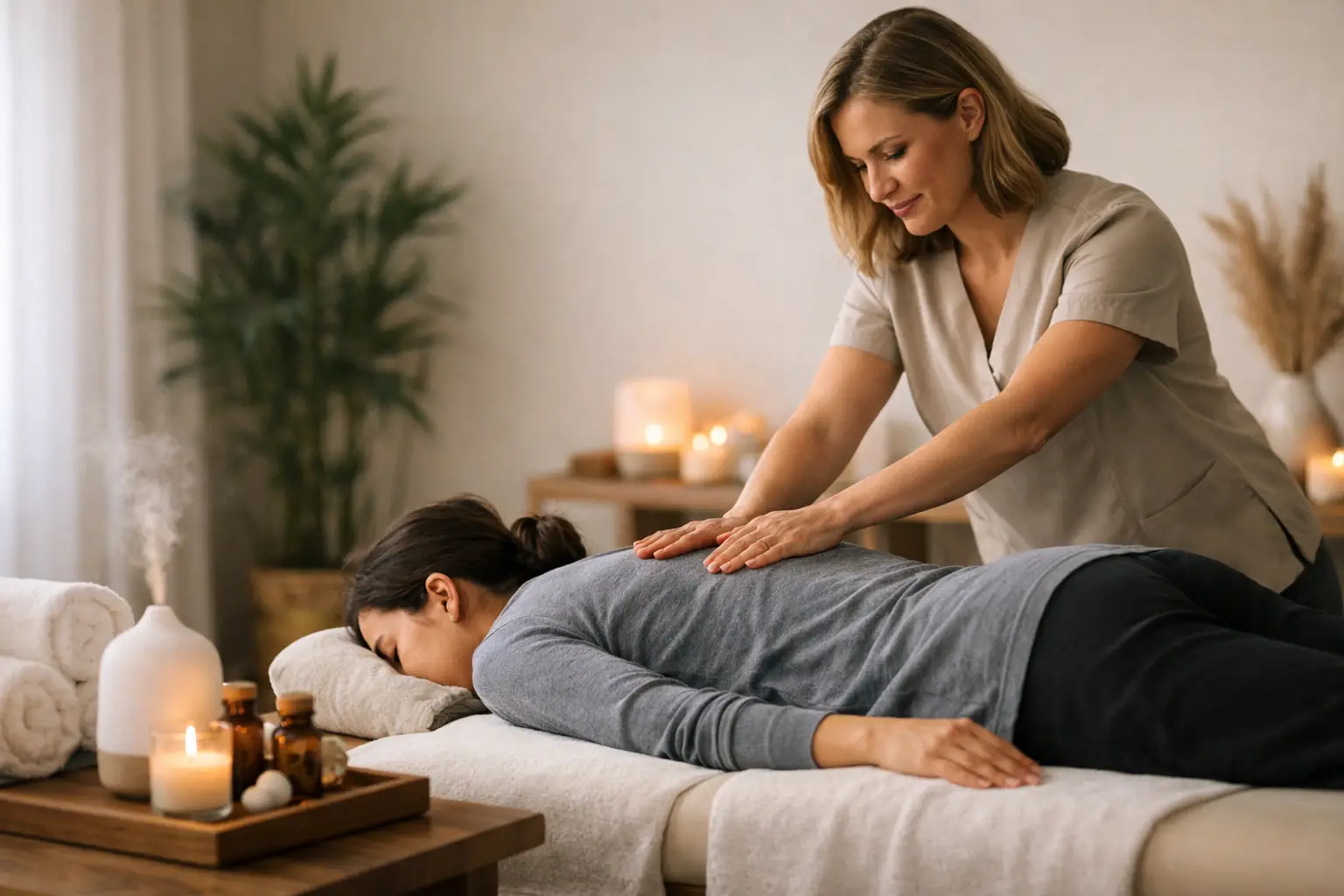
That wired-but-exhausted feeling often shows up in the body before people have words for it. Shoulders stay elevated, breathing gets shallow, the jaw grips, and even resting can feel strangely effortful. In that context, swedish massage for anxiety symptoms is not just about feeling relaxed for an hour. It can be a practical way to reduce muscular guarding, improve body awareness, and give the nervous system a clearer signal that it is safe enough to downshift.
At a clinical massage practice, this matters because anxiety rarely lives in the mind alone. It often shows up as neck tension, headaches, upper back tightness, stomach discomfort, clenching, poor sleep, and a general sense that the body cannot fully settle. A well-delivered Swedish-style session can support symptom relief, but the best results usually come when treatment is personalized, consent-based, and adjusted in real time to match the client’s tolerance.
How Swedish massage affects anxiety symptoms
Swedish massage is typically associated with lighter to moderate pressure, long gliding strokes, rhythmic kneading, and a predictable pace. Those features matter. When the body receives steady, non-threatening input, the nervous system may shift away from constant vigilance and toward a more regulated state.
That does not mean massage treats anxiety in the same way therapy or medication might. It means it can influence some of the physical patterns that tend to travel with anxiety symptoms. If your chest feels tight, your breathing feels stuck high in the ribs, or your neck is doing the work of your whole day, manual therapy may help reduce the load your system is carrying.
For some people, the biggest change is not dramatic. It is the first full exhale they have taken all week. For others, it is less headache frequency, less jaw clenching, or a better chance of falling asleep without feeling revved up. Those are meaningful changes, especially when anxiety has become physically repetitive.
Swedish massage for anxiety symptoms works best when it is personalized
A generic relaxation routine is not always the right fit for an anxious body. Some clients settle with broad, flowing strokes and a quiet room. Others become more aware of vulnerability when treatment is too passive, too silent, or too full-body too quickly. This is where clinical judgment matters.
A trauma-informed, safety-centered approach changes the experience. Pressure should be collaborative, not imposed. Positioning should feel stable and comfortable. The therapist should explain what they are doing, check in without overloading the session, and respect that some regions of the body may feel more activating than calming.
In practice, that may mean starting with the upper back instead of the front of the body, keeping one foot or leg bolstered for grounding, avoiding overstimulating pressure, or spending more time on breathing-related tension around the ribs, shoulders, scalp, and jaw. For clients with anxiety symptoms, predictability is often therapeutic.
Why lighter is not always better
There is a common assumption that if someone feels anxious, treatment should always be very light. Sometimes that is true. Sometimes it is not. A pressure level that feels too faint can be irritating or hard to register, especially for people whose nervous systems already feel scattered.
The better question is whether the input feels clear, safe, and easy to receive. Moderate Swedish pressure can be deeply regulating when it is paced well and matched to the client. More pressure is not automatically more effective, and lighter pressure is not automatically more calming. It depends on the person, the area being treated, and how overloaded the system is that day.
The role of assessment
Anxiety-related tension can mimic or amplify other pain patterns. A person may book for stress relief but actually be dealing with tension headaches, TMJ involvement, postural strain, or training load that is keeping the nervous system on edge. That is why assessment matters.
A skilled RMT looks at where tension is accumulating, how breathing mechanics may be contributing, whether symptoms are local or widespread, and what type of touch is most likely to help without overwhelming the system. Swedish techniques can then be blended with more targeted work, such as myofascial release or gentle trigger point treatment, if that suits the client’s goals and tolerance.
What symptoms may improve
Massage is not a cure-all, but it can support several common physical symptoms associated with anxiety. Muscle tightness in the neck, shoulders, back, and jaw often responds well. Some people notice fewer stress headaches, easier breathing, less restlessness in the body, and a stronger sense of physical grounding after treatment.
Sleep can also improve, although this varies. If your body has been stuck in a prolonged stress response, one session may help you feel calmer that day without fully changing your sleep pattern. Over time, repeated downregulation can make it easier for the body to recognize rest again.
There are limits. If anxiety symptoms include panic attacks, severe insomnia, intrusive thoughts, trauma responses, or major disruptions to work and relationships, massage should be seen as supportive care rather than stand-alone treatment. It can be a valuable part of a broader plan that may also include mental health care, medical care, movement, and recovery strategies.
What a good session should feel like
For anxiety-related care, a successful session is not defined only by whether you feel sleepy afterward. It should feel organized, respectful, and physically easier to inhabit. Many clients describe a sense of more space in the chest, less effort in the shoulders, and a clearer divide between “alert” and “on edge.”
You should not feel like you had to endure the treatment. If pressure, pace, positioning, or silence increases your stress, that is useful information, not a personal failure. Good care adapts. In a well-run clinical setting, your therapist can adjust the plan mid-session based on how your nervous system is responding.
That flexibility is especially important for clients who are high-performing at work or in training and have gotten used to pushing through discomfort. With anxiety symptoms, more intensity is not always more therapeutic. Sometimes the most effective treatment is the one your body can trust enough to receive.
When Swedish massage may not be the right fit on its own
There are cases where Swedish massage for anxiety symptoms is helpful but incomplete. If your body tension is driven by a specific orthopedic issue, you may need more focused treatment. If anxiety is intertwined with trauma, dissociation, or strong sensitivity to touch, the pacing and structure of care become even more important.
Similarly, if you are seeking relief from both stress and pain, a blended session may be more effective than a purely relaxation-based one. A clinical therapist might combine Swedish flow with targeted work for the jaw, neck, hips, or thoracic spine so the session supports both nervous-system regulation and measurable physical change.
This is one reason many clients prefer a practitioner-led approach over a standard spa format. The goal is not to force the body to relax. The goal is to create conditions where relaxation becomes more possible.
Getting better results between appointments
The effects of massage are often stronger when the rest of your routine does not immediately push your system back into overload. That does not require a perfect lifestyle. It usually means keeping the post-treatment window as supportive as possible.
Hydration, a slower evening, easier breathing, and less screen-driven stimulation can help the body hold onto the shift. If your therapist recommends simple home care, such as jaw awareness, rib mobility work, or shorter bouts of movement during the workday, those strategies can reinforce what happened on the table without making recovery feel like another job.
At Reset Registered Massage Therapy, this kind of care is built around both tissue response and nervous-system response, because the two are rarely separate in real life. For many adults balancing work strain, commuting, training, and chronic tension, that combined lens is what makes treatment feel genuinely useful.
If anxiety has been showing up in your body as clenching, guarding, shallow breathing, or exhaustion that never quite turns into rest, Swedish massage can be more than a temporary escape. In the right hands, it can be a steady, respectful way to help your body remember what settling feels like.