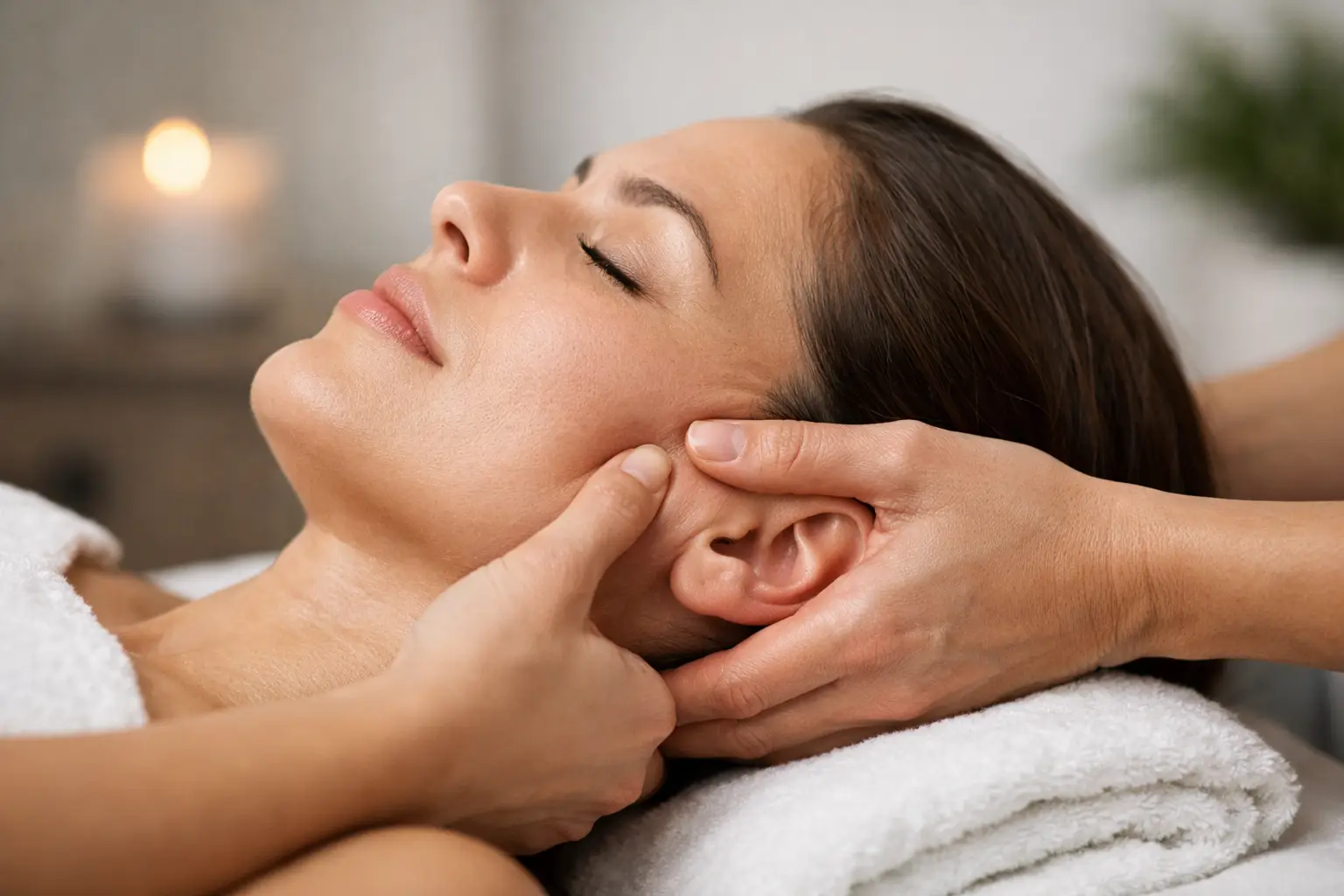
Jaw pain rarely stays in the jaw. It can show up as headaches behind the eyes, ear-area discomfort, neck tension, tooth sensitivity, or that tired, overworked feeling when you chew or talk for too long. If you are wondering, is massage good for jaw pain, the short answer is yes – often, and especially when muscle tension is part of the problem. But the better answer is that it depends on why your jaw hurts, how irritable the area is, and whether treatment is approached with enough precision.
Is massage good for jaw pain when muscles are involved?
In many cases, yes. Jaw pain is commonly linked to overactive muscles around the temporomandibular joint, or TMJ, especially the masseter, temporalis, and the muscles of the neck and upper shoulders. Clenching, grinding, stress, poor sleep, long hours at a desk, and even heavy lifting can all contribute to a jaw that feels guarded and compressed.
Massage therapy can help by reducing resting tension in these muscles, improving local circulation, and calming the nervous system response that keeps the area on alert. That matters because jaw pain is often part of a larger pain-tension-stress loop. When the system feels threatened or overloaded, muscles tend to grip harder. The more they grip, the more sensitive the jaw can become.
A well-planned treatment does not just press on the sore spot. It looks at the surrounding pattern. The jaw does not work in isolation, so effective care often includes the temples, face, neck, scalp, shoulders, and upper chest. For some clients, that broader approach changes the jaw more than direct pressure ever could.
What massage can actually help with
Massage is not a cure-all for every TMJ issue, but it can be very useful for a specific cluster of symptoms. If your jaw pain is related to clenching, muscle guarding, tension headaches, stress-driven tightness, or postural strain, massage may reduce both pain and stiffness. Some people also notice they can open their mouth more comfortably, chew with less fatigue, or wake up with less soreness.
This is especially true when treatment is individualized. A clinical session should consider what movements aggravate the area, whether symptoms are one-sided or bilateral, whether headaches are involved, and whether the jaw is reacting to neck dysfunction or vice versa. That assessment piece matters. Two people can both say “my jaw hurts” while needing very different treatment strategies.
It also matters how pressure is used. More pressure is not always better for jaw pain. Very irritable TMJ symptoms can flare if treatment is too aggressive, too direct, or poorly timed. In practice, a combination of targeted manual therapy and nervous-system downregulation is often more effective than chasing intensity.
Common jaw-related symptoms massage may improve
Massage may be a good fit when jaw pain comes with morning tightness, stress-related clenching, tenderness in the cheeks or temples, tension headaches, or pain that spreads into the neck and shoulders. It can also help people who notice their jaw symptoms worsen during busy work periods, after long screen time, or when sleep quality drops.
That does not mean every symptom points to a muscle issue. Clicking, locking, significant bite changes, or sharp joint pain may need a broader assessment.
Why jaw pain is often bigger than the TMJ
People are often surprised to learn that the jaw is heavily influenced by the rest of the body, especially the neck. If the upper cervical area is stiff, the head sits forward for hours, or the shoulders stay elevated under stress, the muscles that assist with jaw stability can become overloaded.
Breathing patterns can matter too. Mouth breathing, shallow chest breathing, and high stress can all increase tone through the neck and facial muscles. Add nighttime clenching or daytime bracing, and the jaw never really gets a break.
This is one reason an evidence based massage approach can be so helpful. Instead of treating jaw pain as an isolated local problem, treatment can be built around the full pattern – load on the tissues, movement quality, sleep, stress, work posture, training habits, and symptom irritability. For many clients, relief comes from reducing the overall system burden, not just from working inside the pain zone.
What a thoughtful massage approach looks like
A good treatment for jaw pain should feel collaborative, not automatic. The first step is assessment. That may include questions about clenching, headaches, dental history, stress, trauma history, sleep, and what makes symptoms better or worse. It may also include checking neck range of motion, jaw opening, side-to-side movement, and tenderness in related muscles.
From there, treatment might include myofascial release, trigger point work, gentle Swedish-style relaxation techniques, and slower pacing to help reduce protective tension. In some cases, craniosacral-style techniques or very light manual work can be helpful when the nervous system is highly reactive and deeper input is not well tolerated.
Consent and comfort are essential here. Jaw work can feel vulnerable, and not every client wants direct hands-on treatment to the face. A trauma-informed therapist will explain options clearly, check tolerance throughout the session, and adjust the plan if the area feels too exposed or overstimulating. A safe, non-judgmental, inclusive space is not extra polish in this kind of care. It is part of treatment quality.
What about intraoral massage?
Some TMJ treatment plans include intraoral work, meaning treatment of the jaw muscles from inside the mouth. This can be effective in the right setting, but it is not necessary for every person with jaw pain. Many clients improve with external work to the jaw, temples, neck, and upper shoulders, especially when symptoms are driven by clenching and general muscular overload.
If intraoral work is considered, it should be explained carefully, consented to clearly, and performed within the therapist’s scope, training, and hygiene standards. It should never feel pressured or routine.
When massage may not be enough
This is the part that gets missed in overly simple articles. Sometimes massage helps, but only as one part of a larger plan. If your jaw locks, catches, dislocates, or has persistent joint noises with pain, there may be a stronger joint or disc component. If you have recent trauma, swelling, fever, dental infection, severe tooth pain, numbness, or unexplained facial pain, massage is not the first stop.
Jaw pain can also overlap with migraines, sinus issues, nerve irritation, arthritis, or dental problems. In those cases, massage may still help reduce secondary tension, but it should not replace appropriate medical or dental evaluation.
The goal is not to force massage to fit every scenario. The goal is to use it where it is most useful – and know when a broader referral is the better call.
How quickly can you expect results?
That depends on the pattern. A stress-related flare with obvious muscle tension may respond within one or two sessions, especially if treatment includes home strategies and load management. Longstanding jaw pain with chronic clenching, sleep issues, headache history, and neck involvement usually takes more patience.
Progress is not always linear. Sometimes pain improves before mobility does. Sometimes headaches settle first, then jaw fatigue during chewing starts to ease. Sometimes the biggest early change is simply that the jaw feels less guarded.
This is where individualized care matters. At Reset Registered Massage Therapy, jaw-focused sessions are built around assessment, tolerance, and the broader pattern contributing to symptoms rather than a fixed routine. That tends to produce more meaningful change than treating the jaw as a stand-alone complaint.
What you can do between sessions
The most helpful self-care is usually the least dramatic. Try to notice when your teeth are touching during the day. In most relaxed positions, they should not be. A small amount of awareness around clenching can reduce strain more than repeated stretching.
Heat can be soothing for some people, especially if the muscles feel dense and achy. Others do better with quieter strategies like nasal breathing, softer chewing for a few days, reducing gum chewing, and setting up their workstation so the head is not pushed forward all day.
If self-massage helps, keep it gentle. The jaw often responds better to calm, brief input than to intense pressure. And if a strategy consistently increases pain, that is useful information – not a sign you need to push harder.
So, is massage good for jaw pain?
Often, yes. Massage can be very effective for jaw pain tied to clenching, muscle tension, neck strain, stress, and tension headaches. The best results usually come from treatment that is evidence based, precise, and responsive to your comfort level rather than aggressive or one-size-fits-all.
If your jaw pain feels muscular, stress-sensitive, or connected to your neck and shoulders, massage is a reasonable place to start. If symptoms are more complex, massage may still play a helpful role alongside dental, medical, or multidisciplinary care. The key is finding treatment that listens to the whole pattern, because a jaw rarely tightens for no reason.