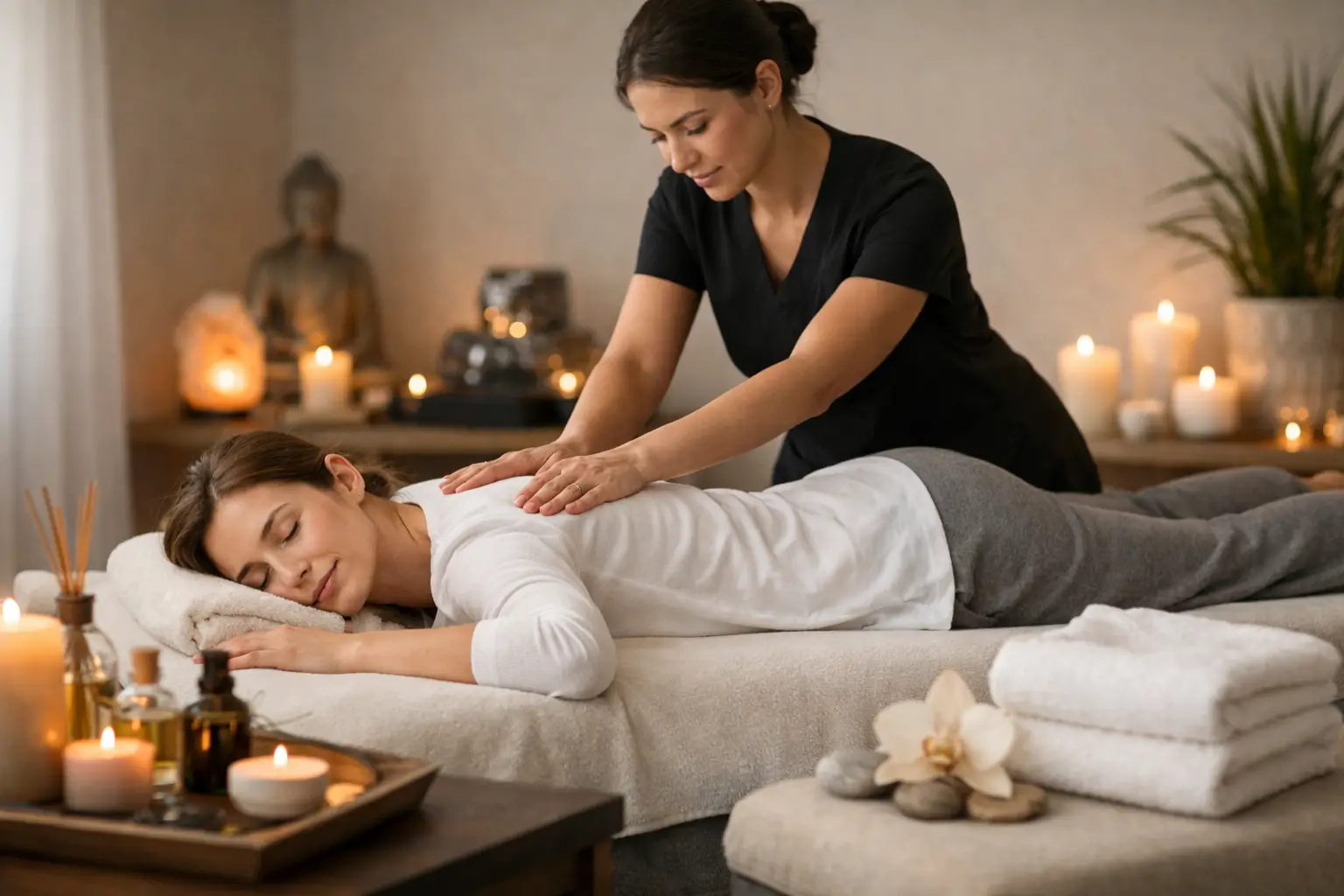
A massage does not need to be intensely painful to be therapeutic. For many people carrying desk-related neck tension, a demanding training schedule, or the physical effects of prolonged stress, Swedish relaxation massage benefits begin with a change in how safe and settled the body feels. When pressure, pace, and technique match your tolerance, the nervous system has more room to downshift and muscles may become easier to move.
At Reset Registered Massage Therapy, relaxation is not treated as an afterthought or a standardized spa routine. It can be an intentional part of a clinically informed treatment plan, shaped by assessment, your goals, and what your body is communicating during the session.
What Swedish Relaxation Massage Is Designed to Do
Swedish-style massage generally uses long, gliding strokes, kneading, gentle rhythmic movements, and lighter-to-moderate pressure. Its purpose is not to force a tight muscle to release. Instead, it creates conditions that can support circulation, body awareness, and a calmer physiological state.
That distinction matters. Muscles often become guarded because the nervous system perceives stress, pain, uncertainty, fatigue, or overload. More pressure is not automatically a better answer. If treatment exceeds your tolerance, your body may brace against it, leaving you sore or more sensitive afterward. A well-paced relaxation approach gives the practitioner useful feedback and gives you permission to soften gradually.
For some clients, Swedish techniques are the entire focus of the appointment. For others, they are blended with targeted work such as myofascial release, trigger point therapy, craniosacral therapy, or orthopaedic massage. The right balance depends on whether your priority is recovery, stress reduction, mobility, pain management, or a combination of these.
Swedish Relaxation Massage Benefits for Body and Mind
It can reduce the feeling of muscle tension
Massage may help reduce the subjective feeling of stiffness and tightness, especially in commonly overloaded areas such as the shoulders, upper back, hips, forearms, and calves. Gentle, sustained contact can make it easier for a muscle to tolerate movement without immediately guarding.
This does not mean massage permanently changes muscle structure in one appointment. Chronic tightness often has several contributors, including work posture, sleep, training load, joint irritation, stress, and previous injury. Still, a decrease in tension can create a useful window for more comfortable movement, exercise, or rehabilitation.
It supports nervous-system downregulation
A fast-paced workday can leave the body in a state of constant readiness: jaw clenched, breathing shallow, shoulders elevated, and attention pulled in several directions at once. Swedish-style relaxation massage can support a shift away from that high-alert state through predictable, comfortable touch and a quieter pace.
This is especially relevant for stress-driven body discomfort. Tension headaches, jaw clenching, persistent upper-back tightness, and generalized soreness can be influenced by the pain-tension-stress cycle. Massage is not a cure for every cause of pain, but it can be a supportive intervention that helps interrupt that cycle.
A trauma-informed approach is essential here. Relaxation is never something a client should be expected to perform. Clear consent, privacy, the ability to adjust pressure, and the freedom to pause or stop treatment all contribute to genuine nervous-system safety.
It may improve sleep and recovery habits
Many clients notice that they sleep more deeply or feel less restless after a calming massage session. The effect is not guaranteed, and sleep concerns can have medical, psychological, and lifestyle components that require broader support. But when muscular discomfort and stress are keeping the body activated at night, a treatment focused on settling the system may be useful.
Recovery also means more than feeling loose after a workout. Active people often need a realistic way to manage training load without treating every sore area aggressively. Lighter Swedish techniques may be appropriate after periods of hard training when the goal is to feel more comfortable, reconnect with the body, and avoid adding unnecessary soreness.
It can improve body awareness
Pain and stress can make people either hyperaware of every sensation or disconnected from their body altogether. A thoughtful massage session can help you notice patterns: where you hold tension, which movements feel restricted, how your breathing changes with stress, or when pressure becomes too much.
That awareness is clinically valuable. It helps guide future treatment and can make it easier to identify the difference between ordinary post-workout fatigue, recurring tension, and symptoms that need further assessment. It also makes treatment more collaborative. Your feedback is not an interruption – it is part of the care.
It offers a lower-intensity option for sensitive days
There are days when deep tissue work is not the right choice. You may be sleep-deprived, recovering from an illness, managing a flare-up, feeling emotionally overloaded, or simply not interested in a highly stimulating session. Choosing a gentler approach is not “wasting” an appointment.
For clients with chronic pain, sensitivity, or a history of difficult treatment experiences, beginning with lower-intensity work can be a practical way to build trust and learn what their system responds to well. Pressure can always be increased later if it is appropriate. It is much harder to undo a session that felt too intense.
When Relaxation Massage Is Not Enough on Its Own
Swedish massage can be deeply helpful, but it is not a substitute for diagnosis or medical care when symptoms call for it. New numbness, progressive weakness, unexplained swelling, fever, severe or sudden pain, a suspected fracture, or signs of a vascular problem need prompt medical assessment rather than massage.
It may also be only one piece of the plan for persistent shoulder dysfunction, hip pain, sports injuries, TMJ symptoms, or recurring headaches. In these cases, an RMT assessment can help determine whether relaxation-focused work should be combined with more specific manual therapy, movement guidance, load modification, or referral to another provider.
The goal is not to make every appointment feel clinical or intense. It is to use the right clinical reasoning so treatment matches the problem in front of you.
What a Personalized Session Can Feel Like
A personalized relaxation-focused RMT appointment starts before hands-on work. Your therapist should ask about your symptoms, health history, activities, previous massage experiences, and goals for the day. For a client who sits through long meetings, that may mean assessing neck and shoulder movement. For a runner, it may mean discussing recent mileage, recovery, and hip or calf symptoms.
During treatment, communication remains active. You can request more or less pressure, ask for a different area of focus, keep parts of the body covered, or decline any technique. In a safe, non-judgmental, and inclusive space, those choices are expected and respected.
The treatment itself may move between broad Swedish strokes and more focused techniques, depending on what the assessment suggests. A tense upper trapezius may not need relentless pressure. It may respond better to gentle warming work, work around the shoulder blade and chest, supported positioning, and slower breathing. Similarly, a sore hip may benefit from addressing the surrounding gluteal muscles and movement tolerance rather than chasing one painful spot.
Afterward, the best next step is often simple: drink water if you are thirsty, return to normal movement as comfortable, and notice how you feel over the next day or two. Some people feel immediately lighter; others notice subtler changes in sleep, ease of motion, or awareness of their stress patterns. Mild tenderness can happen, but a session should not leave you feeling punished.
Choosing the Right Pressure for Your Goals
Pressure preference is personal, but the most useful pressure is the amount your body can receive without bracing. A sensation of therapeutic discomfort may be acceptable for some targeted techniques, yet sharp pain, holding your breath, tensing against the table, or feeling unsafe are signals to adjust.
If you are booking because you feel “tight,” it can help to clarify what you want from the session. Do you want to calm down after a difficult month? Recover between training sessions? Address a specific shoulder or jaw pattern? The answer shapes the treatment. Swedish relaxation work is often most effective when it is chosen deliberately, rather than viewed as the lesser version of deep tissue massage.
The most meaningful benefit may be leaving with a body that feels more manageable and a clearer sense of what it needs next. That is a strong place from which to rest, move, and make decisions about your care.