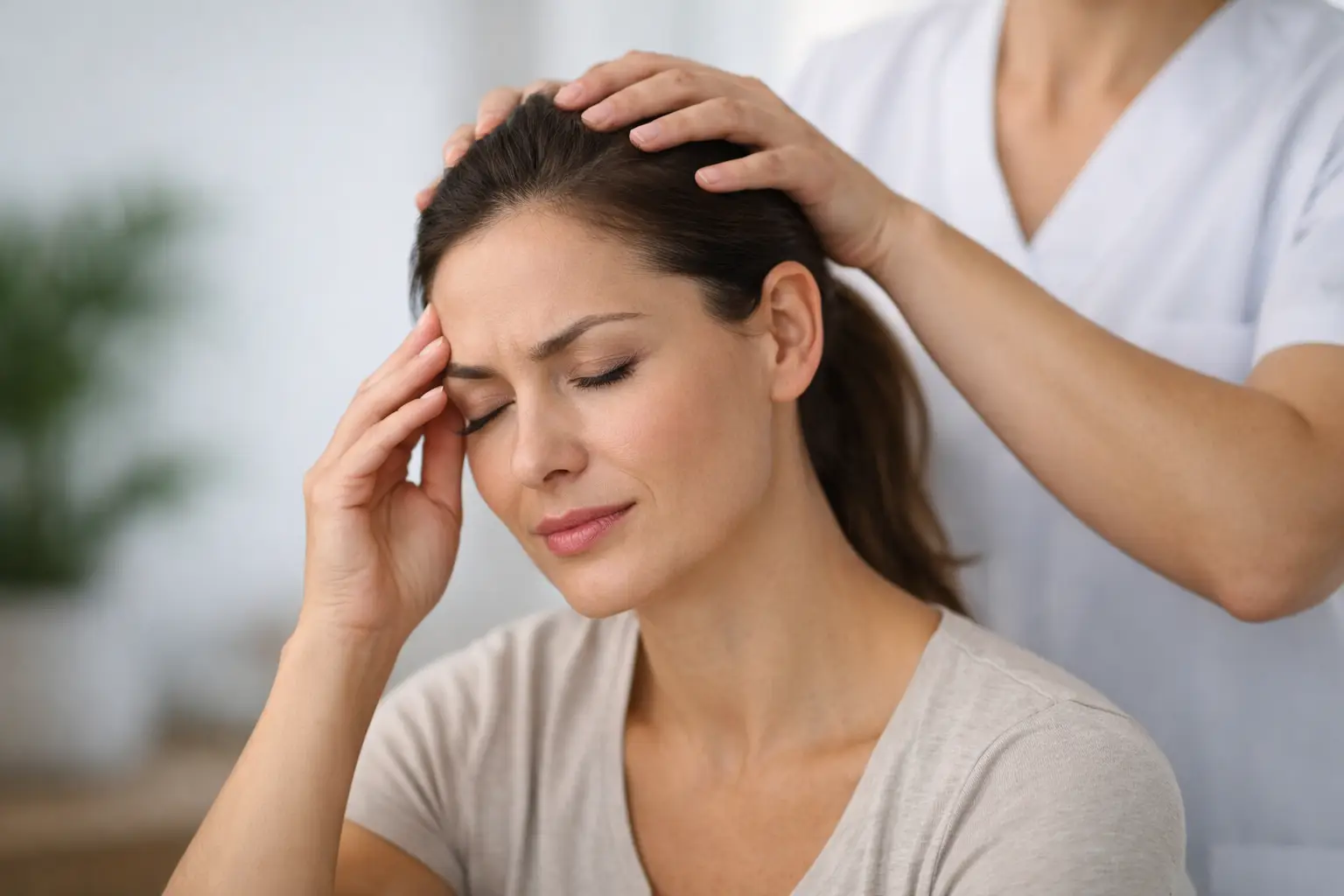
A headache that starts at the base of your skull after a screen-heavy workday does not always need more willpower. It may be your body responding to sustained muscle effort, jaw clenching, limited movement, poor sleep, stress, or a combination of all five. Massage for headache relief can be a useful part of care when those factors are contributing, particularly when treatment is specific to your symptoms and comfortable enough for your nervous system to receive it.
That does not mean every headache should be treated the same way. A thoughtful massage therapy session begins with assessment: where the pain starts, how it travels, what it feels like, what tends to bring it on, and whether there are signs that massage is not the right next step. The goal is not simply to work harder into tight tissue. It is to reduce the inputs that may be keeping your system on alert while supporting easier, more confident movement.
Which Headaches May Respond to Massage?
Tension-type headaches are often the clearest fit. They can feel like pressure, tightness, or a band around the head, sometimes paired with aching at the temples, forehead, neck, or upper shoulders. Long periods at a desk, driving, training, stress, and shallow breathing can all increase the load on the muscles around the cervical spine, shoulders, and jaw.
Cervicogenic headaches may also benefit from targeted manual therapy. These headaches are referred from structures in the neck and often begin on one side, moving from the upper neck or back of the head toward the temple, forehead, or eye. Neck movement, sustained posture, or certain positions may aggravate them. Because several conditions can create similar symptoms, assessment matters before assuming the source is muscular.
Massage can also be supportive for people who get migraines, especially when neck tension, stress, disrupted sleep, or jaw clenching are reliable triggers. It is not a replacement for medical migraine care, and it will not stop every attack. Still, carefully paced treatment between episodes may help reduce muscular guarding and give some people another tool for managing their overall trigger load.
Why the Neck Is Only Part of the Picture
The neck is commonly blamed for headaches, but it rarely works alone. Your upper trapezius, levator scapulae, suboccipital muscles, chest, upper back, and jaw all share the job of holding your head and responding to daily demands. If you spend hours looking down at a phone, leaning toward a laptop, cycling in a forward position, or bracing through stressful meetings, these tissues may stay active longer than they need to.
Jaw tension deserves particular attention. Many people clench without realizing it, especially during focused work, difficult conversations, exercise, or sleep. Tenderness in the temples, cheeks, or muscles around the jaw can contribute to head and face pain. A clinician may use gentle external work around the jaw, scalp, neck, and shoulders while discussing habits that keep the area overloaded. Any approach to the jaw should be consent-based and adapted to your comfort.
There is also a nervous-system component. Pain and stress can create a feedback loop: discomfort leads to guarding, guarding increases sensitivity, and sensitivity makes ordinary demands feel more threatening. A session that combines precise manual therapy with a calm, predictable pace can help interrupt that loop. Sometimes deeper pressure is useful. Sometimes it makes a sensitized system push back. Effective care responds to your tolerance rather than treating intensity as proof of quality.
What Massage for Headache Relief Looks Like in Practice
A clinical massage session for headaches should not be a standardized neck-and-shoulder routine. Your therapist may first ask about headache frequency, duration, location, medication changes, sleep, exercise, work setup, previous injuries, stress, and any symptoms that concern you. They may also assess neck and shoulder movement, tissue sensitivity, breathing patterns, and how your symptoms change with position.
Treatment may include myofascial release to reduce the sense of pull through the neck and upper back, trigger point therapy for particularly irritable muscle areas, and orthopaedic-style soft tissue work to address movement restrictions. Gentler Swedish-style techniques can be equally valuable when your body needs downregulation rather than more stimulation. Some clients also respond well to carefully applied craniosacral therapy, particularly when headache patterns are closely tied to stress and high overall sensitivity.
The treatment plan should remain collaborative. You can ask for less pressure, more explanation, a change in position, or a pause at any time. In a trauma-informed setting, consent is ongoing, not a one-time question at the beginning of the appointment. This is especially relevant for work around the head, face, jaw, chest, and neck, where proximity can feel vulnerable for some clients.
What to Expect After a Session
Some people notice easier neck movement, less pressure around the head, and a calmer baseline immediately afterward. For others, the benefit is more gradual: they sleep more deeply that night, notice less clenching during the week, or recover more quickly after a demanding workday. Results depend on the type of headache, how long the pattern has been present, current stress load, and whether other contributors are being addressed.
Temporary soreness can happen after focused work, particularly if the tissues were highly guarded. It should be mild and short-lived, not a significant flare. Hydration, gentle movement, regular meals, and avoiding an abrupt return to a highly aggravating posture can all help after treatment. If symptoms worsen substantially or feel different from your typical headache, seek medical guidance rather than trying to massage through it.
For recurring headaches, spacing can matter more than a single long appointment. A short series of sessions may allow your therapist to learn your patterns, adjust treatment based on your response, and help you identify the moments when your body starts to build tension. The aim is functional improvement: fewer disruptive days, less intense symptoms, and more options when a headache begins.
Small Changes That Support Treatment
Massage works best as one part of a practical plan. You do not need a perfect desk setup or a rigid stretching routine. Often, the useful change is smaller: taking a brief movement break before your shoulders creep upward, using a headset instead of pinning a phone between shoulder and ear, or noticing whether your teeth are touching while you concentrate.
If your headaches relate to training, the plan may include looking at recent changes in volume, recovery, hydration, or fueling. If they occur during high-pressure periods at work, nervous-system support may be as relevant as strengthening or mobility work. Your therapist can help you distinguish between helpful self-care and the urge to aggressively stretch or press on painful areas, which can sometimes make an irritated system more reactive.
When Headache Symptoms Need Medical Attention
Massage is not appropriate for every headache. Seek urgent medical care for a sudden, severe headache that reaches peak intensity quickly, a headache after a significant head injury, or head pain accompanied by fainting, confusion, fever, seizure, vision loss, weakness, numbness, trouble speaking, or loss of coordination. New headaches during pregnancy, a major change in your usual headache pattern, or worsening headaches with exertion also warrant prompt medical assessment.
A therapist should refer out when symptoms suggest something beyond a musculoskeletal pattern. That is not a failure of massage. It is part of safe, evidence-based care. The most useful treatment is the one that matches what your body actually needs.
At Reset Registered Massage Therapy, headache care is approached with that balance in mind: detailed assessment, clinically informed manual therapy, and a quiet, inclusive space where your comfort guides the session. Relief often begins not with forcing your body to relax, but with giving it enough safety and support to stop working so hard.