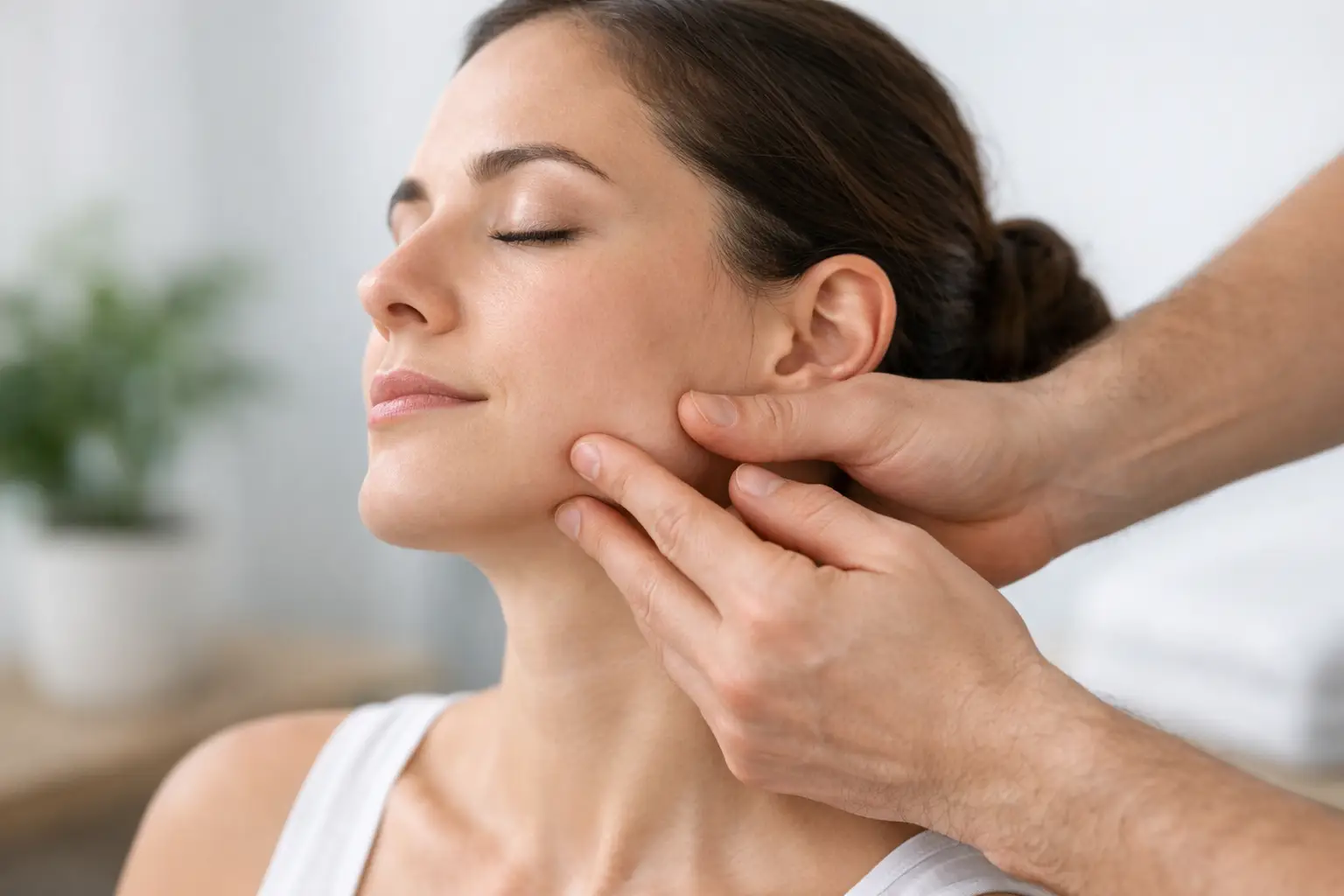
Jaw tension rarely starts and ends at the jaw. Many people notice it first as clenching, clicking, or soreness when chewing, but the pattern often includes temple pain, headaches, neck stiffness, and that tired, overworked feeling through the face. When clients ask about the best massage techniques for jaw tension, the most honest answer is that the right approach depends on why the jaw is guarding in the first place and how sensitive the nervous system is that day.
A strong treatment plan is rarely about forcing the jaw to relax. It is about reducing threat, improving tissue tolerance, and addressing the surrounding muscles that keep pulling the system back into tension. That is why effective jaw work usually blends precise manual therapy with a measured, safety-centered pace.
What causes jaw tension in the first place?
The jaw is influenced by more than chewing. Stress, nighttime clenching, airway issues, dental changes, posture, training load, screen-heavy work, and previous injury can all contribute. For some people, the main driver is the masseter and temporalis muscles doing too much work. For others, the neck, upper traps, and suboccipitals are feeding into the pattern.
This matters because jaw tension is not always a pure TMJ problem. Sometimes the joint itself is relatively calm, while the muscles around it are overloaded. In other cases, the area is highly irritable, and aggressive pressure can make things worse. A good clinical approach starts with assessment – how wide the mouth opens, whether there is deviation, where symptoms refer, what activities trigger pain, and how the tissue responds to touch.
Best massage techniques for jaw tension and when they help
There is no single best method for every person, but a few techniques consistently stand out when applied thoughtfully.
Trigger point therapy for overactive chewing muscles
Trigger point therapy is often one of the most effective options when the jaw feels dense, tender, and constantly switched on. The masseter, temporalis, and sometimes the medial and lateral pterygoid muscles can develop highly irritable spots that refer pain into the teeth, temple, ear, and cheek.
When done well, trigger point work is specific rather than forceful. The therapist locates a taut, familiar area of tension, applies tolerable sustained pressure, and monitors how the tissue and nervous system respond. This can help reduce the intensity of the local contraction and improve range of motion.
The trade-off is that trigger point therapy is not always comfortable, and more pressure is not better. In a highly sensitized jaw, heavy work can provoke guarding. For clients who clench hard or wake with facial soreness, moderate pressure with careful pacing is often more productive than a deep, grinding style.
Myofascial release for broader facial and neck tension
Jaw symptoms often sit inside a larger tension pattern that includes the scalp, face, front of the neck, and upper chest. Myofascial release can be especially useful here because it works with tissue restriction more gradually. Instead of chasing one painful spot, it addresses the connective tissue continuity that may be limiting movement and contributing to that stuck, compressed feeling.
This approach tends to suit clients who are stress-loaded, prone to headaches, or quick to flare after intense treatment. Gentle sustained contact around the jaw, temples, sternocleidomastoid, and upper cervical area can help reduce guarding without overwhelming the system. It may feel subtler than deep tissue work, but subtle does not mean ineffective. In many cases, it creates the conditions that make more focused jaw work possible.
Intraoral massage for deeper jaw muscles
When standard external massage is not reaching the source of symptoms, intraoral work can make a meaningful difference. This technique involves treating certain jaw muscles from inside the mouth, typically with gloved hands and clear ongoing consent. It can be especially helpful for the pterygoid muscles, which are difficult to access externally and are often involved in clenching and limited opening.
For the right client, intraoral treatment can reduce pain, improve opening, and change how the bite feels at rest. But it is not appropriate for everyone. Some people do very well with it, while others prefer to avoid it for sensory, emotional, or medical reasons. Trauma-informed care matters here. There should be clear explanation, no pressure to proceed, and room to stop or modify at any point.
Temporalis and scalp work for headache-related jaw tension
The temporalis muscle is easy to overlook because the pain often presents as temple tightness or tension headaches rather than obvious jaw pain. Massage to the temporalis, scalp, and fascia around the side of the head can be surprisingly effective for people who clench, grind, or spend long hours concentrating at a screen.
This work is usually well tolerated and pairs nicely with treatment to the jaw itself. If you tend to feel a band of pressure around the temples, or your jaw pain increases during stressful workdays, this area deserves attention.
Neck and upper shoulder treatment for referred tension
One of the most common mistakes in jaw treatment is staying too local. The upper traps, sternocleidomastoid, scalenes, suboccipitals, and even the pecs can influence jaw mechanics and resting tone. If the head is carried forward all day or the neck is stiff and overloaded, the jaw often compensates.
This is why some of the best massage techniques for jaw tension are not technically jaw techniques at all. Orthopaedic-style work to the neck and shoulder girdle can reduce pull through the system, improve head and neck movement, and make it easier for the jaw to stop bracing. For commuters, desk workers, and athletes training through upper body load, this wider lens is often where treatment starts to hold.
Craniosacral-informed, downregulating techniques
For clients whose jaw pain rises with stress, poor sleep, or a persistently revved-up nervous system, slower and gentler techniques can be clinically relevant. Craniosacral-informed work is sometimes helpful not because it forces mechanical change, but because it can support downregulation. When the body stops scanning for threat, clenching can soften.
This is not the right fit for every case. If there is a clear mechanical restriction, it may work best alongside more direct soft tissue treatment. But for those who feel like their jaw is always on, especially during periods of burnout or anxiety, calming the system is often part of solving the muscle tension.
What effective jaw massage should feel like
Good treatment should feel targeted, respectful, and adaptable. Some tenderness is common, especially in the masseter and temporalis, but you should not feel trapped under pressure or pushed past your tolerance. The tissue often responds better when the therapist listens for resistance rather than fighting it.
Relief can show up as less facial heaviness, easier opening, fewer headaches, reduced tooth contact at rest, or a sense that the whole neck and face are less busy. Sometimes the change is immediate. Sometimes it builds over a few sessions as the area becomes less reactive.
When self-massage helps and when it does not
Self-massage can be useful between appointments, especially for the masseter and temples. Gentle circular pressure over the cheek muscles, slow sweeping strokes over the temples, and light work around the base of the skull can reduce day-to-day buildup. Heat, breath work, and jaw awareness can make those effects last longer.
But self-treatment has limits. It is harder to assess whether pain is coming from the joint, the muscle, the neck, or a referred pattern. People also tend to press too hard into an already irritated area. If your jaw locks, clicks painfully, feels unstable, or symptoms are getting worse, it is worth getting assessed instead of trying to out-massage the problem at home.
A personalized approach works better than a standard routine
The most effective care for jaw tension is rarely a preset sequence. One person needs focused trigger point work to the masseter. Another needs gentle downregulation, neck treatment, and a slower pace because the whole system is on high alert. Another may benefit most from intraoral work combined with coaching around clenching habits and resting jaw position.
That is where clinical massage stands apart from a generic relaxation session. A thoughtful therapist assesses what is driving the tension, explains the reasoning behind treatment choices, and adjusts based on response, not routine. At Reset Registered Massage Therapy, that kind of individualized, trauma-informed care is central to how treatment is delivered.
If your jaw has been carrying more than it should, the goal is not to force it into submission. It is to give it enough support, precision, and safety that it no longer has to stay braced all day.