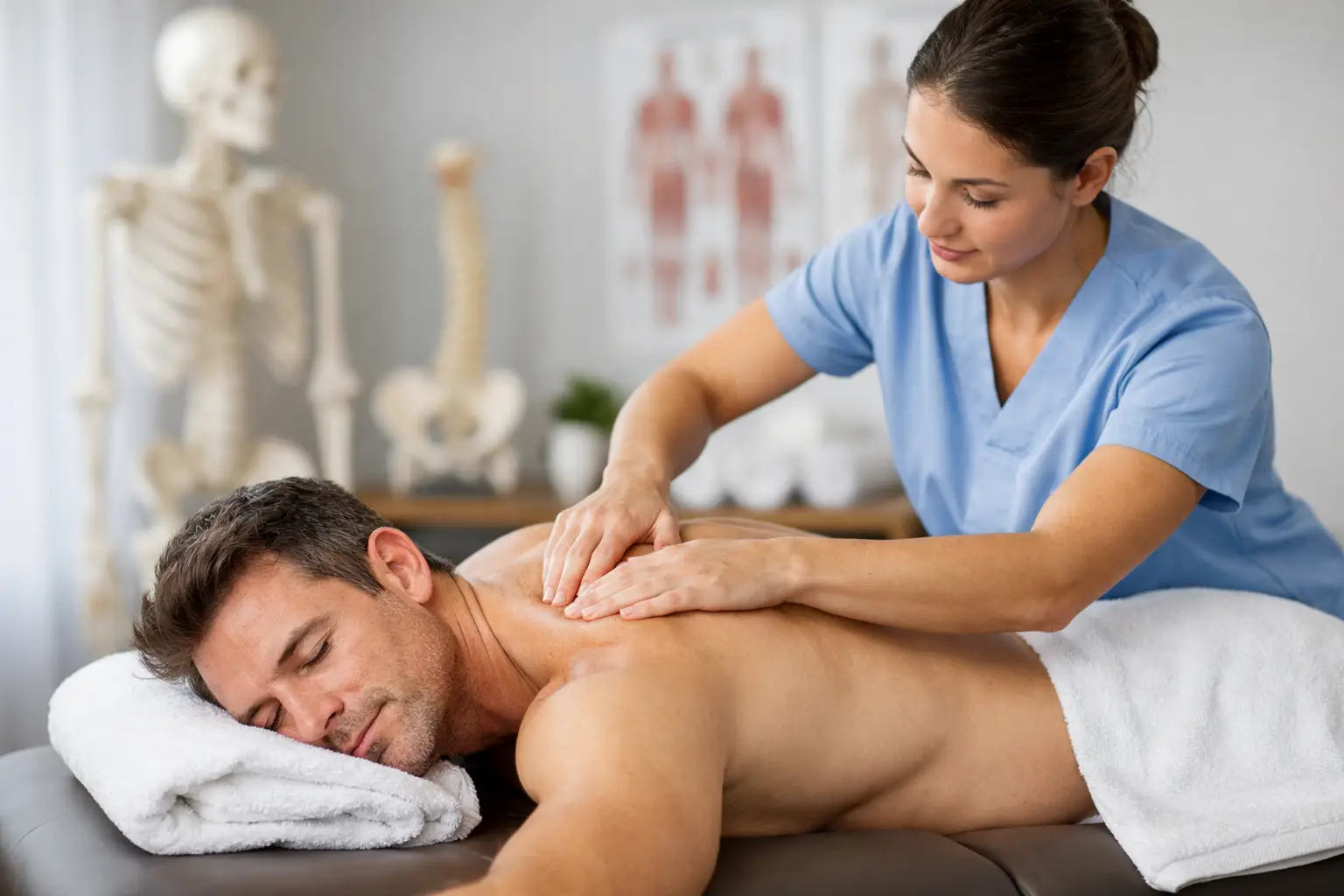
That nagging shoulder pinch when you reach overhead, the hip that always feels “tight,” the jaw tension that turns into a headache by 3 p.m. – these patterns usually are not random. A good guide to orthopaedic massage therapy starts with that reality: pain and restriction often follow recognizable mechanical and nervous-system patterns, and treatment works best when it is specific.
Orthopaedic massage therapy is not a generic full-body routine with firmer pressure. It is a clinical, assessment-led approach that looks at how muscles, fascia, joints, and movement habits contribute to pain, tension, and functional limits. The goal is not only to help you feel better on the table, but to improve how you move, recover, and tolerate daily life afterward.
For many adults juggling desk work, training, commuting, and stress, that distinction matters. If your symptoms return quickly after a standard massage, it may be because the treatment felt good but did not fully address the structures involved, the way the issue is being aggravated, or the nervous system state that keeps the area guarded.
What is orthopaedic massage therapy?
Orthopaedic massage therapy is a treatment approach focused on musculoskeletal pain and dysfunction. It combines hands-on techniques with clinical reasoning, movement assessment, and ongoing reassessment during the session. Rather than using the same sequence for every client, the therapist evaluates what tissue is involved, what movements reproduce symptoms, and what type of input your body responds to best.
That can include work for overused muscles, irritated tendons, restricted fascia, protective muscle guarding, and compensatory patterns around a painful joint. Depending on the presentation, treatment may involve myofascial release, trigger point therapy, targeted deep tissue techniques, joint-related soft tissue work, and gentler downregulating methods to reduce overall guarding.
This is where expectations matter. Orthopaedic massage is not about forcing tissues to change through intensity alone. Sometimes deeper pressure is useful. Sometimes it is not. If the nervous system reads pressure as threat, more force can increase bracing rather than improve mobility. A skilled session adjusts to tissue tolerance, symptom irritability, and your comfort level in real time.
A guide to orthopaedic massage therapy for common issues
People often seek orthopaedic massage therapy when they have a specific complaint, not just general stress. Common examples include neck and shoulder tension, low back discomfort, hip tightness, tension headaches, jaw pain, post-workout overload, and lingering restrictions after repetitive strain.
Shoulder pain is a good example of why assessment matters. Two people may both say, “My shoulder hurts when I lift my arm,” but one may be dealing with rotator cuff overload, while the other is reacting to upper back stiffness, poor scapular mechanics, or referred tension from the neck. The hands-on work may overlap somewhat, but the treatment focus should not be identical.
The same goes for hips and low back pain. A feeling of tightness in the hamstrings or glutes does not always mean those tissues need aggressive pressure. Sometimes they are guarding because the pelvis, hip rotators, or low back are irritated. Sometimes stress and fatigue amplify the sense of tension even when the main issue is not tissue shortness. Good care looks at the full pattern.
For athletes and active adults, orthopaedic massage therapy can support recovery and training tolerance, but timing matters. A treatment before an event may prioritize mobility, circulation, and nervous-system readiness. A session after heavy training may focus more on reducing protective tone, improving comfort, and helping the body settle without overloading already sensitive tissue.
What happens in a session?
A well-run orthopaedic massage session usually starts before any hands-on work begins. You describe your symptoms, aggravating factors, injury history, training load, work setup, stress level, and goals. The therapist may ask when the pain started, whether it travels, what makes it better, and whether there are red flags that should be referred out.
From there, assessment often includes posture, active movement, passive range of motion, strength or resistance testing, palpation, and symptom behavior. This sounds clinical because it is clinical. The point is to create a treatment plan based on findings rather than guesswork.
Once treatment begins, reassessment should continue throughout the session. If a technique improves range of motion or reduces discomfort, that is useful information. If an area becomes more sensitive or symptoms spread, the approach may need to change. This kind of moment-to-moment adaptation is part of what separates a personalized therapeutic session from a standard routine.
The feel of treatment can vary. Some areas may receive focused deep tissue work. Others respond better to slower, lighter techniques that reduce guarding and allow the body to stop fighting the input. In practice, many effective sessions blend orthopaedic precision with relaxation-focused work because tissue change is easier when the nervous system feels safe enough to let go.
Why the nervous system matters
Pain is not only a tissue issue. It is also a protective output shaped by stress, previous injury, sleep quality, workload, and perceived safety. That does not mean your pain is “just stress.” It means the body and nervous system influence each other constantly.
This is one reason a trauma-informed, consent-based approach matters in massage therapy. If your body is already on high alert, intense treatment without communication can increase guarding. Clear explanations, predictable pacing, pressure adjustments, and respect for boundaries are not extras. They directly affect treatment tolerance and outcomes.
In a clinical massage setting, nervous-system downregulation can be just as important as local tissue work. When the system settles, muscles often stop bracing as hard, breathing becomes easier, and movement can improve with less effort. That is especially relevant for people with chronic tension, jaw clenching, headaches, or pain patterns that flare during stressful periods.
For many clients, the most effective work is not purely “deep” or purely “relaxation.” It is the right amount of specific input delivered in a way the body can actually use.
Who tends to benefit most?
Orthopaedic massage therapy often fits people who want more than temporary relief but are not looking for a one-size-fits-all treatment. Office workers with posture-related strain, runners managing recurring calf or hip tension, lifters with shoulder restrictions, and professionals carrying stress in the neck and jaw often do well with this approach.
It can also be a strong option if you appreciate understanding the why behind treatment choices. Many clients want their therapist to explain what seems involved, what the plan is for the session, and what kind of response is realistic. That collaborative style tends to build trust and make follow-up care more effective.
There are limits, though. Massage therapy is not the right tool for every condition, and ethical care includes knowing when a symptom needs a different provider or further medical evaluation. Sharp unexplained pain, neurological symptoms, significant swelling, fever, recent trauma, or symptoms that do not fit a musculoskeletal pattern deserve extra caution.
How to choose the right therapist
If you are using this guide to orthopaedic massage therapy to decide where to book, look for someone who combines technical skill with clinical reasoning. The techniques matter, but the therapist’s ability to assess, adapt, and communicate matters more.
A few signs of a strong fit are straightforward: they ask detailed questions, explain their thinking clearly, get consent before changing pressure or focus, and adjust treatment based on your response instead of sticking rigidly to a plan. They should also be comfortable working within your tolerance. More pressure is not automatically better pressure.
Environment matters too. A safe, non-judgmental, inclusive space can change how well your body receives treatment. That is particularly important for clients who have had dismissive health care experiences, who feel anxious in clinical settings, or who want confidence that boundaries will be respected without question. At Reset Registered Massage Therapy, that safety-centered standard is part of treatment quality, not a side note.
What results should you expect?
Some people feel a clear change after one session – less pain, easier movement, better sleep, fewer headaches. Others notice more gradual progress, especially if the issue has been building for months or years. Chronic patterns usually respond best to a short series of focused treatments paired with small changes in workload, movement habits, or recovery practices.
It also helps to expect variation. You may leave one session feeling looser right away. Another may create subtler changes that show up the next morning when stairs feel easier or your jaw is not clenched by lunchtime. Progress is not always dramatic, but it should feel meaningful.
A good treatment plan is honest about that. It respects both biomechanics and biology. Tissues need the right input, but people also need enough safety, consistency, and recovery capacity to change.
If your body has been asking for more precise care than a generic massage can offer, orthopaedic massage therapy is worth considering. The best sessions do not just chase tension. They listen for the pattern underneath it – and treat you in a way that helps your system stop repeating it.
1 thought on “A Guide to Orthopaedic Massage Therapy”
Comments are closed.