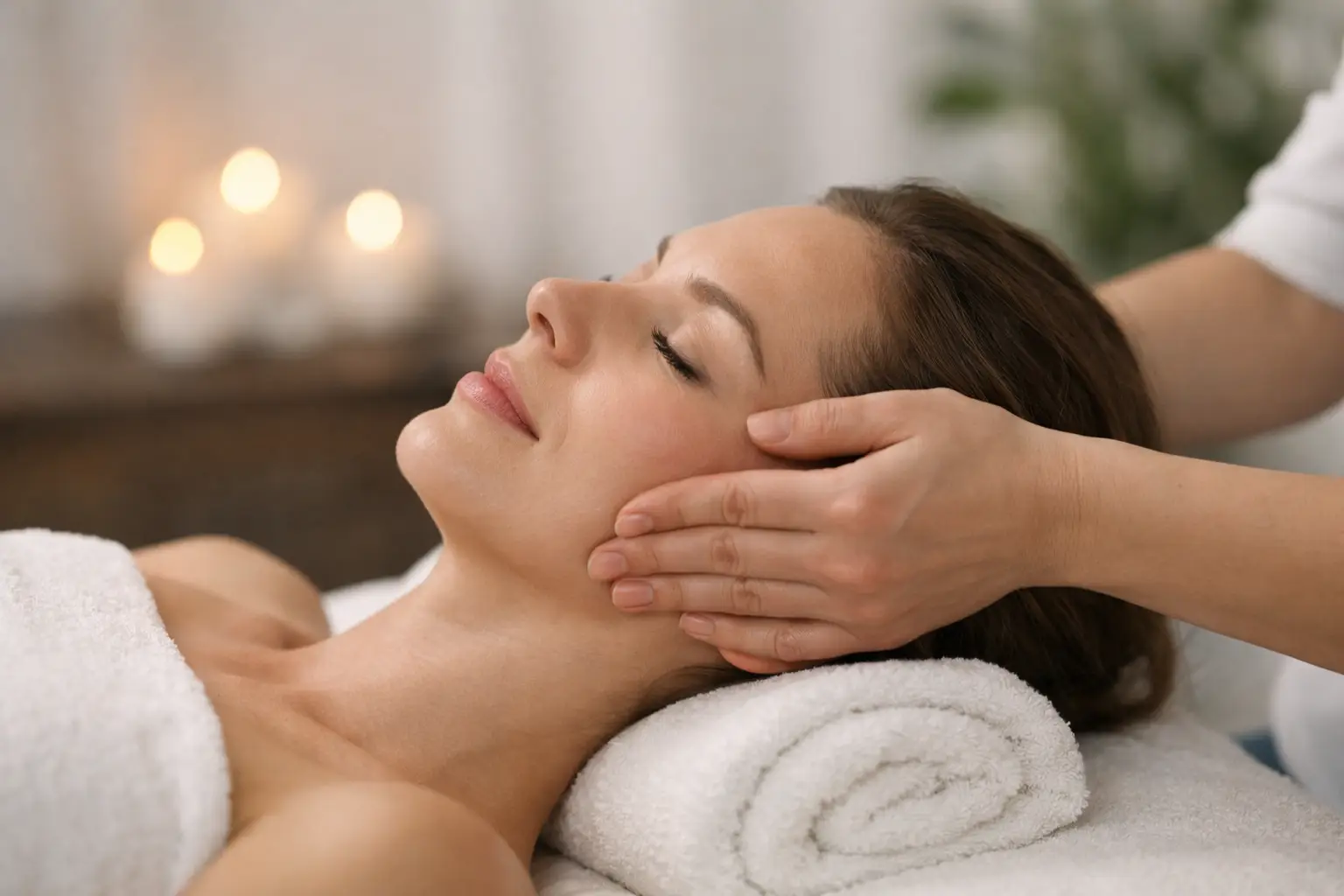
Jaw pain rarely stays in the jaw. It shows up as temple headaches during work, neck tension on the commute home, ear-area pressure, clenching at night, and that tired, overworked feeling when chewing should be easy. If you are searching for the best massage for TMJ symptoms, the most honest answer is not one technique. It is the right combination of assessment, pressure, and manual therapy for your specific pattern.
TMJ symptoms can come from more than the joint itself. The masseter, temporalis, pterygoids, sternocleidomastoid, upper traps, and suboccipitals often contribute. Stress and nervous system load matter too. That is why a generic “jaw massage” can feel incomplete, and sometimes irritating, if the bigger picture is missed.
What is the best massage for TMJ symptoms?
For most people, the best massage for TMJ symptoms is a personalized treatment that combines focused work on the jaw and surrounding muscles with neck, scalp, and upper shoulder treatment. In clinical practice, that often means some mix of myofascial release, trigger point therapy, and carefully graded deep tissue work, balanced with gentler techniques that help reduce guarding.
That balance matters. TMJ pain is often protective. If the tissues are already reactive, aggressive pressure can make clenching worse instead of better. On the other hand, treatment that is too general may feel relaxing but not create much change in chewing comfort, jaw opening, or headache frequency. The sweet spot is specific treatment that your body can tolerate.
Why one-size-fits-all TMJ massage often falls short
The jaw does not work alone. It is part of a system that includes the neck, tongue, face, rib cage, and breathing pattern. If your jaw pain increases during stressful weeks, long computer hours, or heavy training blocks, the driver may not be local tissue tension alone. It may be a whole-body tension strategy.
That is why a proper treatment plan usually starts with assessment. How wide can you open? Does the jaw deviate? Is there clicking, locking, or pain with chewing? Are headaches part of the picture? Is clenching mostly at night, or all day at your desk? Those details shape what type of massage will help and how direct the work should be.
The techniques that help most
When people ask about the best massage for TMJ symptoms, they are usually asking which technique works fastest. The better question is which technique matches the problem.
Myofascial release for broad jaw and facial tension
Myofascial release can be especially helpful when the jaw feels dense, restricted, or constantly tight rather than sharply painful. It uses sustained, slower pressure to reduce tension through the fascia and surrounding soft tissue. For TMJ-related discomfort, this may include the cheeks, temples, scalp, neck, and upper chest.
This approach often works well for clients who are stress-loaded, sensitive to pressure, or dealing with a long-standing pattern of clenching. It can create meaningful change without feeling forceful. That matters because some TMJ symptoms improve more when the nervous system feels safe enough to stop bracing.
Trigger point therapy for referral into the jaw, face, and head
Trigger points in the masseter and temporalis commonly refer pain into the teeth, temples, and side of the face. Trigger points in the SCM and suboccipitals can add headache symptoms, ear-area discomfort, and a sense of pressure that is easy to misread as purely jaw-based.
Targeted trigger point therapy can be very effective here. The key word is targeted. The goal is not to press hard everywhere. It is to identify which tissues reproduce the familiar pattern and then work them with precision and within tolerance. Good treatment should feel intentional, not overwhelming.
Deep tissue work when the jaw is linked to neck and shoulder load
Deep tissue can help TMJ symptoms, but not always in the way people expect. Sometimes the most useful deep work is not directly over the jaw. It is in the upper traps, levator scapulae, scalenes, and suboccipital region, especially if posture, training load, or desk setup is part of the problem.
This is where clinical reasoning matters. If the jaw is compensating for tension higher or lower in the chain, deep tissue in the right areas can reduce the overall load. But deeper is not automatically better. With TMJ pain, pressure should be adapted in real time based on tissue response, symptom irritability, and how your body handles treatment that day.
Intraoral massage can help, but it is not always necessary
Some TMJ treatment includes intraoral work, where a practitioner treats the muscles inside the mouth, especially the pterygoids. For certain clients, this can be very effective. For others, it may feel too invasive, too intense, or simply unnecessary to get results.
A trauma-informed approach is essential here. Informed consent, clear explanation, and ongoing choice are not extras. They are part of treatment quality. External techniques can still be very effective, and intraoral work should never be presented as the only serious option.
What a good TMJ massage session should include
A useful TMJ-focused session is rarely just “jaw work.” It should connect symptoms to function. That means looking at how you open and close, how the neck moves, whether breathing is shallow or chest-driven, and how much guarding is present before hands-on work even begins.
Treatment may include the jaw muscles, temples, scalp, neck, shoulders, and sometimes the upper chest. In some cases, craniosacral-style techniques or other calming manual therapy can be a smart addition, especially when symptoms are flared by stress, poor sleep, or sensory overload. This is not about being vague or less clinical. It is about recognizing that pain and tension are often reinforced by an activated nervous system.
At Reset Registered Massage Therapy, this is where a neurocentric, evidence-based approach matters. The goal is not to force tissue change. It is to improve function, reduce threat, and help break the pain-tension-stress cycle with treatment that is both specific and workable for your system.
When massage helps most, and when it is not enough
Massage therapy can be excellent for muscular TMJ symptoms. It often helps with jaw tension, clenching-related soreness, temple headaches, neck tightness, and the feeling that the whole face is working too hard. It can also support better awareness of daytime clenching habits and create a window where movement feels easier.
But there are limits, and being clear about them is part of good care. If your symptoms involve true locking, major bite changes, significant joint noise with pain, recent trauma, or suspected dental issues, massage may be helpful as part of care, but it should not be the only step. TMJ disorders can involve the joint disc, arthritis, dental factors, and other contributors that need a broader evaluation.
It also depends on timing. If the area is highly inflamed and even talking is painful, treatment may need to start gently. Trying to “work it out” aggressively in a flare can prolong recovery.
How to know if a massage style is right for you
The right treatment usually feels specific, safe, and productive. You should understand why certain areas are being treated. Pressure should be adjustable without awkwardness. Your therapist should be able to explain what they are noticing and how that connects to your symptoms.
You should also expect some nuance. A successful session does not always mean instant, dramatic release in the jaw. Sometimes the biggest change is that you stop bracing through the neck, your headaches ease, or chewing feels less fatiguing over the next few days. Those are meaningful outcomes.
If you have a history of trauma, high stress, or medical anxiety, the environment matters too. TMJ treatment can be vulnerable by nature because it involves the face, head, and sometimes the mouth. A safe, non-judgmental, and inclusive space is not separate from results. It supports them.
The practical takeaway on the best massage for TMJ symptoms
If you want the simplest answer, the best massage for TMJ symptoms is usually a personalized, clinically reasoned session that treats the jaw in context, not in isolation. For some people that means myofascial release and nervous system downregulation. For others it means trigger point therapy and more focused orthopedic work through the neck and jaw. Often, the best results come from blending both.
The right approach should reduce pain without making you guard more, improve function rather than just chase soreness, and adapt to how reactive your system is on that day. That is what turns massage from a temporary break into meaningful care.
If your jaw has been carrying more than its share lately, that is worth taking seriously. A well-planned TMJ treatment should leave you feeling not only looser, but less defended.
1 thought on “Best Massage for TMJ Symptoms”
Comments are closed.