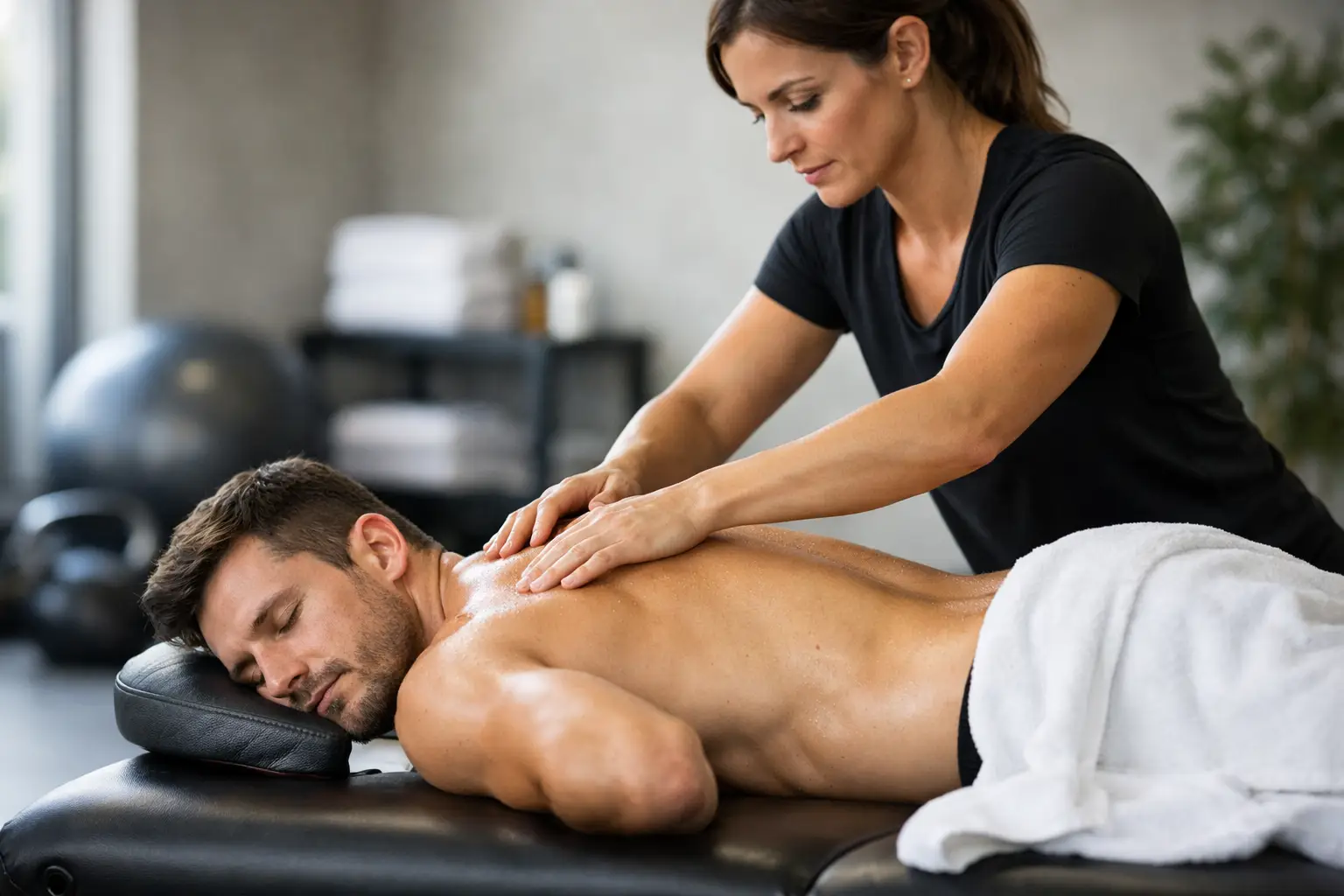
If your calf tightens halfway through a run, your neck locks up after long days at a desk, or your shoulders never quite recover between training sessions, the issue usually is not just “tight muscles.” For many people seeking sports massage Vancouver care, the real problem is a mix of load, compensation, stress, and a nervous system that has stopped feeling safe enough to let go.
That is why effective treatment should do more than chase soreness. A good sports massage session helps you understand what is being overloaded, what is guarding, and what your body is trying to protect. It should feel targeted, collaborative, and adapted to your tolerance rather than delivered as a preset deep tissue routine.
What sports massage in Vancouver should actually do
Sports massage is often misunderstood as aggressive pressure for athletic people. In practice, it is better defined by intent than intensity. The goal is to improve function, reduce pain, support recovery, and help you move with less restriction.
Sometimes that means focused work on a hamstring that is taking too much load because the hip is not contributing well. Sometimes it means reducing upper trap and jaw tension that builds when work stress, poor sleep, and training volume all stack up at once. Sometimes it means calming an irritable area enough that your body stops bracing against movement.
A clinical approach starts with assessment. That can include how symptoms began, which movements reproduce them, where compensation is showing up, and how your tissue responds during treatment. Good care is rarely about applying the same pressure everywhere. It is about using the right input, in the right place, at the right time.
Who benefits from sports massage Vancouver treatment
You do not need to be training for a race to benefit from sports massage Vancouver treatment. Active adults, recreational athletes, commuters, and professionals with persistent tension can all be good candidates.
This work can be especially helpful if you are dealing with recurring shoulder or hip tightness, post-workout soreness that lingers longer than expected, tension headaches, jaw clenching, or a feeling that one area keeps “grabbing” no matter how much you stretch. Many of these patterns are not isolated problems. They are part of a broader loop involving movement habits, local irritation, and stress-related muscle guarding.
It also helps people returning to activity after time off. When training resumes faster than tissue tolerance does, the body often responds with stiffness, protective tension, or pain that seems out of proportion. Massage therapy can help restore more comfortable movement while supporting a gradual return to load.
The difference between effective treatment and generic deep tissue
A lot of people ask for deep tissue when what they really want is relief that lasts. Those are not always the same thing.
Deep pressure can be useful, especially for dense, overworked tissue that responds well to slower, more specific work. But more pressure is not automatically better. If the body perceives the input as too much, it may guard harder, leaving you sorer without improving the underlying pattern.
Effective sports massage is specific. It may include myofascial release, trigger point therapy, joint-oriented orthopaedic techniques, and focused work around movement restrictions. It may also include gentler work when the nervous system is already overloaded and the area is reactive. That shift is not a downgrade in care. It is often what allows change to happen.
The best sessions are responsive. Pressure, pacing, and technique should adjust based on what your body does in real time, not on a fixed idea of what sports massage is supposed to feel like.
Why assessment matters as much as hands-on treatment
One of the clearest markers of quality is whether your therapist is paying attention before and during treatment. Assessment is not a formality. It guides the plan.
If your shoulder pain increases during pressing movements, for example, the issue may involve more than the spot that hurts. The neck, rib mechanics, scapular control, or even stress-related clenching patterns can all contribute. If your low back keeps tightening after leg day, the treatment may need to address hips, breathing mechanics, or the way your body is managing load through the trunk.
A thoughtful assessment also helps set realistic expectations. Some conditions respond quickly. Others improve in layers. If symptoms are longstanding, stress-driven, or linked to several contributing factors, progress may be less linear. That does not mean treatment is not working. It means the body often needs consistency, not force.
Recovery is not only physical
Athletes and active professionals are often taught to think about recovery in mechanical terms: tissue quality, mobility, inflammation, workload. Those matter. But they are not the whole picture.
Pain and tension are shaped by the nervous system too. When stress is high, sleep is poor, or your body has been bracing for weeks, muscles can stay on guard even after the original strain settles down. That is one reason some people feel “tight” all the time despite stretching, foam rolling, and rest days.
A trauma-informed, neurocentric approach recognizes that relief depends partly on whether your system feels safe enough to change. That affects everything from pressure tolerance to breathing to muscle tone. In practice, this means treatment should include clear communication, consent, adaptable pacing, and an environment that does not push your body past what it can use.
This is especially important for clients who have had painful treatment elsewhere, who feel anxious on the table, or who need a space that is explicitly inclusive and non-judgmental. Safety is not separate from outcomes. It is part of what makes outcomes possible.
What a personalized session can include
A well-designed sports massage session is rarely one-note. If you come in with hip restriction and glute tension, you may need focused orthopaedic work through the posterior chain, but you may also benefit from downregulating the surrounding system so the body stops gripping.
That can look like combining deeper tissue work with myofascial techniques, trigger point therapy, or slower calming input. For someone with jaw tension and headaches, treatment may include the neck, shoulders, scalp, and TMJ-related structures, along with attention to how stress and posture are feeding the pattern. For desk-bound clients who also train hard, the plan may need to address both repetitive work strain and exercise recovery.
Personalization also means respecting tolerance. Some days your body can handle more direct work. Some days it needs a quieter approach. Good treatment meets the moment instead of forcing a protocol.
Choosing a sports massage provider in Vancouver
Not every clinic that offers sports massage provides the same level of care. If you want treatment that is both effective and sustainable, look for a registered massage therapist who can explain their reasoning, assess movement and symptom patterns, and adapt technique based on response.
It helps to choose a provider who works comfortably at the intersection of clinical and restorative care. That combination matters because many pain patterns are not solved by intensity alone. They improve when targeted manual therapy is paired with nervous system downregulation and a plan that fits your actual life.
Environment matters too. A quiet, respectful setting can make a measurable difference, especially if you are coming in already stressed, overstimulated, or guarded. Convenience matters as well. If care is easy to access near downtown transit routes, easier to book, and compatible with direct billing, consistency becomes more realistic.
At Reset Registered Massage Therapy, this kind of care is built around precision, collaboration, and client safety. Sessions are structured to address both the musculoskeletal issue and the stress-tension patterns that often keep it going.
What to expect after treatment
The best outcome is not always feeling flattened or exhausted afterward. Often, it is a sense that movement is easier, breathing is less restricted, and the aggravated area is no longer doing all the work.
Some soreness can happen, especially after focused treatment, but more is not better. Ideally, you leave with clearer body awareness and a nervous system that feels less revved up. Over time, that can translate into better recovery between workouts, fewer flare-ups, and more confidence in training or daily movement.
Results depend on the issue. Acute strain, chronic compensation, workload management, and stress-related tension all respond on different timelines. What matters most is whether the treatment is specific, tolerable, and consistent enough to support real change.
If you are looking for sports massage in Vancouver, aim for care that treats the full pattern, not just the sore spot. When treatment is evidence based, inclusive, and tailored to how your body actually responds, relief tends to feel less temporary and a lot more useful.