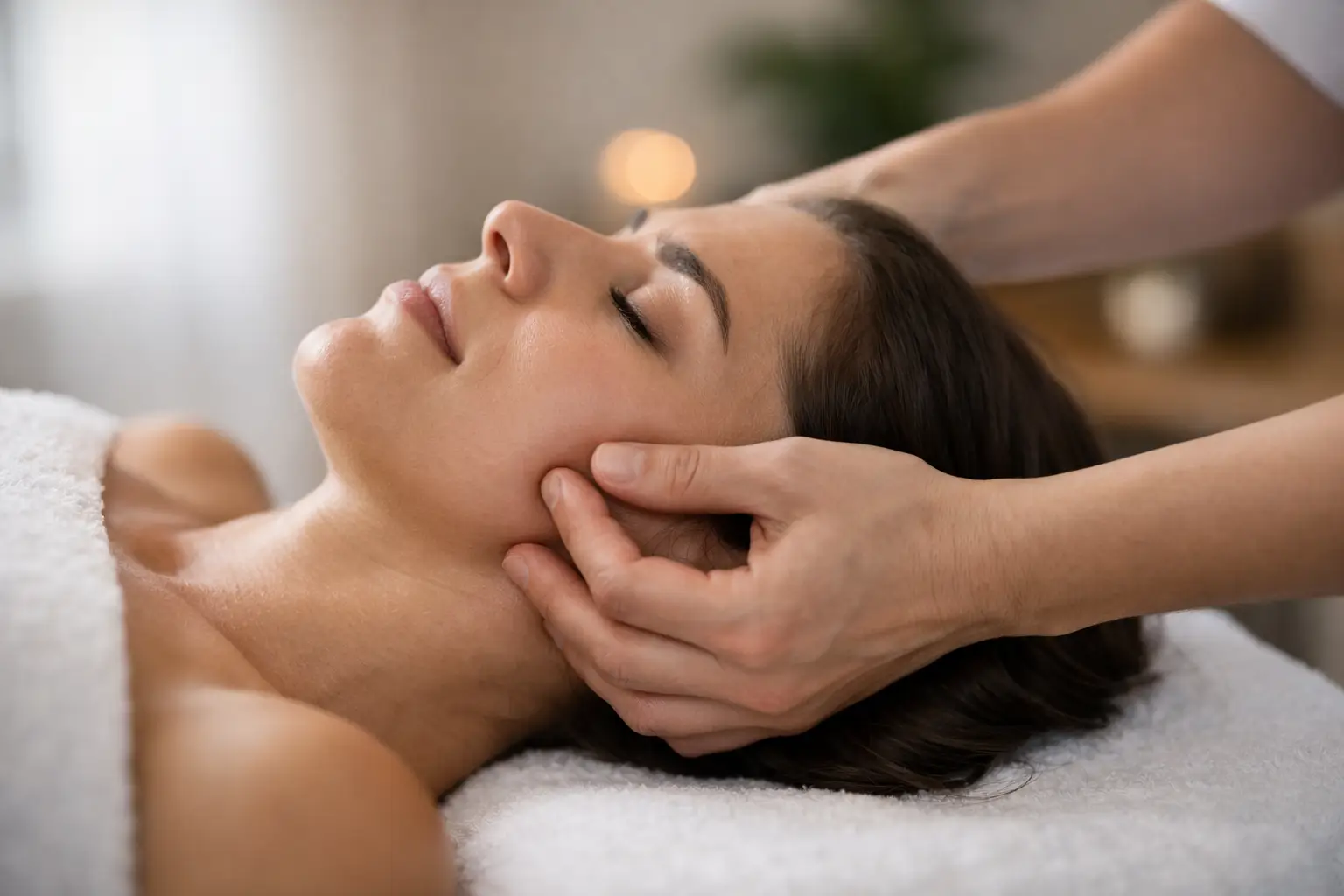
If you wake up with a tight jaw, a dull headache behind your eyes, or sore teeth that make no sense, jaw clenching may be part of the picture. Understanding how massage helps jaw clenching starts with one simple idea: the jaw is rarely working alone. The muscles around the face, temples, neck, shoulders, and upper chest often join in, especially when stress, sleep disruption, posture, or overuse keep the nervous system on high alert.
For many people, clenching is not a conscious habit. It can show up during focused work, intense training, commuting, or sleep. That is why treatment needs to go beyond telling someone to “just relax your jaw.” A more useful approach looks at muscle tension, joint mechanics, breathing patterns, and nervous-system load together.
Why jaw clenching happens in the first place
Jaw clenching is often linked to overactivity in the masseter and temporalis muscles, which are two of the primary muscles used for chewing. When they stay switched on for too long, they can create local soreness, tooth sensitivity, facial pain, ear-area discomfort, and tension headaches. In some cases, clenching also contributes to TMJ irritation, clicking, or reduced comfort with chewing and talking.
But the jaw is influenced by more than the jaw. Forward head posture, neck stiffness, and upper trap tension can change how the jaw and surrounding tissues load throughout the day. Stress matters too. When the body is stuck in a protective state, clenching can become one more way it holds tension.
This is where a clinical massage approach can be helpful. Not because massage is a cure-all, but because it can address both the tissues doing too much work and the broader tension pattern that keeps feeding the problem.
How massage helps jaw clenching in the body
Massage can reduce jaw clenching by decreasing excessive muscle tone, improving tissue mobility, and giving the nervous system a chance to downshift. In practical terms, that may mean less tension through the jaw and temples, fewer headaches, and an easier time noticing when you are bracing.
A skilled therapist will not only focus on the face. The work may include the masseter, temporalis, sternocleidomastoid, scalenes, upper trapezius, suboccipitals, and chest muscles, depending on your presentation. When those areas are contributing to a jaw tension pattern, treating them can change the load on the entire system.
Manual therapy can also improve your awareness of what relaxed actually feels like. That matters more than it sounds. Many people who clench have been doing it for so long that a neutral jaw position feels unfamiliar. Massage creates a window where the body can experience less guarding, which makes it easier to build new habits afterward.
The results are not always instant or permanent after one session. It depends on why you are clenching, how long it has been happening, your sleep quality, your stress load, and whether there is dental or joint involvement. Still, even when massage is not the whole answer, it can be a meaningful part of a broader plan.
The techniques that may help most
There is no single best technique for every case of jaw clenching. Treatment should match the person, their symptoms, and their comfort level.
Myofascial release can be useful when the tissues around the jaw, neck, and chest feel restricted and protective. Trigger point therapy may help when there are clear referral patterns, such as temple pain, facial ache, or headaches driven by overactive chewing muscles. Swedish-style techniques can support overall downregulation when stress is a major driver and the body needs help shifting out of constant tension.
Some clients also benefit from gentle craniosacral-informed work or slower treatment that prioritizes nervous-system safety. That is not about being less clinical. It is about recognizing that a guarded system often responds better to precision and pacing than to force.
Deep pressure is not automatically better for jaw issues. Sometimes it helps, especially in the neck and shoulder girdle, but sometimes aggressive work can make a sensitive jaw feel more irritated. A trauma-informed, consent-based approach matters here. Pressure, positioning, and pace should be adjustable throughout the session.
What a good assessment should include
If massage is being used for jaw clenching, assessment matters. A thoughtful therapist should ask when the clenching happens, what symptoms come with it, and what seems to aggravate or ease it. They may look at jaw opening, side-to-side movement, neck mobility, posture, breathing pattern, and tenderness in related muscles.
They should also ask about headaches, dental work, night guards, tooth pain, locking, clicking, ringing in the ears, and any history of trauma or concussion. Those details help shape safe treatment.
This is also where the limits of massage become clear in a good way. If your symptoms suggest significant TMJ joint involvement, dental grinding severe enough to damage teeth, nerve symptoms, or persistent locking, massage may need to be one part of care rather than the only intervention. Collaborative care with a dentist, physician, or other provider can be appropriate.
What treatment often feels like
Jaw-focused massage is usually more subtle than people expect. It may involve direct work to the cheeks and temples, but much of the session often happens in surrounding areas that influence the jaw. Neck and scalp work can feel especially relevant if you also get tension headaches or a heavy, compressed feeling around the face.
You should not feel like you have to tolerate sharp pain for it to be effective. Some tenderness is normal, especially over the masseter or temporalis, but the goal is to reduce guarding, not provoke more of it. In a well-paced session, you should feel that the therapist is tracking your response and adjusting in real time.
Many clients notice they can let their teeth part more easily after treatment, or that their shoulders drop without effort. Others notice reduced headache intensity, less facial fatigue while chewing, or an easier time falling asleep without bracing. Those changes can be small at first, but they are meaningful.
How massage helps jaw clenching long term
The short answer is consistency and context. Massage helps most when it is paired with awareness, pacing, and changes to the factors that keep the jaw overloaded.
That might mean noticing whether you clench during email, traffic, workouts, or concentration-heavy tasks. It might mean adjusting workstation setup if forward head posture is part of the pattern. It might mean using a night guard if your dentist recommends one, or looking at sleep quality if nighttime grinding is driving morning pain.
Simple home strategies can support what happens on the table. Nasal breathing, keeping the tongue resting gently on the roof of the mouth, and letting the teeth stay slightly apart during the day can reduce unnecessary jaw loading. Heat can help some people. Others do better with brief movement breaks, neck mobility, or stress-regulation practices that lower overall muscle guarding.
Massage is not replacing those tools. It is often what makes them easier to use because the body is less tense and more responsive after treatment.
When jaw clenching is stress-driven
For many adults, clenching gets worse during high-demand periods, even if they do not feel especially anxious. That does not mean the pain is “just stress.” It means stress changes muscle tone, breathing, sleep quality, and pain sensitivity in ways that are very physical.
This is one reason a session that combines orthopedic skill with nervous-system downregulation can be so effective. When treatment is both targeted and calming, it addresses the pain-tension-stress cycle from two sides. The tissues get hands-on attention, and the system gets an opportunity to stop bracing for a while.
At Reset Registered Massage Therapy, this is a central part of care. A personalized, evidence-based, trauma-informed approach matters for jaw pain because people do not all need the same pressure, the same techniques, or the same pace.
When massage may not be enough on its own
There are times when massage helps, but not enough by itself. If your jaw locks, your bite suddenly changes, you have major tooth wear, you cannot open comfortably, or you are getting persistent ear symptoms, further assessment is worth pursuing. The same is true if headaches are severe, new, or changing.
That does not make massage less valuable. It just means good care is honest about scope. The best treatment plan is the one that matches what is actually going on.
If your jaw has been doing too much for too long, relief usually starts with reducing threat, not forcing release. That is why careful assessment, precise hands-on work, and a safe, collaborative treatment environment matter so much. When the body feels supported enough to stop guarding, the jaw often follows.