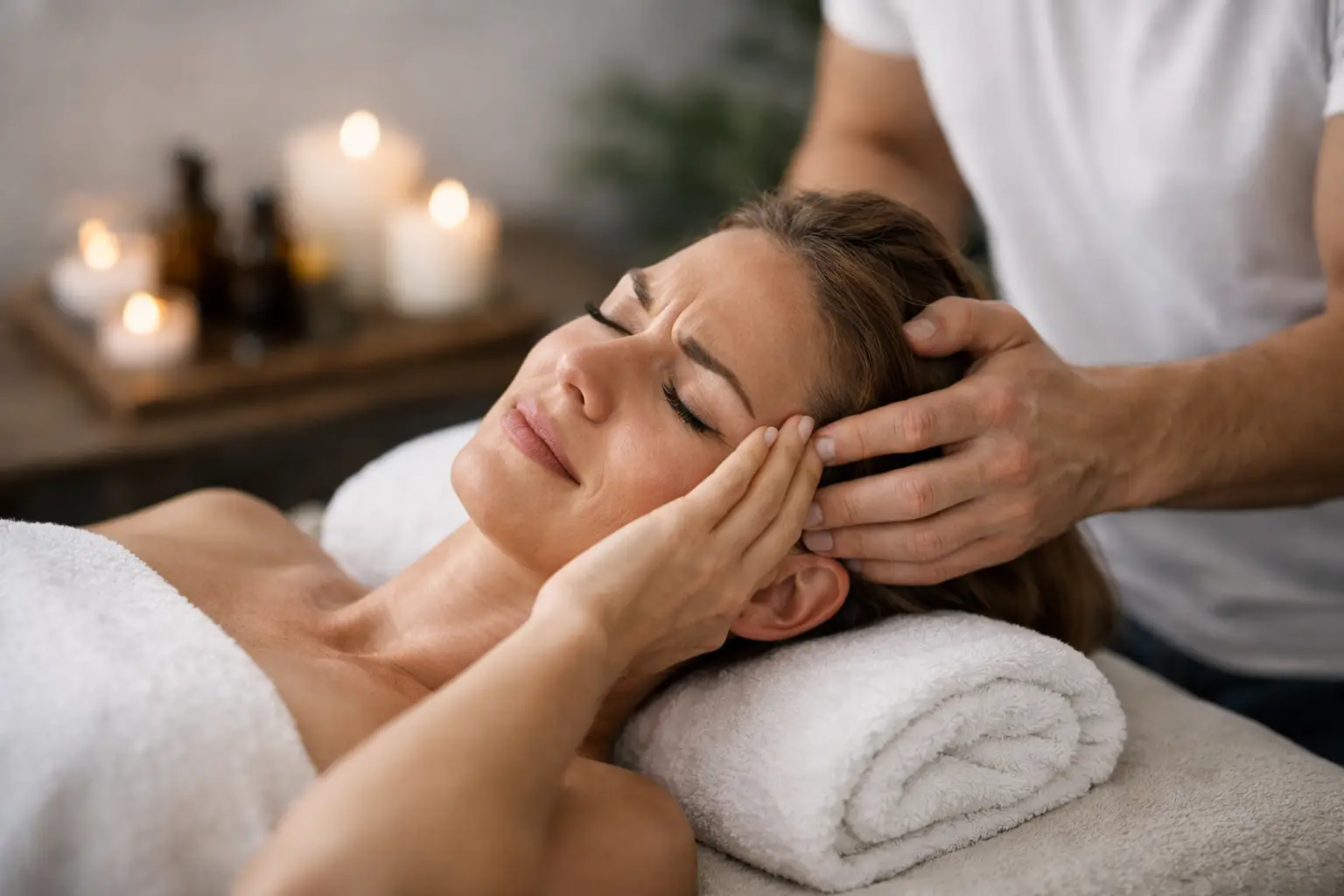
A migraine is not simply a bad headache. It can bring one-sided or throbbing pain, nausea, light sensitivity, sound sensitivity, visual changes, fatigue, and a nervous system that feels overwhelmed by ordinary input. The relationship between massage and migraines is therefore more nuanced than “work out the knots.” For some people, massage therapy can be a meaningful part of a broader migraine management plan. For others, the wrong pressure, timing, or sensory environment can make symptoms worse.
The goal is not to promise a cure. It is to assess the patterns that may be contributing to your migraine burden, then provide treatment that respects both your musculoskeletal tolerance and your nervous system.
Can massage help with migraines?
Research on massage for migraine is still limited compared with research on medication, exercise, sleep, and behavioral therapies. However, clinical experience and smaller studies suggest massage may help some people reduce muscle tension, improve relaxation, support sleep, and lessen the frequency or intensity of headache symptoms over time. Those benefits are most relevant when migraines coexist with persistent neck pain, jaw clenching, shoulder tension, stress, or poor recovery.
Massage does not treat the underlying neurological condition in the same way a migraine-specific medication might. Migraines involve complex changes in the brain and nervous system, and triggers vary widely between people. A treatment that is helpful for a person whose migraines are associated with forward-head posture and long screen days may be unhelpful for someone whose primary trigger is hormonal change, skipped meals, or certain medications.
That is why an evidence-based approach begins with questions, not assumptions. When do your migraines occur? What happens in the 24 hours before one starts? Is there neck stiffness, jaw pain, disrupted sleep, unusual stress, or a change in training load? What treatment feels relieving, and what tends to flare symptoms?
When massage is most likely to be useful
Massage therapy may be particularly useful when migraine symptoms overlap with a pain-tension-stress cycle. A demanding workweek can lead to elevated shoulders, shallow breathing, jaw clenching, and reduced movement. These patterns do not necessarily cause migraine, but they can add a constant stream of discomfort and sensory input to an already sensitive system.
A thoughtful treatment may include gentle work to the neck, upper back, chest, scalp, and jaw when appropriate. Myofascial release and carefully dosed trigger point therapy can address tissue sensitivity without treating the body like a problem to be forced into submission. Swedish-style relaxation techniques can also be clinically relevant: slower, predictable touch may support downregulation when stress and poor sleep are part of the picture.
For active people, training volume matters too. A sudden increase in lifting, cycling, running, or contact sport can leave the neck and shoulders carrying more load than usual. An orthopaedic assessment can help distinguish ordinary post-training tightness from a pattern that needs further medical evaluation. The aim is to improve comfort and movement while keeping treatment within your tolerance.
The neck is relevant, but it is not always the answer
Many people with migraines report neck pain before, during, or after an episode. It is tempting to assume the neck is the source. Sometimes it is contributing. Other times, neck pain is part of the migraine itself, appearing early as the nervous system changes.
This distinction matters because aggressive neck work is not automatically better. If your neck becomes tender, your skin feels painful to touch, or pressure on the head and neck aggravates symptoms, deeper work may be counterproductive. A skilled therapist adjusts pressure, pace, position, and focus based on what your body is communicating in that session.
Timing matters with massage and migraines
The best time for massage is often between migraine attacks, when your system is relatively settled. Regular sessions may help reduce the buildup of tension and create a reliable opportunity to notice changes in sleep, stress, movement, and pain patterns before they become overwhelming.
During an active migraine, preferences differ. Some people find a quiet room, gentle scalp or hand massage, and supported positioning soothing. Others cannot tolerate touch, fragrance, conversation, bright light, or pressure around the neck. There is no prize for pushing through. If touch feels like too much, the appropriate treatment may be no hands-on work at all, or a shorter, gentler session focused on comfort.
A trauma-informed approach is especially valuable here. You should be able to change your mind, ask for less pressure, skip an area, remain fully clothed for part of treatment, or stop at any time. Consent is not a formality at the start of an appointment. It is an ongoing part of safe care.
What a personalized treatment plan can look like
A useful plan is usually simple and responsive rather than overly elaborate. Your therapist may begin with a brief assessment of your migraine history, current symptoms, medication changes, prior injuries, work setup, training demands, sleep, and touch preferences. They may also assess neck and shoulder movement, jaw function, breathing patterns, and areas of muscle guarding.
From there, the session should match the day you are having. On a high-sensitivity day, that may mean low-light conditions, minimal conversation, broad calming contact, and gentle craniosacral-style techniques if they are comfortable for you. On a more stable day, it may include targeted work to the suboccipital muscles, upper trapezius, levator scapulae, pectorals, temporalis, or masseter, alongside movement-based reassessment.
The technique is less important than the response. More pressure does not equal more therapeutic value. Effective care considers whether you leave feeling more settled and mobile, not merely whether the treatment felt intense.
It can also help to track your response for a few weeks. Note migraine days, symptom severity, sleep quality, stress level, jaw clenching, exercise, and how you feel in the 24 to 48 hours after massage. This gives you and your healthcare team better information than relying on a vague sense that treatment “sometimes helps.”
When massage should wait
Massage therapy is supportive care, not a substitute for medical assessment. Seek urgent medical attention for a sudden, severe headache that reaches maximum intensity quickly, a headache after a significant head injury, new weakness or numbness, trouble speaking, fainting, confusion, seizure, fever with neck stiffness, or major vision changes that are new for you.
You should also speak with a medical professional about new or changing headache patterns, migraines that are becoming more frequent, headaches that begin after age 50, or symptoms that differ substantially from your usual migraine. If you are pregnant, have a history of vascular conditions, take blood-thinning medication, or have been diagnosed with a condition affecting the cervical spine, tell your therapist before treatment.
A reputable massage therapist will welcome this information and may recommend pausing treatment or coordinating with your physician, neurologist, physical therapist, or other provider. Referral is not a failure of massage therapy. It is part of responsible, collaborative care.
Small changes between appointments
Massage tends to work best when it fits into a larger plan. You do not need a perfect wellness routine. Start by protecting a few basics that are commonly relevant to migraine: regular meals, hydration, sleep consistency, manageable training progression, and short movement breaks during long desk days.
If jaw tension is a factor, notice when your teeth are touching. At rest, the lips can be together while the teeth remain slightly apart. If screen work leaves your neck stiff, changing positions more often may matter more than finding the one “perfect” posture. A brief walk, shoulder movement, or a few slow breaths can interrupt hours of sustained bracing.
For people who live with recurring migraines, the most helpful care often feels less dramatic than a one-time fix. It is a careful process of reducing unnecessary strain, recognizing early warning signs, and building strategies that your body can actually tolerate. The right massage session should leave you feeling listened to, not pushed past your limits.