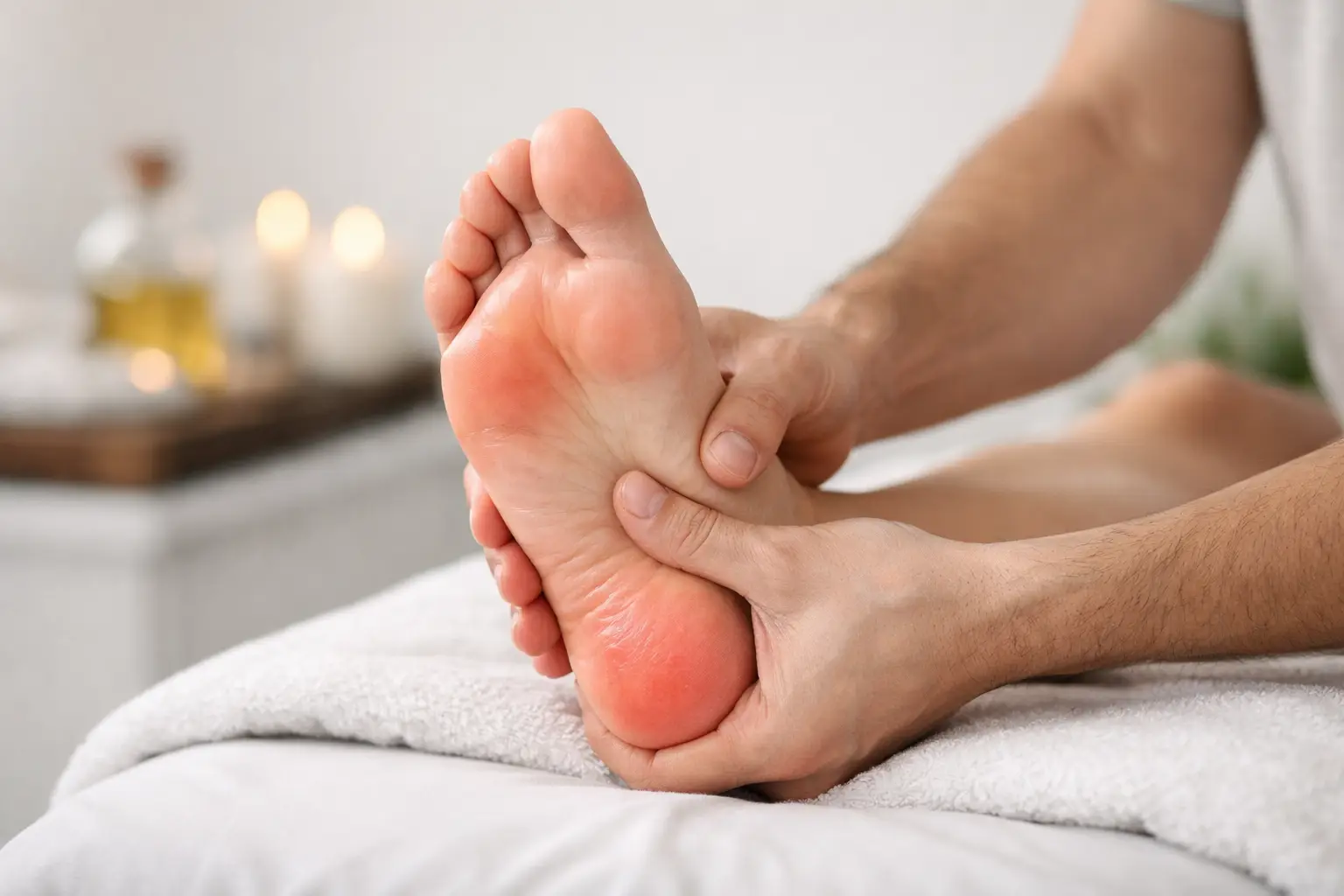
That first step out of bed can feel surprisingly sharp. If your heel or arch hurts most in the morning, after long periods of sitting, or during the first few minutes of walking, massage for plantar fasciitis pain may help – but usually not in the simplistic way people expect.
Plantar fasciitis is often treated like a single tight spot that just needs to be pressed harder. In practice, it is usually more layered than that. The plantar fascia is a thick band of connective tissue along the bottom of the foot, and pain there is often influenced by calf stiffness, ankle mobility, walking and running load, footwear, tissue irritability, and how sensitized the nervous system has become. That is why a thoughtful treatment plan tends to work better than aggressive pressure aimed only at the sorest point.
What massage for plantar fasciitis pain can actually do
Massage therapy does not “break up” plantar fasciitis, and it is not a magic reset for every irritated foot. What it can do well is reduce protective muscle tension, improve local tissue tolerance, support circulation, and help your body move with less guarding.
For many people, the biggest driver of relief is not direct pressure on the plantar fascia itself. It is treatment to the calf complex, Achilles region, intrinsic foot muscles, and surrounding fascia, combined with graded pressure that your system can tolerate. When the lower leg is carrying less tension and the foot is less reactive, walking often feels smoother and less threatening.
This matters because pain is not just about tissue status. It is also about sensitivity. If the area has been irritated for weeks or months, your body may start bracing before you even stand up. A trauma-informed, neurocentric approach respects that. Sometimes the fastest way to calm a painful foot is not to overpower it, but to work with the tissues and nervous system in a way that reduces threat.
Why plantar heel pain is rarely just a foot problem
The bottom of the foot does not function in isolation. Your plantar fascia is influenced by ankle motion, calf flexibility, toe extension, and how load moves through your entire kinetic chain.
If your calves are persistently shortened, your ankle may have less dorsiflexion. That can increase stress through the foot during walking, stairs, running, or prolonged standing. If your hips are stiff or your gait has changed to avoid discomfort, the foot may end up doing more work than it should. In office workers and commuters, a different pattern is common – long periods of sitting followed by sudden standing and walking, with the tissues never fully warming up before being asked to absorb force.
This is where assessment matters. A session focused only on the heel can miss the larger pattern. Clinically, plantar fasciitis pain often responds better when treatment considers the calf, ankle, plantar surface, and movement habits together.
How treatment is usually approached
A good clinical massage session for plantar fasciitis pain starts with questions, not pressure. When did it start? Is it worse with first steps, after long walks, or after workouts? Is the pain sharp, burning, aching, or diffuse? Are you training through it, standing all day, or wearing shoes with very little support? Those details help determine irritability, tolerance, and the right dosage.
Hands-on treatment may include myofascial release to the calf and foot, trigger point work in the soleus and gastrocnemius, gentle mobilization around the Achilles and plantar tissues, and careful work through the arch and intrinsic muscles of the foot. In some cases, lighter Swedish-style techniques are useful at the beginning of the session to reduce global guarding before more specific orthopaedic work begins.
That mix is not about being gentle for the sake of gentleness. It is about precision. If the tissues are highly reactive, deep pressure too early can spike pain and leave you limping for the rest of the day. If the area is less irritable and the surrounding tissues are clearly restricted, deeper work may be appropriate. It depends on what your body is presenting in that moment.
Should the painful spot be massaged directly?
Sometimes yes, but not always immediately and not always firmly. The most tender point is often the least tolerant place to start. Skilled treatment usually works toward the area rather than attacking it first.
For some clients, direct contact along the plantar fascia helps reduce stiffness and improves comfort with weight bearing. For others, especially in more acute or flared states, indirect work through the calf and ankle provides more relief with fewer after-effects. A collaborative therapist will adjust based on your response during the session, not force a standard routine.
What massage can and cannot fix
Massage can be a very useful part of recovery, especially when pain has led to compensatory tension and reduced activity. It can make walking easier, improve comfort after exercise, and create a window where mobility drills or strengthening feel more manageable.
What it cannot do on its own is solve an ongoing load problem. If you are doing a sudden jump in mileage, standing ten hours a day in unsupportive shoes, or returning to sport faster than the tissue can tolerate, the foot may keep getting irritated no matter how good the bodywork is.
That is why evidence-based care usually looks at both symptom relief and contributing factors. A massage therapist may identify patterns that suggest you also need changes in training load, footwear, recovery routines, or home care. That is not outside the scope of massage. It is part of responsible clinical reasoning.
When massage for plantar fasciitis pain tends to help most
Massage is often most useful when the pain pattern includes clear calf tightness, arch stiffness, post-activity soreness, or guarding that has built up over time. It can also be helpful for runners, gym-goers, and active commuters whose symptoms are mild to moderate but persistent.
People with long-standing heel pain often benefit from a treatment style that blends specific manual therapy with nervous system downregulation. If your foot pain has made you dread standing, walking, or training, your system may already be in a high-alert state. Calming that response can make mechanical treatment more effective.
At a clinic like Reset Registered Massage Therapy, that often means treatment is designed not just around the irritated tissue, but around your tolerance, stress level, and movement demands. For many clients, that combination is what makes the session feel both clinically effective and genuinely safe.
Signs you may need more than massage alone
Not all heel pain is plantar fasciitis. If pain is severe, rapidly worsening, associated with significant swelling, numbness, tingling, night pain, or an inability to bear weight, a medical assessment is appropriate. The same is true if you have had no meaningful improvement after several weeks of conservative care.
Even within a plantar fasciitis diagnosis, some cases need a broader rehab plan. If the pain keeps recurring, the issue may involve strength deficits, tendon irritation, training errors, or footwear mismatch. Massage can still play a role, but usually as one part of a larger strategy.
How to get more from treatment between sessions
The best results usually come when the session is not fighting against the rest of your week. That might mean reducing a temporary training spike, using a ball or gentle self-massage on the calf instead of aggressively digging into the arch, or doing simple mobility work that your therapist has recommended.
It also helps to pay attention to response patterns. If your heel always hurts after long drives, hard speed sessions, barefoot walking on hard floors, or standing at your desk all day, those clues matter. The goal is not to avoid all activity. It is to find a level your foot can tolerate while it becomes less reactive and more resilient.
Supportive care should feel collaborative. You should know why certain areas are being treated, what the expected response is, and how to tell the difference between productive soreness and aggravation. In a safe, non-judgmental clinical setting, that conversation is part of the treatment.
A realistic timeline for relief
Some people feel noticeable improvement after one session, especially if the primary issue is calf and foot tension with relatively recent symptoms. More persistent cases usually change more gradually. You may notice first-step pain becoming less sharp, walking tolerance improving, or post-run soreness settling faster before the pain fully resolves.
That slower progress is not failure. It is often what recovery looks like when the tissue has been irritated for a while. Consistent, well-dosed treatment tends to outperform sporadic aggressive work.
If your foot has been asking for help every morning, the answer is rarely to push through harder. The better approach is usually simpler and smarter – assess the pattern, calm what is overworking, and give the tissue a chance to tolerate load again.